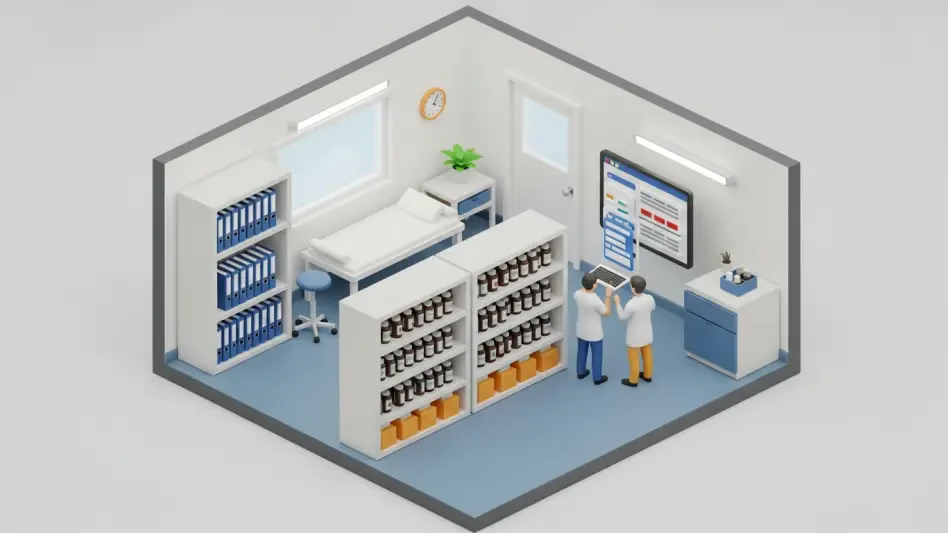

The disparity in global health outcomes often stems not from a lack of medical knowledge or skilled professionals, but from the systemic failure to deliver essential supplies to the patients who need them most. Focusing on the management of pharmaceutical stocks rather than just clinical procedures has emerged as a transformative strategy in the global health landscape. Recent research conducted by Professor Amir Karimi at the University of Texas at San Antonio highlights how simple, low-cost training for frontline health workers can drastically reduce the occurrence of stock-outs, which are periods when vital medications are unavailable. While nurses and midwives are expertly trained in life-saving clinical tasks, such as delivering newborns or providing prenatal care, they often face a dual responsibility dilemma. Without formal training in logistics, administrative duties like tracking inventories and forecasting demand frequently take a backseat to immediate patient needs, leading to fatal gaps in care.
Navigating the Logistical Hurdles in Developing Nations
In vast archipelagos like Indonesia, maintaining a steady flow of medical supplies presents a logistical challenge of unprecedented proportions due to the geographical dispersion of thousands of tiny clinics. Fragile infrastructure, frequent vehicle breakdowns, and seasonal flooding that blocks major roadways create significant bottlenecks that prevent medicine from reaching its destination. These failures usually occur at the so-called last mile, where the distribution network is supposed to transition from regional hubs to local treatment centers. When record-keeping is poor or local staff are overwhelmed, medications might sit in a central warehouse while the clinics that need them are empty. The complexity of navigating thousands of islands requires more than just better trucks; it requires a workforce that understands how to manage the flow of goods within their own walls. Improving these local operational efficiencies ensures that the distribution network remains resilient even when the physical infrastructure is under stress.
The human toll resulting from these logistical failures is staggering, with developing nations accounting for the overwhelming majority of maternal and neonatal deaths worldwide. Many of these tragedies are entirely preventable if the necessary medical supplies, such as antibiotics or contraceptives, are available at the point of care. Interestingly, the research indicates that the problem is rarely a complete absence of medicine at the national level. Instead, the shortage is often localized at individual clinics where patients are actually treated, signifying a failure in inventory management rather than a lack of resources. When a midwife lacks the specific tools or drugs required during a complicated birth, the clinical training she received cannot bridge the gap. By emphasizing the importance of inventory control, health systems can ensure that the investment made in clinical education is not wasted. This shift treats logistics as a core component of humanitarian aid that directly determines patient survival rates.
Comparing Training Methods for Maximum Impact
To address these persistent shortages, the MyChoice Project evaluated different educational interventions for health workers, specifically comparing traditional offsite classroom training with onsite, on-the-job mentorship. Offsite training typically requires workers to travel to a central city, leaving their clinics understaffed and learning in an environment that does not mirror their daily reality. In contrast, onsite training allows educators to work alongside staff in their actual clinical environment. This approach recognizes that every clinic has unique challenges, such as limited shelf space, varying temperature controls, or specific regional demand fluctuations. By teaching inventory management within the context of the worker’s physical workspace, the training becomes more relevant and immediately applicable. The results demonstrated that this personalized method significantly outshines classroom learning because it addresses the practical barriers that prevent workers from implementing new protocols.
This learning-by-doing philosophy led to a remarkable forty-three percent reduction in stock-outs, which far exceeded the performance of any classroom-based curriculum. When trainers visit a clinic, they can help the local staff solve specific problems that a generalized lecture simply cannot cover, such as how to organize a cramped storage room or how to interpret local usage patterns. This immediate application of knowledge fosters a culture of accountability and empowers health workers to take ownership of their inventory. It removes the intimidation factor of complex logistics by breaking tasks down into manageable daily routines that do not detract from primary clinical duties. As workers see the direct correlation between accurate record-keeping and the availability of medicine, their commitment to operational tasks increases. This method proves that professional development is most effective when it is integrated into the workflow, ensuring that the skills learned are retained.
Measuring Economic Efficiency and Clinical Success
Beyond the operational improvements, the economic justification for onsite training is compelling, particularly for regions operating under severe budget constraints. Onsite visits were found to cost approximately nine dollars and seventy-two cents per facility, whereas offsite training involves substantial expenses for venue rentals, participant lodging, and transportation. By strategically planning sequential routes for trainers to visit multiple clinics in a single circuit, the program maximizes every dollar spent. This level of cost-efficiency makes the model highly scalable for public health departments that may not have access to large amounts of foreign aid. It demonstrates that significant health improvements do not always require massive capital investments in new technology or buildings; sometimes, the most effective solution is a modest investment in human capital. By prioritizing low-cost, high-impact training, governments can stretch their limited resources further, ensuring that more clinics receive support.
The most profound outcome of this refined inventory management is its direct and measurable impact on human health and regional survival rates. The data collected revealed that better tracking and forecasting helped prevent over eight hundred unintended pregnancies and significantly lowered the rate of maternal and newborn mortality. These statistics provide concrete evidence that a simple tracking sheet or a better forecasting tool can be just as life-saving as a surgical instrument. When the supply chain is managed effectively, it creates a safety net for the community, ensuring that reproductive health services and emergency medicines are always accessible. This transforms the perception of logistics from a dry, administrative burden into a humanitarian priority of the highest order. By connecting operational excellence directly to clinical success, the study encourages a more holistic view of healthcare where the pharmacist and the logistician are seen as essential partners to the doctor.
Strengthening Health Systems Through Digital Innovation
This research aligns with a broader global trend toward health systems strengthening, which focuses on the underlying infrastructure of medical care rather than just treating individual diseases. By viewing the supply chain as a critical clinical intervention, experts are finding new ways to make health systems more resilient against sudden crises or long-term systemic pressures. This multidisciplinary approach, which blends rigorous data analytics with public health expertise, is setting a new standard for closing the healthcare quality gap between wealthy and developing nations. It moves away from the traditional silo mentality where logistics and medicine are treated as separate entities. Instead, it promotes an integrated model where the health of the supply chain is considered a vital sign of the health of the entire system. Building this resilience ensures that even in the face of economic shifts, the core mission of providing reliable medical care remains uncompromised and sustainable.
Looking forward, stakeholders explored how digital innovation could further lower costs while extending the reach of these essential training programs to the most remote areas. Pilot initiatives in Senegal utilized digital platforms and mobile applications designed to provide just-in-time inventory training to health workers in the field. These tools allowed for real-time data monitoring across vast distances, representing a significant advancement in ensuring that life-saving medicine remained available. Decision-makers recognized that the integration of mobile technology could bypass traditional logistical barriers, providing workers with instant access to guidance and inventory tracking. The successful implementation of these digital solutions suggested a clear path forward for public health policy. It was recommended that governments prioritize the adoption of such scalable, tech-driven training models to reinforce supply chain integrity. By committing to these actionable steps, the global health community moved closer to a future where medical shortages were no longer a barrier to care.