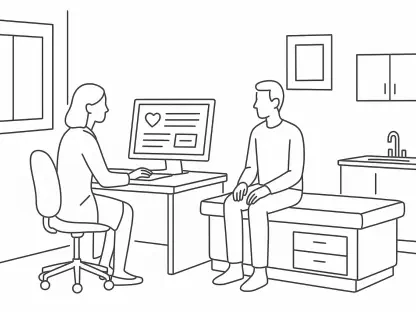

The frantic uncertainty a parent feels when staring at a thermometer during the quiet hours of a Tuesday morning has long been a foundational challenge in the traditional healthcare delivery model. This persistent gap in immediate, specialized support led to the rise of digital health solutions, yet many families remained frustrated by fragmented services that separate adult and pediatric care. Today, the landscape is shifting as the healthcare technology sector witnesses a major consolidation between AI-native platforms and niche clinical providers. Doctronic, a primary care startup built on artificial intelligence, recently signaled a significant pivot by acquiring Summer Health, a platform specifically recognized for its high-touch pediatric services. This strategic merger aims to move beyond generic adult medicine, establishing what industry experts call a single front door for family healthcare. By combining computational scale with clinical knowledge, the entity creates a unified interface that offers continuous support.
Transforming Family Primary Care Models
Establishing a Unified Digital Entry Point: The AI-First Approach
Doctronic has rapidly disrupted the established telehealth market by handling millions of health encounters through an AI-first operational model that prioritizes immediate accessibility and technical efficiency. Its proprietary system acts as an initial point of contact for patients, helping them navigate complex symptoms and receive preliminary medical guidance before they are connected with licensed clinicians for a flat fee. This approach successfully transitions primary care from a series of occasional, inconvenient office visits into a model of continuous support that is always available to the user regardless of their physical location. By removing the friction associated with traditional scheduling, the platform ensures that minor health concerns are addressed before they escalate into urgent care emergencies. This proactive stance is essential for modern families who require medical advice that fits into a fluid daily schedule.
Summer Health complements this robust technical framework by focusing specifically on the nuanced and often high-stress needs of parents and primary caregivers in the domestic environment. Since its inception, the platform has provided specialized text-based care for common pediatric questions that often require professional reassurance but do not necessarily demand a physical visit to a clinic. By acquiring Summer Health, Doctronic is able to capture the high demand for pediatric support within its existing user base while integrating specialized triage protocols into its broader AI platform. This integration allows the combined company to serve as a comprehensive medical home for every member of a household, regardless of their age or medical history. The focus on pediatric-specific communication styles ensures that the AI can interpret parental concerns with clinical accuracy. This approach bridges the gap between general AI and the rigorous demands of pediatrics.
Expanding Clinical Accessibility: Bridging the Specialized Gap
The merger is designed to create a seamless experience for families, allowing parents to manage their own health and their children’s medical needs in one place without switching between different apps. A primary goal of this collaboration is to develop the most accurate pediatric AI in the world by integrating specialized knowledge directly into the existing software framework. This involves moving thousands of clinical guidelines authored by board-certified pediatricians directly into the AI’s protocols to ensure the technology handles child-specific medical issues with precision. Because children exhibit different physiological and developmental risks compared to adults, the technology must be trained on specialized information to remain clinically safe. The system uses these guidelines to determine when a symptom requires immediate escalation to a human physician and when it can be managed through at-home care.
Beyond just technical integration, the collaboration focuses on the user journey, ensuring that the transition between automated AI guidance and human clinical interaction is virtually invisible to the end user. Parents can initiate a conversation about a child’s cough or rash and receive an immediate, data-driven response that draws from the combined expertise of both organizations. If the situation warrants a human intervention, a licensed pediatrician is brought into the chat with the full context of the AI’s initial assessment already prepared. This reduces the need for parents to repeat basic information, which is a common pain point in traditional medical settings. The platform’s ability to maintain a unified medical record for the entire family further enhances the continuity of care. As families increasingly look for convenience without sacrificing clinical quality, this unified model provides a compelling alternative to traditional clinics.
Leveraging Data for Specialized Clinical Safety
Building Precision: Integrating Pediatric Guidelines and Guardrails
A major component of this technical strategy involves utilizing the vast repository of data Summer Health has collected since its initial launch in the digital healthcare space. With access to over 100,000 real-world pediatric conversations, the company now possesses a unique dataset that highlights exactly how parents describe symptoms and medical histories in natural language. This proprietary information acts as a competitive moat, providing a significant advantage that is difficult for other telehealth companies to replicate without similar years of specialized interaction. These high-quality, professionally graded datasets allow for the development of essential safety guardrails within the artificial intelligence system to prevent errors. By utilizing these real-world interactions, the platform ensures that the AI can navigate the nuances of pediatric care while maintaining strict medical standards. The data provides insights that are often missing.
These specialized datasets are particularly valuable because they allow the AI to recognize subtle differences in pediatric presentations that generic models might overlook. For example, a fever in a neonate is treated with far more urgency than a fever in a teenager, and the AI’s logic must reflect these critical clinical distinctions. By training the algorithms on actual pediatric encounters, the developers can ensure that the software understands the difference between a minor viral symptom and a potentially life-threatening condition. This level of precision is non-negotiable when dealing with vulnerable populations, and the integration of Summer Health’s data provides the necessary foundation for such accuracy. Furthermore, the system is designed to provide clear, actionable advice that empowers parents to take the next steps with confidence. This focuses on reducing parental anxiety while ensuring that resources are used efficiently.
Data Moats: Utilizing Real-World Conversations for Better Outcomes
Looking forward, the company plans to maintain its momentum by adding several new services over the next two years to broaden its clinical footprint significantly. This expansion includes the launch of an internally developed behavioral health program designed to address the high demand for mental health support among families and adolescents. Additionally, new partnerships will allow users to perform at-home health screenings, with the results being immediately integrated into their virtual clinical care plans for a diagnostic experience. These screenings will range from basic blood panels to more complex metabolic tests, all manageable from a domestic setting to reduce the burden on local clinics. By incorporating these tools, the platform evolves from a simple consultation service into a comprehensive diagnostic hub. This trajectory suggests a move toward a holistic wellness model where physical and mental health are addressed together.
The strategic focus shifted toward scaling business-to-business efforts by collaborating with health plans, employers, and third-party administrators to expand market reach. This strategy was led by an experienced leadership team focused on demonstrating how digital triage provided a measurable return on investment through improved access and organizational efficiency. By building a complete ecosystem of care, the platform set a new standard for how AI-driven healthcare was delivered to both individual consumers and large-scale organizations. Decision-makers in the healthcare industry prioritized the integration of these AI-native tools to reduce administrative overhead and improve outcomes across diverse populations. The transition toward a unified family health portal highlighted the necessity of specialized datasets in maintaining clinical integrity. Ultimately, the industry moved toward a model where high-quality pediatric care was accessible to every household.