
The field of respiratory medicine is becoming inseparable from environmental science as specialists bridge the gap between epidemiology and clinical practice. As of 2026, the conversation surrounding climate change has evolved from a series of theoretical future-leaning predictions into a tangible and immediate threat to human physiology. During the European Respiratory Society’s Congress in Barcelona, leading medical figures provided a sobering assessment of how the shifting climate is directly compromising the respiratory systems of populations worldwide. Specialists from Norway, Denmark, Italy, and the United Kingdom have reached a consensus that climate change is no longer a looming possibility but a current medical emergency. The report focuses on four primary environmental drivers—extreme heat, the proliferation of desert dust, hydrological extremes such as flooding, and the ongoing crisis of urban air pollution—all of which are converging to create unprecedented challenges for lung health. As metropolitan areas expand, these factors converge to create a perfect storm of physiological stressors that overwhelm the body’s natural defenses and necessitate a fundamental rethink of public health strategy.
The Synergistic Dangers of Rising Temperatures
Thermal Stress in Metropolitan Heat Islands
Europe is currently warming at approximately twice the rate of the global average, a trend that has significantly amplified the phenomenon known as the urban heat island effect. Because asphalt and concrete absorb solar radiation while air conditioning units and vehicular engines generate secondary heat, modern cities can experience temperatures up to 10°C higher than their rural surroundings. This thermal disparity creates a localized environment where the air is not only hotter but also more stagnant, making it increasingly difficult for the human body to regulate its internal temperature. The physiological impact of this extreme heat on the lungs is profound and multifaceted. Heatwaves cause systemic overheating and dehydration, which in turn trigger internal inflammation and impede the standard function of the airways. While this poses a threat to the general population, the elderly, children, and those with pre-existing conditions like asthma or COPD are at the highest risk of mortality. Without significant and immediate mitigation efforts, researchers estimate that heat-related mortality could increase by 10 to 20 times by the end of the century, emphasizing the need for urban planning that prioritizes thermal regulation.
Interaction Between Stagnant Air and Pollutants
Heat waves rarely occur in isolation; instead, they create a synergistic effect by interacting with existing environmental hazards to produce a more lethal atmospheric profile. High temperatures are frequently accompanied by atmospheric inversions and stagnant air, which prevent the dispersion of ground-level pollutants. Under these conditions, nitrogen oxides and volatile organic compounds react with sunlight to form ground-level ozone, a powerful respiratory irritant that causes immediate coughing and shortness of breath. This stagnant air also provides the perfect conditions for the accumulation of particulate matter from industrial energy production and vehicular traffic. The resulting mixture of urban smog creates what experts describe as a potent cocktail of toxins that overwhelms the body’s respiratory defenses more effectively than any single factor could on its own. Furthermore, the increasing frequency of climate-driven wildfires adds another layer of complexity, as smoke plumes from distant fires carry high concentrations of carbon monoxide and fine particulates into densely populated city centers. This cumulative exposure leads to acute exacerbations of chronic diseases and a measurable rise in emergency hospital admissions during high-temperature periods.
The Lifecycle of Early Respiratory Exposure
The biological toll of a warming planet is not distributed evenly across a person’s life; rather, it often begins in utero through a phenomenon known as the lifecycle of exposure. Medical researchers have identified that maternal exposure to high levels of urban pollutants and extreme heat can lead to lower birth weights and impaired lung development in the fetus. As these children grow, they face heightened risks of developing chronic asthma and suffering from frequent, severe respiratory infections that can lead to permanent scarring of lung tissue. This early-life damage creates a baseline of vulnerability that persists into adulthood, manifesting as an increased likelihood of developing Chronic Obstructive Pulmonary Disease (COPD) and lung cancer later in life. Furthermore, children are more susceptible to the effects of poor air quality because they breathe more rapidly than adults and spend more time outdoors, often in areas where vehicular emissions are concentrated at their height. By 2026, the data indicates that this cycle of exposure is creating a generation of individuals with fundamentally compromised respiratory capacity, highlighting the urgent need for pediatric-focused environmental protections.
Physiological Resistance and Systemic Inflammation
Recent clinical studies have delved deeper into how the combination of thermal stress and particulate matter affects the microscopic structures within the lungs. When a person inhales air during a heatwave, the high temperature can cause a direct thermal injury to the mucosal lining of the respiratory tract, leading to increased airway resistance and reduced oxygen exchange efficiency. This is often compounded by the presence of PM2.5 particles—particulate matter smaller than 2.5 micrometers—which are so minute that they bypass the body’s natural filtration systems in the nose and throat. These particles penetrate deep into the alveoli, where they can cross into the bloodstream and trigger a systemic inflammatory response. This inflammation does not remain localized to the lungs; it spreads throughout the cardiovascular and neurological systems, contributing to a host of non-respiratory issues, including stroke, type 2 diabetes, and neurological disorders. The realization that respiratory health is the gateway to overall systemic well-being has shifted the focus of clinical medicine toward a more holistic view of environmental exposure, where the lung is seen as the primary interface between a warming world and human internal stability.
Transboundary Threats and Indoor Hazards
Atmospheric Transport of Toxic Desert Dust
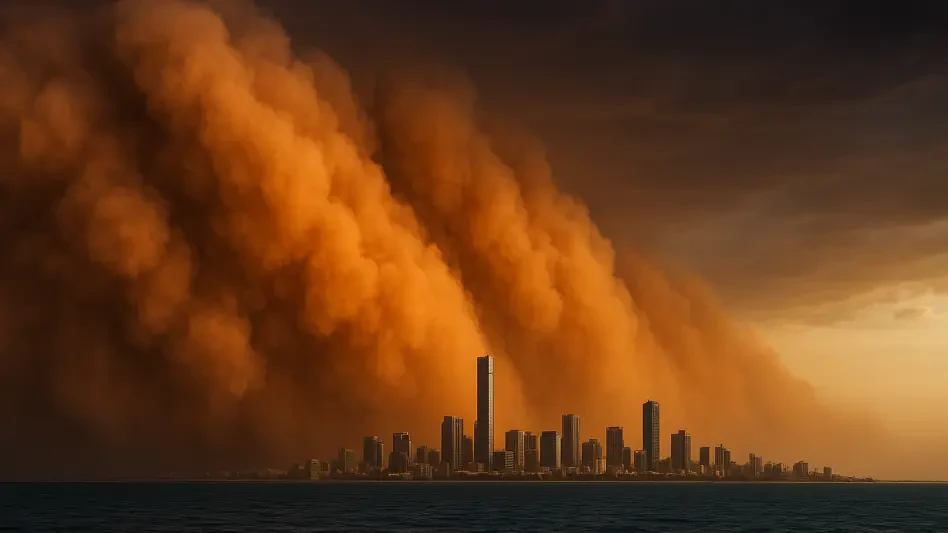
One of the more nuanced findings discussed in recent medical forums is the increasing impact of desert dust on global healthcare systems, particularly in regions far removed from the source. While desertification in North Africa might seem geographically distant, shifts in atmospheric circulation—a direct byproduct of climate change—are carrying massive quantities of Saharan dust across the Mediterranean and into European cities. This is not merely an issue of sand in the air; these dust events represent a complex toxicological threat. As these massive dust clouds travel across industrial zones, refinery plants, and agricultural regions in North Africa and the Middle East, they adsorb a variety of anthropogenic pollutants, heavy metals, and microorganisms. By the time this dust reaches metropolitan centers in Europe, it has become a carrier for lead, arsenic, and pesticide residues. When inhaled, this toxic mixture triggers intense oxidative stress and severe inflammation within the lungs of the local population. Data from 2026 indicates that these dust events are directly correlated with spikes in hospital admissions for both cardiovascular and respiratory emergencies, proving that environmental degradation in one region can quickly manifest as a clinical crisis in another.
Clinical Impacts of Saharan Particulate Matter
The inhalation of desert dust particles presents a unique challenge to clinical respiratory medicine because of the specific inflammatory markers they trigger. Unlike standard urban soot, mineral dust particles are often jagged and carry biological components like fungal spores and bacteria that have survived the trans-Mediterranean journey. These elements provoke a robust immune response that can lead to the sudden onset of asthma-like symptoms in individuals with no prior history of respiratory disease. In patients who already suffer from chronic conditions, the arrival of a dust plume often leads to a rapid decline in peak flow and a higher necessity for rescue inhalers or systemic corticosteroids. Furthermore, the sheer concentration of particulate matter during these events can exceed safe World Health Organization limits by several hundred percent, overwhelming the clearance mechanisms of the lungs. This highlights the reality that climate-driven health risks are truly transboundary and require international cooperation to monitor and mitigate. Effective early-warning systems and public health advisories are becoming essential tools for managing these episodes, as they allow vulnerable individuals to limit their outdoor exposure during peak dust concentrations.
Hydrological Shifts and Flood Related Risks
The relationship between global warming and water is equally hazardous to lung health, driven by the basic physical principle that warmer air holds significantly more moisture. This leads to more frequent and intense rainfall events, which, when combined with rising sea levels and warming oceans, increase the likelihood of catastrophic coastal and river flooding. Experts predict that by 2050, a quarter of the global population will be at risk of significant flooding, but the health impacts are already being felt in 2026. The clinical consequences of flooding are both immediate and long-term. In the short term, floods disrupt the power grids and supply chains necessary for patients who rely on ventilators, nebulizers, or life-saving medications, leading to acute respiratory failure in home-care settings. In the long term, the threat shifts from the water itself to the dampness it leaves behind. When buildings are inundated, they become breeding grounds for a variety of indoor hazards that persist long after the floodwaters have receded. This transition from external environmental threats to internal residential hazards represents a major frontier in modern public health, requiring a focus on building resilience and rapid remediation.
Indoor Pathogens and Post Flood Mold Growth
Within just 48 hours of a flood or major leak, toxic mold can begin to proliferate in a damp home, creating a hazardous indoor environment that is often more dangerous than the outdoor air. The presence of indoor mold is causally linked to both the development of asthma in previously healthy children and the severe exacerbation of symptoms in those already diagnosed with respiratory conditions. These fungal colonies release spores and mycotoxins that can trigger chronic inflammatory responses, leading to persistent coughing, wheezing, and recurring sinus infections. As extreme weather events like flash floods and heavy storms become more common, the prevalence of mold-related respiratory illness is expected to rise sharply, particularly in lower-income areas where housing quality is already subpar. This situation creates a cycle of respiratory ill-health that is difficult to break without significant investment in housing infrastructure and moisture control. Furthermore, the psychological stress associated with property damage and displacement during floods can further weaken the immune system, making individuals more susceptible to respiratory pathogens. Addressing this issue requires a shift in how society views housing, moving from a property-centric perspective to one that prioritizes indoor air quality as a fundamental human right.
Legislative Frameworks and Future Solutions
Urban Emission Control and Air Quality Gains
Despite the grim outlook, successful interventions have provided a roadmap for mitigating the respiratory health crisis through bold legislative action. London’s Ultra Low Emission Zone (ULEZ) serves as a primary example of how targeted policy can yield immediate biological benefits. By charging vehicles that do not meet strict emission standards to enter the city center, the municipality has seen a measurable improvement in the lung function growth of its children. This suggests that localized policy can counteract the negative trends associated with global warming by reducing the baseline of pollution that the population must endure. Similar initiatives are being rolled out across major European and North American cities as of 2026, with data showing that even modest reductions in nitrogen dioxide and PM2.5 levels can lead to fewer hospitalizations and deaths. These zones do more than just clean the air; they also encourage the adoption of electric vehicles and public transit, further reducing the carbon footprint of metropolitan areas. The success of these programs demonstrates that the integration of clinical research with proactive legislation is the most effective way to protect public health in an increasingly volatile climate.
Nature Based Mitigation and Urban Greening
Increasing the green footprint of cities through parks, vertical gardens, and extensive tree canopies is recognized as a vital strategy to counter the urban heat island effect and improve air quality. Urban greening acts as a natural air filtration system, where leaves trap particulate matter and absorb carbon dioxide, while the process of transpiration cools the surrounding air by several degrees. This cooling effect is crucial during extreme heatwaves, as it can reduce the thermal load on buildings and decrease the energy demand for air conditioning, which in turn reduces emissions from power plants. Furthermore, access to green spaces has been shown to improve overall well-being and reduce the symptoms of stress-related respiratory disorders. By 2026, many cities have begun to mandate the inclusion of green roofs and urban forests in all new commercial developments, acknowledging that nature-based solutions are as important as technological ones. These efforts create a buffer against the harshest effects of climate change, providing residents with cooler, cleaner microclimates that protect their respiratory systems from the escalating external heat and pollution.
Legislative Protections for Indoor Environments
In the United Kingdom, the tragic death of a toddler due to chronic mold exposure in social housing led to the creation of Awaab’s Law, which represents a significant shift in recognizing indoor air quality as a public health priority. This legislation mandates that social housing landlords must address reported damp and mold issues within specific, urgent timeframes, often within 24 hours for the most severe cases. As this law enters its full implementation phase through 2026 and 2028, it serves as a model for other nations looking to protect vulnerable populations from the indoor consequences of global warming. By holding property owners legally accountable for the respiratory safety of their tenants, the law shifts the burden of environmental health from the individual to the institution. This legislative approach acknowledges that in a world with increasing hydrological extremes, the safety of the indoor environment is no longer guaranteed and must be actively managed. This trend toward higher housing standards is expected to significantly reduce the incidence of pediatric asthma and chronic respiratory infections in urban centers, proving that legal frameworks are a necessary component of the fight against climate-driven health crises.
A Unified Path for Medicine and Policy
The findings from the ERS Congress underscored a critical reality where the field of respiratory medicine became permanently linked to environmental science. Experts concluded that while individual clinical care remained vital, the most significant improvements in lung health were destined to come from systemic changes. This necessitated a demand for more long-term research into transboundary pollutants and a continued push for policies that reduced urban emissions and improved housing standards. Moving forward, the integration of clinical research with aggressive climate mitigation was seen as the only viable path to protect respiratory health. The collective message from researchers like Professor Zorana Jovanovic Andersen and Dr. Erol Gaillard was clear: the climate had been turned against the human lung, and reversing this trend required a combination of rigorous scientific inquiry and proactive public health legislation. Ultimately, the health of the global population was found to be inextricably linked to the speed and efficacy of the international response to a warming planet. Actionable next steps included the mandatory inclusion of environmental health data in clinical diagnostics and the rapid expansion of emission-free urban zones to preserve the future of global respiratory health.