
Selecting between the path of a physician and that of a dental surgeon at Creighton University involves weighing the merits of two prestigious programs that share a common Jesuit heritage but diverge significantly in their technical demands. As a private Jesuit institution located in Omaha, Nebraska, Creighton University has cultivated a reputation for excellence by grounding its health science education in the philosophy of cura personalis, or care for the whole person. This commitment ensures that students are not merely trained as technicians but as compassionate providers who consider the psychological, social, and spiritual dimensions of their patients. Within this framework, the Creighton University School of Medicine (CUSOM) and the Creighton University School of Dentistry operate as distinct yet complementary pillars of the university’s mission.
The infrastructure supporting these programs is expansive, involving a network of high-tier facilities and strategic partnerships that span across the Midwest and the Southwest. Students in the medical program benefit from affiliations with major healthcare entities such as CHI Health in Omaha and Dignity Health–St. Joseph’s and Valleywise Health in Phoenix. Meanwhile, the CL and Rachel Werner Center for Health Sciences Education stands as a state-of-the-art hub for interprofessional learning, providing a centralized location where medical and dental students can refine their skills. These facilities are designed to foster clinical excellence and a service-oriented mindset, ensuring that graduates are practice-ready from the moment they complete their degrees.
In the competitive landscape of 2026, Creighton distinguishes itself from secular and state-funded universities by maintaining a curriculum that prioritizes humanistic care alongside technical proficiency. While state schools often focus on high-volume throughput, the Creighton health science programs leverage their institutional history and regional partnerships to offer a more personalized, mission-driven experience. This approach has allowed the university to produce healthcare professionals who are highly sought after by residency directors and private practices alike, reinforcing the value of a private Jesuit education in an increasingly complex medical environment.
Foundations of Creighton University’s Health Science Programs
The cornerstone of Creighton’s health science programs is the deep-seated Jesuit tradition that informs every aspect of the curriculum. This foundation is not merely a historical footnote but a living philosophy that encourages students to see their professional work as a form of service to the marginalized. At both the School of Medicine and the School of Dentistry, the emphasis on cura personalis manifests in mandatory service-learning components and a culture that values collaboration over internal competition. This environment is particularly attractive to students who seek a sense of purpose beyond the clinical mechanics of their chosen field.
Supporting this mission is a massive clinical infrastructure that connects students with diverse patient populations across multiple states. The Creighton University School of Medicine utilizes its dual-campus model to provide students with exposure to both the traditional Midwestern healthcare landscape of Omaha and the high-growth, metropolitan environment of Phoenix. Through partnerships with Dignity Health and Valleywise Health, medical students encounter a wide array of pathological conditions and socioeconomic factors. Simultaneously, the dental school operates as a clinical powerhouse within the Omaha community, providing essential services to thousands of patients while ensuring that students gain the hands-on experience necessary for clinical mastery.
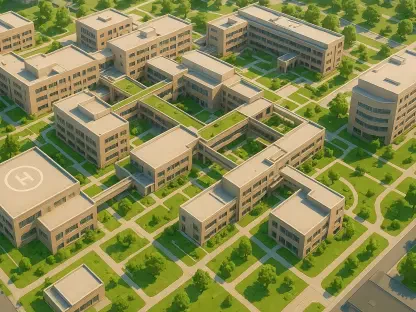
The recent opening of the 145,000-square-foot CL and Rachel Werner Center for Health Sciences Education has further unified these programs. By offering high-fidelity simulation labs and advanced skills facilities, the Werner Center serves as a bridge between theory and practice. This facility allows medical and dental students to engage in collaborative exercises that mimic real-world healthcare scenarios, preparing them for the multidisciplinary nature of modern medicine. By investing in such sophisticated infrastructure, Creighton reaffirms its commitment to producing healthcare leaders who are as technically skilled as they are empathetic.
Evaluating Academic Standards, Clinical Exposure, and Outcomes
Admissions Rigor and Student Profiles
The admissions process for the Creighton University School of Medicine is characterized by extreme selectivity, reflecting its standing as a premier MD program in the United States. For the current application cycle, the school received over 7,200 applications for a limited number of seats, resulting in a narrow interview rate of approximately 13.8%. The academic profile of the successful applicant is nothing short of elite, with the median MCAT score holding at 512 and the median cumulative GPA reaching 3.88. These benchmarks suggest that while the school maintains a minimum MCAT threshold of 500, a truly competitive candidate must demonstrate a high level of academic excellence and a well-rounded background in both the hard and behavioral sciences.
In contrast, the Creighton University School of Dentistry emphasizes a unique set of performance metrics that focus heavily on manual dexterity and the potential for technical mastery. One of the most significant indicators of the program’s quality is its 6-to-1 student-to-faculty ratio, which is considerably more intimate than many of its competitors. This ratio ensures that dental students receive personalized mentorship from the earliest stages of their education, a factor that is critical for developing the fine motor skills required for complex restorative and surgical procedures. While the academic prerequisites remain high, the dental program places a premium on the “chairside” manner and the practical ability to perform under the direct supervision of experienced faculty.
Admissions committees at both schools also look for evidence of the Jesuit mission in their applicants’ backgrounds. A history of community service, leadership in altruistic organizations, and a demonstrated commitment to serving underserved populations can often be the deciding factor for an applicant who meets the academic thresholds. This holistic review process ensures that the student body is composed of individuals who not only have the intellect to succeed in a rigorous curriculum but also the heart to carry out the university’s mission of service and compassion.
Clinical Training Infrastructure and Regional Scope
Creighton’s medical program has undergone a significant geographic expansion, effectively transforming it into a national entity through its dual-campus model. The Omaha campus remains the heart of the institution, offering a traditional academic environment with deep roots in Nebraska’s healthcare system through CHI Health. However, the Phoenix campus has quickly become a major draw for students seeking an urban clinical experience. By rotating through high-volume hospitals like Dignity Health–St. Joseph’s, medical students gain unparalleled exposure to emergency medicine, trauma care, and diverse urban pathologies. The 145,000-square-foot Werner Center further enhances this training by providing a space for high-fidelity simulations that allow students to practice life-saving maneuvers in a risk-free environment.
The School of Dentistry maintains a similarly impressive clinical footprint, though its model is focused more on high patient volume and advanced technology within a concentrated geographic area. The dental clinic in Omaha is a primary provider for the region, serving approximately 4,300 pediatric patients annually. This volume ensures that Creighton dental graduates often complete their degree with significantly more clinical hours than the national average. To prepare students for the modern era of dentistry, the school has integrated advanced digital tools such as CAD/CAM systems, cone-beam CT scanners, and digital simulation laboratories. These tools allow students to master the latest techniques in digital impressions and restorative design before they even enter private practice.
Furthermore, the dental school utilizes an extensive community-based extramural model that sends fourth-year students to seven different states. These externships take place in federally qualified health centers, private practices, and tribal clinics, offering students a realistic view of public health and rural dentistry. This exposure is invaluable for developing clinical confidence, as students are often tasked with performing a wide range of procedures—from routine fillings to complex extractions—in environments where they are the primary providers. This regional scope not only fulfills the Jesuit mission of service but also prepares students for the diverse logistical challenges of a career in oral health.
Professional Success and Career Placement Metrics
One of the primary benchmarks of success for the School of Medicine is its consistently high residency match rate. In the most recent graduating class, nearly 100% of students secured residency or research fellowships, with an impressive 95% matching into one of their top-choice specialties. This performance is a testament to how residency program directors across the country perceive the Creighton brand. Graduates have secured prestigious placements at world-renowned institutions such as the Mayo Clinic, Johns Hopkins, and Stanford. Whether a student is pursuing a primary care path or a highly competitive surgical subspecialty like neurosurgery or plastic surgery, the Creighton MD provides a robust foundation that is recognized globally for its clinical rigor.
The School of Dentistry, while focusing on a different career trajectory, achieves a similar level of “clinical supremacy” in its outcomes. Because of the high volume of procedures performed during their four years of training, Creighton dental graduates are widely considered to be among the most practice-ready in the nation. Many go directly into private practice or high-level associateships without the need for a General Practice Residency (GPR), a significant advantage for those looking to begin their professional careers immediately. For those who do choose to specialize, the foundation laid at Creighton makes them highly competitive for programs in orthodontics, oral surgery, and endodontics.
Both programs benefit from an influential and active alumni network that spans all fifty states. This network provides a vital bridge for current students as they navigate the transition from academia to professional life. The Jesuit mission-driven curriculum acts as a professional differentiator, as employers and residency directors often associate Creighton graduates with a higher level of empathy and a stronger work ethic. This reputation for excellence in clinical care and community outreach ensures that regardless of the specific path chosen, a Creighton degree carries significant weight in the competitive health sciences marketplace of 2026.
Practical Challenges and Strategic Considerations
Despite the clear benefits of a Creighton education, the financial reality of attending a private health sciences school is a significant hurdle. For the 2026-2027 academic year, the total cost of attendance for a first-year medical student is estimated to exceed $121,000, with tuition alone accounting for more than $70,000 of that figure. The dental program is even more expensive, particularly in the final years; the fourth-year cost of attendance can reach approximately $144,000 when including tuition, fees, and equipment costs. These numbers represent a staggering financial investment that often results in significant student debt, necessitating a careful analysis of the long-term return on investment (ROI).
Another consideration for prospective students is the institution’s primary focus on clinical training rather than high-level biomedical research. While Creighton offers research opportunities and has made strides in expanding its scientific footprint, it does not currently operate as a global research powerhouse in the same vein as NIH-funded institutions like UCSF or Harvard. For a student whose primary ambition is to become a lead investigator in a major laboratory or a physician-scientist at a top-tier research university, the more modest research ecosystem at Creighton might be a limitation. However, for those who prioritize hands-on patient care and clinical proficiency, this “limitation” is actually a strength, as faculty attention is focused squarely on teaching and mentorship.
Geographic considerations also play a major role in the decision-making process for medical students. The choice between the Omaha and Phoenix campuses involves more than just a change in climate; it dictates the type of healthcare system a student will navigate for the duration of their clinical years. Omaha offers a more traditional campus feel with a lower cost of living, which can help mitigate some of the financial burden. Conversely, Phoenix provides a high-growth, metropolitan environment with a focus on urban health and diverse patient populations. Meanwhile, dental students must be prepared for the technical difficulties and manual dexterity demands that are inherent to the field. Dentistry requires a level of physical stamina and precision that is often more immediate and intense than the diagnostic work typically found in the early stages of a medical career.
Final Verdict: Choosing Between Creighton Medicine and Dentistry
The choice between Creighton Medicine and Creighton Dentistry ultimately depended on the specific career goals and personal strengths of the applicant. Those who sought a traditional path toward high-level medical specialties found the School of Medicine to be an unparalleled launchpad. The school’s residency match power was its most compelling argument, as the 95% top-choice match rate proved that Creighton students could compete for the most coveted positions at institutions like the Mayo Clinic. For students who were comfortable with the broad diagnostic scope of medicine and the potential for a lengthy residency, the medical program offered a prestigious and well-supported route to professional success.
In contrast, the dental program was the superior choice for students who prioritized immediate clinical confidence and a “hands-on” professional life. The sheer volume of patient interactions, highlighted by the 4,300 pediatric patients treated annually, ensured that graduates possessed a level of manual dexterity and procedural experience that was rare in other programs. For those who wanted to enter private practice immediately and were excited by the prospect of utilizing digital technologies like CAD/CAM and cone-beam CT, the dental school provided a direct and high-ROI path. The 6-to-1 faculty ratio offered a level of technical mentorship that made the transition to independent practice much smoother for dental students than the often-fragmented training found elsewhere.
Prospective students also had to reconcile the high debt burden associated with a private Jesuit education. While the $121,000 to $144,000 annual costs were daunting, the long-term benefits of the “Creighton brand” and the institution’s commitment to cura personalis provided a unique value proposition. Students evaluated their decision based on whether they preferred the diagnostic breadth and institutional prestige of the medical school or the technical supremacy and immediate practice readiness of the dental school. Ultimately, the successful candidates were those who aligned their personal mission with the university’s service-oriented philosophy, ensuring that their investment led to a fulfilling career in health sciences. Moving forward, applicants should focus on securing early clinical exposure and exploring scholarship opportunities to manage the significant financial commitments required for these elite programs.