
The sight of a fixed-wing autonomous aircraft silhouetted against the crimson horizon of the Muhanga district signifies far more than a mere technological achievement; it represents a fundamental recalibration of how a nation bypasses physical geography to preserve human life. Rwanda, a nation characterized by its undulating terrain and dense volcanic peaks, has moved beyond the experimental phase of aerial logistics to establish a functional, national-scale drone delivery network. This transformation is not merely about the novelty of unmanned aerial vehicles but about a systemic overhaul of the medical supply chain in a region where traditional road infrastructure often fails during the torrential rainy seasons. The strategic integration of robotics into the public health sector has positioned the country as a global laboratory for last-mile delivery solutions, offering a glimpse into a future where the constraints of the earth no longer dictate the availability of life-saving medicine.
At the core of this transition is a sophisticated partnership between the Rwandan government and the private sector, specifically the American aerospace company Zipline. This collaboration has moved the country away from a reactive, emergency-only model toward a proactive pharmaceutical distribution system that treats the sky as a primary transit corridor. While traditional ground transport in the rural hinterlands can take hours or even days to navigate flooded or unpaved paths, autonomous drones complete these missions in a fraction of the time. This shift addresses the chronic “last-mile” delivery problem, ensuring that the distance between a central warehouse and a remote clinic is no longer measured in treacherous miles, but in minutes of flight.
Transforming the Land of a Thousand Hills: Rwanda’s Aerial Logistics Revolution
The current state of Rwanda’s health sector is defined by a bold commitment to technological sovereignty, as the nation has effectively leapfrogged traditional development stages to embrace a digitized aerial infrastructure. The rugged topography that once isolated rural communities now serves as the impetus for an autonomous logistics revolution that serves millions of citizens. By utilizing a fleet of battery-powered drones, the Ministry of Health has successfully decentralized access to critical medical assets, ranging from emergency blood units to various vaccines. This pioneering integration of unmanned aerial vehicles into the national health framework has created a model that many other developing nations are now attempting to replicate.
The strategic partnership with Zipline operates on a performance-based service contract, which ensures that the government only pays for successful deliveries rather than the maintenance of the technology itself. This business model has allowed Rwanda to maintain a high standard of medical logistics without the massive upfront capital expenditures typically required for state-owned high-tech projects. The efficiency of this arrangement is evident in the streamlined communication between rural health outposts and central distribution hubs. When a medical professional at a remote site identifies a need, they can trigger a fulfillment process via mobile communication that results in an aircraft launch within minutes, bypassing the logistical bottlenecks of the traditional procurement cycle.
Rugged terrain and unpredictable weather patterns necessitated a departure from the historical reliance on ground-based ambulances and trucks. In the mountainous western provinces, a sudden hemorrhage during childbirth or a critical injury in a remote village could easily become a death sentence if the necessary blood type or surgical supplies were locked in a warehouse in the capital. The autonomous flight system effectively flattens the national geography, providing a consistent level of care regardless of a patient’s proximity to a major urban center. This aerial bridge ensures that the quality of healthcare is determined by medical need rather than the quality of the local road network.
Navigating the New Frontier of Medical Delivery and Market Expansion
Emerging Trends in Autonomous Supply Chains and Last-Mile Innovation
The evolution of drones from niche emergency tools to foundational pillars of the national pharmaceutical supply chain represents a significant shift in the broader logistics industry. No longer are these aircraft reserved for rare, life-or-death scenarios; they are now the primary method for moving routine medical supplies across the country. This normalization of drone technology indicates a maturing market where reliability and frequency have superseded novelty. The supply chain has become a dynamic, real-time ecosystem where inventory management is dictated by immediate local demand rather than rigid, pre-scheduled delivery routes that often lead to waste or stockouts.
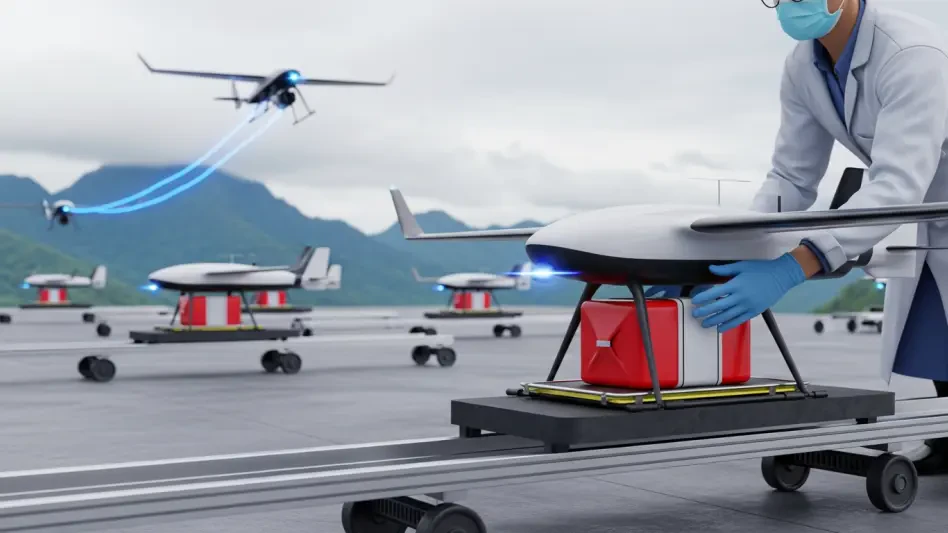
Technological advancements in artificial intelligence and navigation have been central to this market expansion. Modern drones in the Rwandan fleet are equipped with sophisticated sensors and AI-driven navigation systems that allow for independent obstacle avoidance and real-time flight path adjustments based on weather data. These aircraft do not require a pilot on the ground; instead, they operate on a fully autonomous loop, from launch to the precision-drop of a package and the eventual recovery via a specialized landing system. This level of autonomy allows for a high operational tempo that would be impossible to manage with traditional remote-piloted systems, making the sky a high-density transit zone for medical goods.
Shifting consumer behaviors among healthcare professionals have further accelerated the adoption of these autonomous systems. Nurses and doctors in rural outposts have moved away from the “stockpiling” mentality, where they would keep large, potentially expiring inventories of supplies on-site for fear of a shortage. Today, they rely on 30-minute delivery windows for everything from anti-venom to insulin. This transition toward a “just-in-time” medical supply chain has improved the freshness and efficacy of medications while reducing the overhead costs associated with managing large, climate-controlled storage facilities in remote areas.
Measuring Success through Statistical Gains and Growth Projections
The performance indicators of the Rwandan drone program offer a compelling data-driven argument for the efficacy of high-tech logistics. One of the most striking statistics is the drastic reduction in maternal mortality rates, which have fallen from nearly 1,000 deaths per 100,000 births in the previous decades to a current low of 87. While several public health initiatives have contributed to this decline, the ability to deliver blood for transfusions within minutes has been a decisive factor in managing postpartum hemorrhages, which were once a leading cause of death in rural clinics. This measurable improvement in patient outcomes has provided the necessary evidence to justify continued investment in autonomous systems.
Growth projections for the sector indicate a trajectory toward total national coverage, with the goal of ensuring that no Rwandan citizen lives more than a short flight away from a medical distribution center. The expansion of the “Zipline model” to other African nations, such as Ghana and Nigeria, suggests that the market for medical drone logistics is entering a period of significant regional growth. Analysts anticipate that as the technology becomes more cost-effective through economies of scale, the cost per delivery will eventually fall below that of traditional van transport, making it an economically superior choice for long-term health infrastructure.
Data-driven insights into operational volume further highlight the scale of this achievement. In current operations, a drone is dispatched from a Rwandan hub roughly every 50 seconds, creating a continuous flow of supplies across the national airspace. This high frequency of flights demonstrates a level of reliability and system uptime that rivals traditional commercial logistics networks. By maintaining such a high volume, the system generates vast amounts of data that can be used to optimize flight paths, predict seasonal spikes in malaria treatments, and further refine the efficiency of the national pharmaceutical distribution network.
The Paradox of Progress: Overcoming the Limitations of High-Tech Solutions
Despite the undeniable success of the aerial delivery system, it exists within a “funding paradox” where high-tech private sector investment sometimes competes for resources with traditional grassroots healthcare. Large-scale grants often gravitate toward high-profile technological solutions that offer visible, quantifiable results, occasionally at the expense of the mundane, foundational services provided by non-governmental organizations. While a drone can deliver a package with surgical precision, it cannot provide the primary care, preventative education, or nutritional support that forms the backbone of a resilient public health system. This tension highlights the need for a balanced approach to investment that recognizes technology as an enhancer of, rather than a replacement for, basic health services.
The challenge of “technological leapfrogging” is particularly evident when examining the physical limitations that drones cannot resolve. An autonomous aircraft can bypass a washed-out road, but it cannot solve the systemic issues caused by a lack of paved infrastructure for the rest of the economy. Similarly, the delivery of high-tech medical supplies is of little use if the receiving clinic lacks reliable electricity to store them or clean water to administer them safely. The reality of rural Rwanda is that while the sky is filled with 21st-century robotics, the ground often lacks the 20th-century basics of civil engineering. Relying too heavily on technology to solve logistical problems risks ignoring the essential need for comprehensive infrastructure development.
Strategies for addressing the human capital deficit must keep pace with technological advancements if the drone program is to be truly effective. Many rural health outposts remain understaffed and lack the diagnostic equipment necessary to identify exactly which supplies need to be ordered via drone. A delivery of blood is only useful if there is a trained professional capable of performing a safe transfusion and managing complications. Therefore, the next phase of development must focus on training medical staff and equipping local clinics with the tools they need to leverage the speed of aerial delivery. Without a skilled human element at both ends of the flight path, the technology remains a sophisticated delivery service for an under-equipped system.
Socioeconomic barriers such as rural poverty and chronic infant malnutrition represent the final frontier that technology alone cannot conquer. For families living in subsistence conditions, the presence of a drone-delivered vaccine is only one part of the health equation. If a mother cannot afford the calories necessary to breastfeed or if a child lacks access to a diverse diet, the medical intervention provided by the drone serves as a temporary fix for a much deeper societal issue. High-tech solutions must be integrated into broader social safety nets that address the root causes of poor health outcomes. Only by combining aerial innovation with economic empowerment and food security can the nation ensure that its technological gains lead to a truly healthy population.
Governing the Skies: The Regulatory Framework and Geopolitical Influence
The role of government oversight in the Rwandan drone sector is a critical component of its success, ensuring that autonomous flight operations meet the highest standards of safety and medical integrity. The Rwanda Civil Aviation Authority has worked closely with international partners to develop a regulatory framework that allows for high-density autonomous operations while maintaining safe separation from traditional manned aircraft. This includes rigorous certification processes for drone operators and strict adherence to pharmaceutical storage standards at the distribution hubs. The government’s ability to act as a proactive regulator rather than a bottleneck has been essential in fostering an environment where innovation can flourish within a secure legal structure.
Shifts in international foreign policy also play a significant role in the sustainability of these high-tech health initiatives. The allocation of substantial grants toward private-sector innovation represents a broader trend in global aid that prioritizes American-led technological solutions. While this provides a surge of capital for expanding drone operations, it also creates a dependency on shifting geopolitical priorities. The focus on high-tech infrastructure can sometimes lead to a reduction in funding for traditional aid organizations that manage the very clinics the drones serve. Balancing these competing interests requires a strategic diplomatic approach that ensures international aid remains holistic and supportive of all layers of the health system.
Compliance and security measures are paramount when operating a large fleet of autonomous aircraft in a national airspace. Each drone flight is monitored in real-time, and the systems are designed with multiple redundancies to ensure that a technical failure does not result in a safety hazard for the population below. Furthermore, the security of the medical supplies must be maintained from the warehouse to the drop point, requiring a chain of custody that is both digital and physical. These measures are necessary not only for operational safety but also to maintain public trust in a technology that could easily be perceived as intrusive or dangerous if not managed with total transparency.
The tension between international aid cuts for grassroots organizations and the prioritization of high-tech infrastructure remains a central theme in the governance of Rwanda’s health sector. As global donors move toward “impact-driven” investments, there is a risk that the essential but less visible work of community health workers and rural educators will be sidelined. Effective governance requires a commitment to ensuring that the arrival of a drone at a rural clinic is matched by the presence of a well-paid nurse and a functional facility. The Rwandan model’s long-term viability depends on the government’s ability to harmonize these high-tech investments with a robust, traditional public health foundation.
Mapping the Horizon: The Next Phase of Global Health Technology
Rwanda is currently on a trajectory to become the first nation in the world with 100% drone-based medical coverage, a milestone that would mark the completion of its aerial logistics roadmap. This goal involves not only adding more distribution hubs but also increasing the capacity of the drones to carry heavier and more complex payloads. The achievement of universal coverage would eliminate the concept of “remoteness” in the context of healthcare, creating a standardized level of service for every citizen regardless of their location. This accomplishment would serve as a powerful proof of concept for other landlocked or mountainous nations seeking to solve similar logistical challenges through autonomous technology.
Emerging market disruptors are already beginning to explore the potential for drone-based home delivery of medications for chronic illnesses. This shift would represent a move from clinic-to-clinic delivery to a direct-to-patient model, further reducing the burden on rural families who must currently travel long distances to collect their prescriptions. For patients managing life-long conditions like HIV or hypertension, home delivery could significantly improve treatment adherence and overall health outcomes. This evolution would require even more sophisticated navigation and landing systems, as well as new protocols for patient privacy and secure medication handling at the household level.
Future growth areas in AI-integrated diagnostics could complement aerial delivery systems, creating an end-to-end digital health experience. Imagine a scenario where a patient uses a mobile-connected diagnostic tool to identify an illness, and the data is analyzed by an AI system that then automatically triggers a drone delivery of the necessary medication. This level of integration would transform the healthcare system into a proactive, data-driven network that can respond to health crises before they escalate. By combining the speed of the drone with the intelligence of advanced diagnostics, Rwanda could lead the way in creating a truly modern, decentralized healthcare model.
Global economic conditions and Rwanda’s growing logistical expertise suggest that the nation could soon begin exporting its knowledge to neighboring regions. As a pioneer in the field, the Rwandan government and its domestic tech partners have gained invaluable experience in managing complex autonomous systems within a developing world context. This expertise is a valuable commodity that can be used to help other nations in East Africa and beyond establish their own aerial supply chains. By positioning itself as a regional hub for drone technology and training, Rwanda has the potential to turn its domestic health success into a significant economic driver for the entire region.
Final Verdict: Balancing Innovation with Foundational Public Health Needs
The integration of unmanned aerial systems transformed the Rwandan medical landscape by providing a reliable bridge over the country’s most challenging geographical barriers. These autonomous flights proved to be a decisive factor in lowering maternal mortality and ensuring that emergency blood supplies reached the most isolated corners of the nation within minutes. The technological framework established a new standard for logistical efficiency, demonstrating that a commitment to innovation could yield immediate and measurable lives saved. This progress confirmed that the sky could indeed be used as a vital artery for public health, bypassing the limitations of an underdeveloped ground infrastructure.
However, the expansion of this high-tech network revealed that technology functioned best as an enhancement of, rather than a substitute for, the traditional foundations of healthcare. The reliance on drones highlighted the critical need for a parallel investment in human capital and physical infrastructure to ensure that the delivered supplies were used effectively. The limitations faced by rural clinics, such as the lack of diagnostic equipment and trained staff, underscored the reality that a package dropped from the sky only reached its full potential when received by a well-equipped medical professional. This realization shifted the focus toward a more integrated strategy that valued both the high-tech delivery mechanism and the grassroots human element.
The sustainability of the Rwandan model depended on a sophisticated approach to governance and international cooperation. The shifts in global aid priorities and the focus on private-sector innovation provided the necessary capital for growth but also introduced a new set of risks regarding the funding of basic health services. The transition toward universal drone coverage served as a global blueprint, but it also functioned as a reminder that technological “leapfrogging” must be accompanied by a steady climb in foundational social services. The ultimate success of the program was not found in the drones themselves, but in the system’s ability to use that technology to build a more equitable and resilient health future for all citizens.