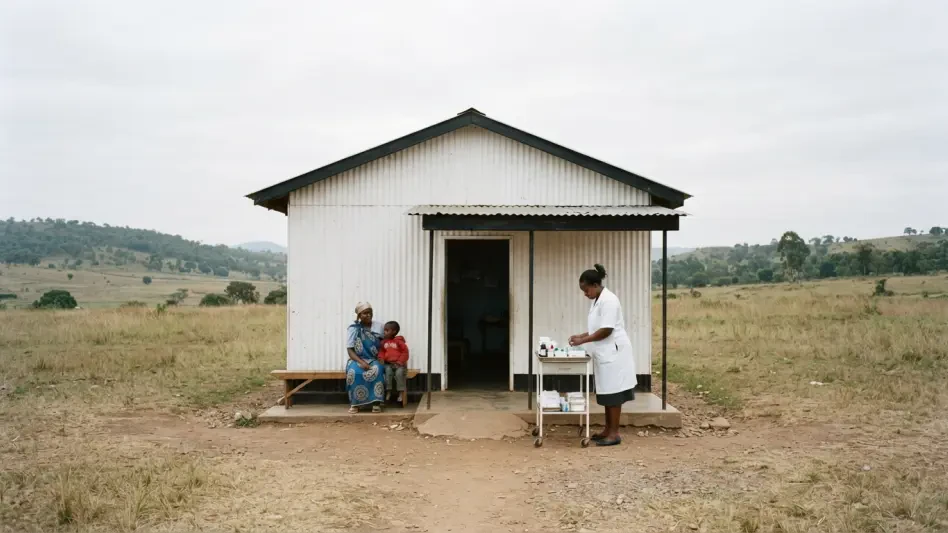

While primary healthcare is the most efficient level of medical service, nearly half of its funding in Laos depends on volatile international subsidies rather than domestic revenue. This precarious financial state currently defines the nation’s journey toward achieving Universal Health Coverage by 2030, a milestone that remains vulnerable to global economic shifts and changing donor priorities. As of 2026, the government is moving forward with a strategic “New Compact” framework designed to reconcile the gap between ambitious health targets and the reality of a fragmented financing landscape. This roadmap is a response to years of uncoordinated international aid and a history of domestic underinvestment that has left the health system struggling to maintain equity across its diverse provinces. By establishing a structured transition plan, the Ministry of Health aims to move away from reactive budgeting toward a proactive, evidence-based system that can withstand macroeconomic volatility and currency depreciation. The success of this initiative is vital for a population where 16 percent of citizens still live below the poverty line and where access to quality medical services often depends on geographic location. This new framework represents more than just a policy adjustment; it is a fundamental shift in how the nation values and funds the well-being of its nearly eight million residents.
Financial Architecture and Poverty Challenges
The macroeconomic environment of Laos presents a significant hurdle for health financing, as the nation balances its lower-middle-income status with some of the highest maternal mortality rates in Southeast Asia. Current data reveals that total health expenditure remains low at approximately 2.4 percent of the gross national product, which translates to roughly 4.7 trillion Lao kip. More concerning is the composition of this spending, which reveals a heavy reliance on external development partners who contribute nearly 40 percent of the total budget. This external dependency creates a fragile ecosystem where vital health programs are subject to the budgeting cycles of foreign governments and international organizations. When combined with the fact that social health insurance covers only a small fraction of the population, the financial burden inevitably falls on individual households. These families are often forced to pay for services out of their own pockets, a practice that accounts for more than 30 percent of all health spending and frequently pushes vulnerable communities deeper into poverty when medical emergencies strike.
Furthermore, the disconnect between official government targets and actual fiscal performance highlights a systemic challenge in resource mobilization. While the national goal for domestic health spending is set at nine percent of the total government budget, the actual allocation has hovered closer to 3.5 percent in recent cycles. This shortfall limits the state’s ability to provide a comprehensive safety net, leaving many essential services underfunded or entirely unavailable in rural regions. The “New Compact” framework seeks to address this by identifying ways to increase domestic revenue through more efficient tax collection and the exploration of innovative financing mechanisms. Without a significant increase in the domestic share of health spending, the nation remains at risk of seeing its health indicators stagnate or regress as international donors gradually transition their support toward other emerging global crises. Strengthening the domestic financial pillar is not merely an economic necessity but a moral imperative to ensure that the promise of universal coverage becomes a reality for every citizen, regardless of their financial standing.
Operational Deficits and Governance Friction
The internal distribution of existing health funds reveals a system that is heavily skewed toward immediate operational needs rather than long-term infrastructure development. Currently, nearly 93 percent of health spending is consumed by recurrent costs, such as salaries and basic supplies, leaving a negligible amount for capital investments or the modernization of medical facilities. This imbalance is particularly visible in the primary healthcare sector, which serves as the first point of contact for the 60 percent of the population living in rural and remote areas. Although more than half of current health spending is directed toward primary care, the sustainability of these services is in jeopardy because nearly 48 percent of this specific funding comes from international subsidies. The potential withdrawal of this foreign aid would create an immediate vacuum in frontline services, likely resulting in a collapse of routine immunization and maternal health outreach programs that have been the backbone of rural health improvements over the last decade.
Governance challenges further complicate the effective use of limited resources, often stemming from a multi-tiered administrative structure that creates friction between central planning and local execution. While the Ministry of Health is responsible for setting technical standards and national priorities, provincial governors hold significant statutory authority over how budgets are actually allocated within their jurisdictions. This decentralization frequently leads to scenarios where health funds are diverted to other sectors deemed more urgent by local leadership, or where budgets are distributed based on historical precedent rather than current epidemiological data. Such incremental budgeting fails to account for the shifting disease burden or the specific needs of impoverished districts. The government is now looking to reform these administrative bottlenecks by improving coordination between the Ministry of Finance and provincial authorities, ensuring that health allocations are protected and used specifically for their intended purposes to maximize the impact of every kip spent.
Evidence-Based Prioritization and Service Packages
A central component of the national strategy involves the Essential Health Services Package, which was updated recently to include 100 core medical interventions. However, the implementation of this package remains largely theoretical for many providers due to an annual funding gap estimated at 53 million dollars. Historically, these service packages were developed without rigorous economic evaluations, leading to a system that often prioritized expensive, hospital-based curative care over more cost-effective preventive measures. For instance, data analysis shows a massive disparity in value; neonatal resuscitation costs only a few dollars per healthy year of life gained, while complex therapies for chronic conditions can cost thousands of dollars for the same outcome. Despite these clear differences in impact, the national health insurance scheme has not consistently linked its reimbursements to cost-effectiveness, allowing resources to flow toward secondary and tertiary facilities at the expense of community-level health centers.
To correct these misalignments, the government has moved to institutionalize Health Technology Assessment through the Unit for Health Evidence and Policy. This new focus on evidence-informed decision-making allows the Ministry of Health to evaluate which treatments and technologies provide the best outcomes for the population at the lowest cost. This shift is particularly critical as the country navigates the transition away from donor-supported vaccine programs and other vertical health initiatives. By applying these methodologies, Laos can prioritize the most impactful interventions within its limited budget, ensuring that the Essential Health Services Package is not just a list on paper but a funded reality. The goal is to move toward a value-based healthcare model where resources are allocated to programs that prevent disease and reduce the need for expensive hospital stays, thereby creating a more sustainable and efficient system for the long term.
Strategic Reforms and Resource Allocation
The “New Compact” framework introduces a fundamental change in how domestic resources are allocated across the country, moving away from outdated incremental budgeting models. In the past, provinces often received funding based on what they were given in the previous year, regardless of whether their population had grown or their health needs had changed. The proposed shift toward a needs-based formula aims to rectify this by incorporating variables such as poverty levels, geographic remoteness, and specific provincial disease burdens into the allocation process. This ensures that funding follows the patient rather than administrative history, providing additional support to provinces that face the greatest challenges in service delivery. By making the distribution of health resources more equitable, the government hopes to reduce the stark disparities in health outcomes that currently exist between urban centers and remote mountainous regions.
In tandem with these domestic reforms, the framework emphasizes the harmonization of international donor aid to reduce the fragmentation that has long plagued the health sector. For years, international partners have funded siloed programs that focused on specific diseases, often creating redundant administrative structures and placing a heavy reporting burden on the Ministry of Health. The new approach encourages donors to move toward pooled funding and sector-wide strategies that align directly with national priorities. By integrating these external contributions into the national budget, the government can improve transparency and oversight, ensuring that donor money supports the overall health system rather than just isolated projects. This integration is essential for building a resilient infrastructure that can continue to function effectively even as the nature of international assistance evolves over the next several years.
Human Resources and Infrastructure Bottlenecks
Beyond the complexities of financing, the health system faces severe physical and human resource constraints that limit the effectiveness of any fiscal reform. As of 2026, the density of health workers in Laos remains at approximately 1.23 per 1,000 people, a figure that is significantly below global recommendations for achieving universal coverage. Recent economic pressures have led to cuts in public recruitment quotas, leaving many facilities understaffed and existing workers overextended. While digital tools like the DHIS 2 platform have improved the collection of health data, the absence of a specialized tracking system for insurance claims makes it difficult for the government to monitor how services are being utilized and where financial leaks might be occurring. Without a robust and well-trained workforce, even the most advanced financing frameworks will struggle to deliver quality care to the people who need it most.
Infrastructure and supply chain issues also continue to erode public trust in the state health system, particularly at the village level where medicine stockouts are common. When patients travel long distances to a clinic only to find that basic medications are unavailable, they are more likely to seek expensive private care or forgo treatment altogether. Furthermore, the recent trend toward autonomous hospitals, which allows some facilities to generate their own revenue, presents a double-edged sword. While this provides some hospitals with the flexibility to improve their services, it also carries the risk of encouraging over-servicing and increasing out-of-pocket costs for patients as facilities prioritize revenue-generating procedures. Balancing the need for facility autonomy with the requirement to protect the poor is a delicate task that requires strong regulatory oversight and a clear commitment to the principles of equity that underpin the universal health coverage goal.
Future Pathways and Administrative Reforms
The management of the transition away from external aid stood as one of the most critical objectives for the government as it implemented the New Compact. Historically, outreach services for remote ethnic communities relied almost exclusively on funding from organizations like the Global Fund and Gavi. The government recognized that a sudden cessation of this support would have led to an immediate decline in maternal and child health indicators. Consequently, the framework established synchronized timelines and programmatic sustainability metrics that allowed the domestic budget to gradually absorb these operational costs. This structured withdrawal ensured that the progress made in disease prevention was not lost during the shift toward self-sufficiency. By planning these transitions years in advance, the Ministry of Health secured a more stable path forward for the country’s most vulnerable populations.
Administrative integration also played a vital role in streamlining the national health response and improving financial oversight. The merger of the planning and finance departments within the central government simplified capital planning, while the consolidation of maternal and nutrition centers reduced the departmental silos that previously hindered service delivery. Furthermore, the relocation of the National Health Insurance administration to the National Social Security Bureau was a strategic move intended to professionalize financial management and reduce fraud. These reforms collectively moved the nation toward a system that was domestically led and primary care-focused. The government effectively demonstrated that through political will and the application of evidence-based policies, it was possible to bridge the funding gap and prioritize the health of all citizens. These actions laid the necessary foundation for a resilient health system capable of achieving its long-term objectives.