
Faisal Zain stands at the forefront of medical technology, bringing years of expertise in the development and manufacturing of innovative diagnostic and treatment devices. As a specialist who has watched the evolution of biotechnology from the inside, he offers a unique perspective on the shifting paradigms of drug discovery. Today, we sit down with him to discuss the remarkable rise of Parabilis Medicines, a company that has recently captured the market’s attention with its record-breaking $745 million IPO. Our conversation explores the technical ingenuity behind “drugging the undruggable” proteins, the clinical success of their lead candidate zolucatetide, and the strategic financial moves that are reshaping the biotech landscape through 2029. We delve into how nature-inspired alpha helix structures and artificial intelligence are finally cracking the code on complex diseases like desmoid tumors and familial adenomatous polyposis.
Many existing drugs struggle to interact with intracellular proteins that have flat surfaces. How do alpha-helix peptides, or Helicons, overcome these structural hurdles to reach targets that were once considered unreachable?
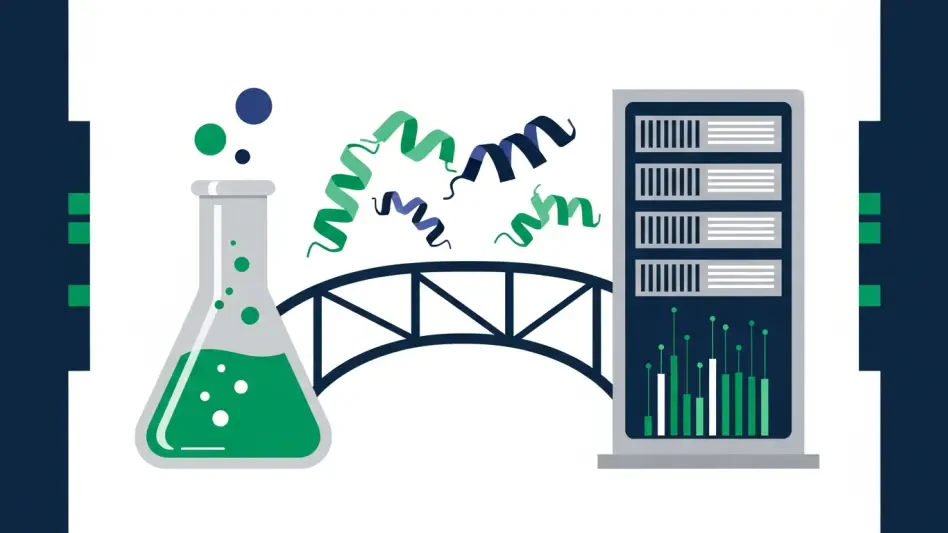
Traditional drug discovery has long been trapped between two limitations: small molecules can enter cells but lack the surface area to bind to flat proteins, while large antibodies can bind to flat surfaces but are too bulky to get inside the cell. Helicons represent a “peptide with a literal twist,” utilizing a spiral-shaped alpha helix structure inspired by how nature naturally moves proteins across membranes. By engineering these stabilized spirals, the team has created a modality that combines the surgical precision of a biologic with the intracellular access and tunability of a small molecule. This specific shape allows the drug to sit flush against the flat surfaces of disease-driving proteins, effectively “locking” onto them in ways a standard molecule never could. Using a proprietary platform, they can integrate ligands at multiple positions to fine-tune potency and selectivity, essentially turning a once-impossible target into a manageable one.
Looking at the lead drug candidate, zolucatetide, what makes its approach to treating desmoid tumors so distinct from current FDA-approved therapies, particularly regarding patient outcomes and safety?
Current treatments, specifically the oral small molecule Ogsiveo, often come with a heavy burden of side effects that can significantly diminish a patient’s quality of life. In clinical trials for Ogsiveo, a staggering 75% of female participants experienced ovarian dysfunction, alongside frequent reports of severe diarrhea and rashes. Zolucatetide offers a much more targeted approach by inhibiting a specific part of the Wnt/beta-catenin signaling pathway, which is the primary driver behind these connective tissue tumors. The early data is incredibly promising; in a Phase 1/2 study of 38 participants, all 25 evaluable patients showed tumor reductions by late February. Among those who received at least two scans, 74% achieved an objective response, defined as a 30% or greater reduction, and one patient even showed a complete response. Perhaps most importantly for the patients, the drug has been safe and well-tolerated, with no one having to discontinue the study due to treatment-related adverse events.
The financial success of this IPO—raising a total of $745 million—is a massive milestone. How does this influx of capital, combined with the strategic partnership with Regeneron, shape the company’s trajectory over the next few years?
This level of funding is almost unprecedented in the current market, especially seeing the deal size boosted twice in a single day before pricing at $20 per share for 33.5 million shares. When you combine the $670 million from the IPO with the $75 million private placement from Regeneron, the company has secured a dominant financial position that supports operations into the second half of 2029. They have a very disciplined spending plan, allocating $150 million to push zolucatetide through its Phase 3 trial in desmoid tumors and another $120 million for other clinical indications. Additionally, they have budgeted $190 million to advance the rest of their pipeline, which includes candidates for liver and colorectal cancers. The partnership with Regeneron is particularly strategic, as it focuses on developing a new class called Antibody Helicon Conjugates, merging two powerful technologies to tackle even more “undruggable” targets.
How has the integration of artificial intelligence and machine learning within the Helicon discovery platform accelerated the identification of these elusive protein targets?
The discovery platform is the engine behind the entire operation, evolving from the foundational research of Harvard professor Greg Verdine into a sophisticated computational tool. By utilizing artificial intelligence and machine learning, the platform can rapidly scan and identify proteins that are structurally amenable to the Helicon approach, which used to take years of manual labor. It doesn’t just find the targets; it actually designs the Helicon sequences to ensure they have the exact pharmacologic properties needed to remain stable inside the human body. This allows for a much higher level of “tunability,” where researchers can adjust the selectivity of a drug to avoid off-target effects that often plague traditional therapies. This transition from “discovery by chance” to “discovery by design” is what allowed the company to grow from its formation in 2015 to a multi-billion dollar public entity with a highly de-risked clinical pipeline.
Beyond desmoid tumors, where else do you see this technology making a significant impact, and what are the next milestones we should look for in the clinical pipeline?
The potential applications are broad because the Wnt/beta-catenin pathway regulates cell proliferation and differentiation across many different tissues. We are already seeing zolucatetide being evaluated for familial adenomatous polyposis (FAP), a rare condition where precancerous polyps form in the GI tract, and for which there are currently no FDA-approved therapies. The pipeline also includes two preclinical Helicons specifically designed for prostate cancer, as well as ongoing evaluations for liver and colorectal cancers. Investors and patients should keep a close eye on the first half of 2027, which is when the Phase 3 pivotal test for desmoid tumors is expected to begin. This will be the ultimate proving ground for whether this new modality can become a standard of care in oncology and rare disease treatment.
What is your forecast for the biotech IPO market following this record-breaking launch?
The success of this $745 million haul is a clear signal that the “biotech window” has reopened, but it is doing so with a much higher bar for quality than we saw during the pandemic era. We are moving away from a market driven by hype and toward one that rewards mature, de-risked companies with clear regulatory paths and solid Phase 1/2 data. Following the $625 million raised by Kailera in April, this latest IPO sets a new high mark, suggesting that Wall Street is once again welcoming biotechs that can demonstrate both technical innovation and clinical safety. I expect the 2026 and 2027 cohorts to follow this lead, focusing on sophisticated modalities like Helicons that address “undruggable” targets with proven efficacy. The backlog of high-quality companies that built up during the recent funding downturn is finally reaching the public eye, and that is a very healthy sign for the future of medical technology.