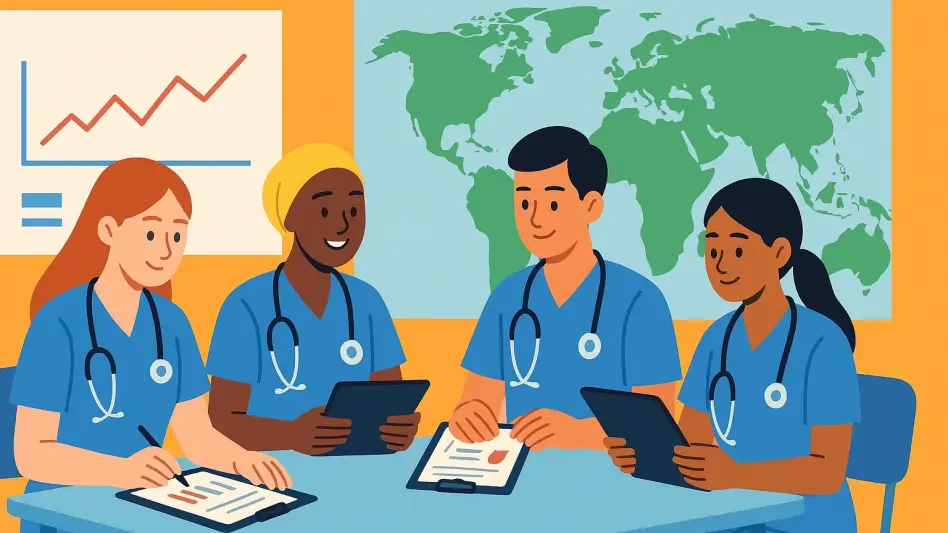

Ultra-short study programs function as a strategic investment in future learners by lowering the psychological barriers to long-term international engagement. For Japanese nursing students, this investment is not merely a luxury but a fundamental necessity within an increasingly globalized medical environment. In 2026, the academic landscape remains remarkably rigid, defined by a series of mandatory clinical rotations and high-stakes national examinations that leave virtually no room for traditional semester-long exchange programs. These students often find themselves trapped between a genuine desire for international exposure and a curriculum that demands near-constant physical presence within domestic hospitals. By introducing programs that condense professional immersion into seven-to-fourteen-day windows, educators have successfully bridged the gap between strict vocational training and global citizenship. This shift acknowledges that the value of an international experience is not solely dependent on its duration but rather on the quality and specificity of the engagement.
Overcoming Curricular Constraints
Maximizing Limited Timeframes: Strategic Scheduling
The primary challenge in facilitating study abroad for nursing majors remains the academic bottleneck caused by their intensive training schedules. Unlike their counterparts in the humanities, nursing students must adhere to a strict sequence of practical laboratory work and clinical shifts that cannot be easily postponed or substituted. Even during official university holidays, their flexibility is significantly curtailed by the need to prepare for specialized certifications or recover from the physical and emotional exhaustion of hospital rotations. This creates a situation where a student may only have a specific ten-day window in an entire year to travel abroad. Recognizing this reality, innovative programs have moved away from the traditional model of long-term language study in favor of concentrated, high-impact modules. These condensed timelines ensure that the educational experience remains a viable option for the most dedicated students without compromising their progress toward graduation or their preparation for the national licensure exams.
To effectively utilize these micro-windows of availability, successful programs rely on flexible partnerships with overseas educational providers willing to waive standard enrollment requirements. Most international language schools operate on business models that mandate a minimum enrollment of four weeks to ensure financial stability and pedagogical continuity. However, by establishing institutional agreements, Japanese universities have identified partners in regions like Australia and North America who are willing to create bespoke one-week tracks. These partnerships are essential for bypassing the logistical barriers that previously prevented vocational students from accessing international education. Such collaborations allow for a seamless transition where the overseas curriculum is explicitly mapped to the students’ available time, ensuring every hour spent abroad is maximized. This logistical agility has transformed the study-abroad landscape, making international exposure a realistic prospect for a demographic that was once almost entirely excluded from such global opportunities.
Prioritizing Professional Relevance: Beyond Generic Language
Experience has shown that generic English language courses often fail to engage nursing students, who view linguistic improvement as a secondary goal to professional discovery. When these students are placed in standard English as a Second Language classrooms, they often struggle to see the connection between general grammar exercises and their future careers in medicine. This lack of relevance can lead to a rapid decline in motivation, especially given the high effort required to travel during their limited breaks. Therefore, the most effective educational models in 2026 prioritize professional relevance over abstract language acquisition. By framing the program as a “professional study tour” rather than a “language holiday,” educators tap into the students’ existing passion for healthcare. This approach ensures that the curriculum remains grounded in the practical realities of the nursing profession, which naturally maintains a higher level of student engagement and encourages a more proactive attitude toward the challenging task of communicating in a foreign tongue.
The specific “hook” that drives this engagement is often the opportunity to conduct professional site visits at aged-care facilities, community clinics, or large-scale hospitals. These visits provide a tangible context for the language they are learning, transforming vocabulary lists from abstract concepts into essential tools for understanding global healthcare operations. For instance, when a student observes how a nurse in Australia manages patient autonomy or utilizes specialized technology, the English terms associated with those actions take on a deeper meaning. This professional immersion serves as a powerful motivator; students are no longer just learning a language, they are expanding their professional identity. By centering the experience on how healthcare operates in a different cultural context, the linguistic component becomes a practical vehicle for professional growth rather than an academic chore. This shift in focus has proven to be the key to unlocking the potential of short-term programs, as it aligns the international experience with the students’ long-term career aspirations.
Designing the Hybrid Educational Model
Balancing Technical Knowledge and Language Immersion: The Hybrid Approach
A recurring theme in the successful development of these programs is the need for a hybrid approach to language use that acknowledges the cognitive demands of medical education. While the overarching goal is English immersion, students frequently request native-language support during professional site visits to fully grasp complex clinical procedures and systemic nuances. Providing Japanese interpretation for these technically demanding segments ensures that the core professional learning objectives are not lost in translation. Without this support, students at an intermediate proficiency level may experience cognitive overload, where the struggle to decode the language prevents them from actually learning the healthcare content. By using Japanese for technical explanations, programs ensure that students return home with a sophisticated understanding of international nursing practices, which is the primary reason many chose to participate in the first place.
This strategic use of the native language allows students to focus their limited linguistic energy on social interactions and daily life, where the emotional impact of communication is often much higher. By offloading the burden of technical translation, the program preserves the students’ mental stamina for homestays, social meet-ups, and navigating foreign cities. This creates a balanced educational environment where the technical knowledge is secured through clear explanation, while the linguistic confidence is built through everyday experience. This model rejects the “sink or swim” approach of total immersion in favor of a supported journey that respects the students’ professional needs. It acknowledges that for a nursing student, understanding a patient’s care plan or a hospital’s management structure is too important to be left to chance or limited by their current English level. Consequently, this hybrid model has become the standard for vocational study abroad, ensuring both professional and personal development are achieved simultaneously.
The Power of Productive Frustration: Catalyzing Real Motivation
While technical segments benefit from translation, everyday interactions—such as staying with a local host family or using public transit—provide what educators call “tangible frustration.” This phenomenon occurs when a student realizes they cannot communicate a basic need, such as asking for a specific food or understanding a train announcement, despite years of formal language study. Unlike the supportive environment of a classroom, these real-world failures carry immediate personal consequences, which serves to shatter the illusion that English is merely a school subject. When a student experiences the direct impact of a communication breakdown, the necessity of the language changes from a distant academic requirement to a lived reality. This brief but intense struggle acts as a powerful catalyst for change, forcing the student to find creative ways to bridge the gap. This productive frustration is often cited by participants as the single most transformative part of their journey, as it provides the raw motivation needed to pursue further study.
This immersion in daily life serves a critical psychological purpose by demystifying the idea of being abroad and lowering the psychological barriers to future travel. Once a student successfully navigates a foreign city or builds a relationship with a host parent despite their limited English, the prospect of longer international engagements becomes far less intimidating. The short-term program functions as a safe space to fail and recover, proving to the student that they possess the resilience necessary to function in a global environment. This newfound confidence is far more valuable than a few new vocabulary words, as it fundamentally changes the student’s perception of their own capabilities. By transforming the “fear of the unknown” into a “challenge to be met,” these programs prepare the nursing workforce to handle the intercultural complexities of modern healthcare. The lessons learned during these moments of frustration stay with the students long after they return to Japan, informing their interactions with diverse patient populations and international colleagues.
Redefining Program Success
Shifting the Metrics of Achievement: Redefining Value
Critics of ultra-short-term education often argued that programs lasting only one or two weeks were too brief to produce measurable improvements in standardized language proficiency scores. However, the paradigm in 2026 has shifted to prioritize a broader set of metrics that measure the impact on student mindset rather than just immediate test results. For a nursing student, the value of a program is found in the expansion of their global curiosity and the development of a more inclusive professional worldview. These qualitative shifts are often more significant than a marginal increase in a TOEIC score, as they dictate how a nurse will interact with foreign patients in Japan’s increasingly diverse healthcare system. When students returned from abroad, they exhibited a marked increase in empathy and a greater willingness to adapt their communication styles. These attributes are essential for modern nursing but are difficult to capture through traditional academic testing, requiring a more nuanced approach to program evaluation.
Furthermore, these “very short” programs functioned as a vital first step in a much longer educational journey. Rather than viewing the one-week trip as a complete and final product, educators began to see it as an investment in the student’s future trajectory. Data from 2026 suggested that students who participated in short-term programs were significantly more likely to seek out international research or volunteer opportunities later in their careers. The positive experience of a brief encounter lowered the threshold for future engagement, effectively acting as a gateway to lifelong global learning. By measuring success through the lens of long-term professional development and career trajectory, the inherent value of short-term programs became clear. They provided the spark necessary to ignite a student’s interest in the wider world, which eventually led to more substantial international contributions after graduation. This shift in perspective allowed institutions to justify the resources spent on short programs as a critical component of a comprehensive global nursing education.
Cultivating a Globally Minded Nursing Workforce: A Professional Legacy
The implementation of these short-term models throughout 2026 demonstrated a clear success in cultivating a more globally minded generation of healthcare providers. By creating accessible entry points for students in high-demand fields, universities effectively democratized international education, reaching those who previously felt excluded due to their vocational commitments. The graduates who participated in these programs entered the workforce with a unique perspective on patient care, influenced by their observations of different clinical cultures. They were better equipped to handle the linguistic and cultural challenges of Japan’s domestic medical landscape, which continued to see a rise in international residents and medical tourists. This result proved that even a few days of immersion could alter a student’s professional DNA, making them more resilient and adaptable in the face of global change. The programs successfully transformed the traditional nursing education model into one that valued international perspectives as highly as clinical skills.
Ultimately, the strategic investment in these programs secured a more capable and culturally competent nursing workforce for the future. By prioritizing flexibility and professional context, educators ensured that the benefits of study abroad were no longer restricted by the rigid boundaries of the academic calendar. The lessons learned from the 2026 pilot programs provided a clear roadmap for future initiatives, emphasizing that meaningful change starts with a single, manageable step. Institutions that integrated these models reported a higher level of student satisfaction and a stronger institutional reputation for innovation in medical education. As these nurses progressed in their careers, the impact of their brief international experiences continued to manifest in their leadership styles and their commitment to evidence-based, global practices. The success of these initiatives affirmed that when international education is tailored to the specific needs of a profession, it can create “bigger possibilities” for students and the healthcare systems they will eventually lead.