
Modern healthcare training relies on the ability of teaching associates to articulate physical sensations such as the appropriateness of pressure and the level of patient comfort. The medical simulation community reached a transformative milestone as the Association of SP Educators released new professional standards for Physical Exam Teaching Associates. This development expands the global framework for human-centered clinical training, codifying practices that harmonize technical guidelines with a philosophy prioritizing the human element. The standards reflect an evolution from experimental mid-century roots to a globally recognized pedagogy emphasizing safety, inclusivity, and the protection of the participant’s voice. By establishing these clear expectations, institutions can better bridge the gap between classroom theory and the tactile reality of patient care, ensuring that the next generation of practitioners is both technically proficient and interpersonally sensitive. This framework serves as a vital tool for educators seeking to maintain the highest levels of pedagogical integrity.
Defining the PETA Role: Specialized Instruction
Dual Responsibility: Acting and Teaching
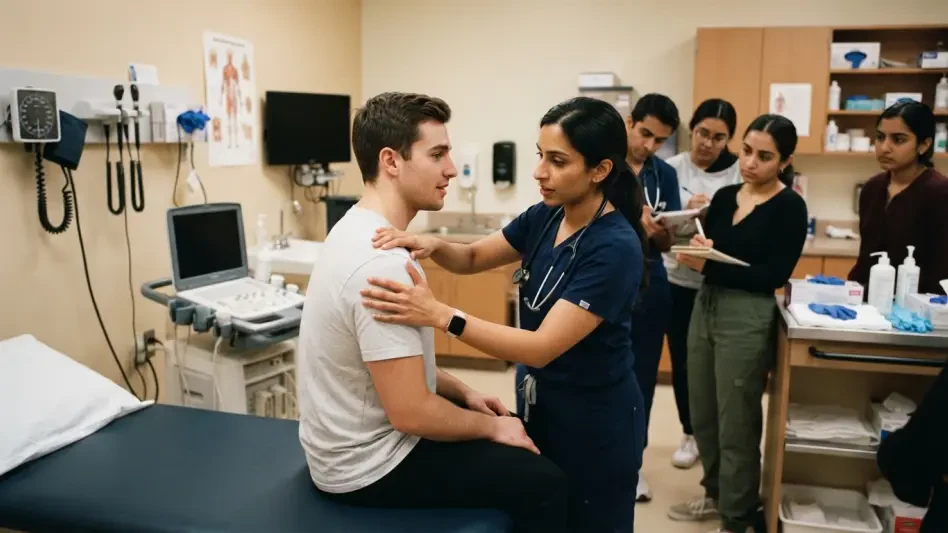
Physical Exam Teaching Associates occupy a unique and demanding niche within the broader category of standardized patients. Unlike traditional role-players who follow a script to portray a specific medical case, these professionals use their own bodies as the primary instructional tool to guide learners through physical examination techniques. This role is inherently dual-natured because the associate serves as both the subject of the examination and a qualified instructor. Such a combination allows them to provide immediate, sensory-based feedback regarding the student’s technique, such as the appropriateness of physical pressure and the level of physical comfort, which a traditional clinical observer might miss entirely. This direct communication transforms a clinical drill into a nuanced dialogue where the learner discovers how their physical actions translate into a patient’s experience, fostering a deeper level of clinical empathy from the very beginning.
Sensory Feedback: Immediate Clinical Insights
The depth of this instructional role requires a level of physical awareness and pedagogical skill that goes far beyond simple modeling. Associates must remain attuned to the subtle shifts in a student’s hand placement or the force of a percussion stroke, translating those physical sensations into actionable verbal guidance. This feedback loop is critical for mastering complex maneuvers like abdominal palpation or musculoskeletal assessments, where the difference between a correct and incorrect technique is often felt rather than seen. By centering the learning process on the associate’s lived experience during the exam, the methodology ensures that technical precision is never divorced from the human context. This approach also empowers the associate to act as an expert on their own anatomy, providing students with a high-fidelity learning experience that mechanical mannequins or passive volunteers simply cannot replicate in a modern medical curriculum.
Program Management: Global Benchmarks
The newly released standards establish a universal benchmark for the professionals who manage these specialized programs, focusing on essential domains like session development and participant training. By standardizing these methodologies, the association ensures that despite regional variations in medical school curricula, the core commitment to protecting the living model remains constant. These guidelines provide program directors with the necessary tools to maintain high-quality instruction while ensuring that the physical and psychological well-being of the participants is never compromised. The focus on stewardship involves a comprehensive approach to recruitment, training, and ongoing support, recognizing that the sustainability of these programs depends on the health and professional satisfaction of the associates. Through these rigorous frameworks, institutions can demonstrate a clear commitment to ethical education practices that prioritize participant safety.
Ethical Frameworks: Professional Evolution
Stewardship Values: Safety and Inclusivity
A central theme of the professional framework is the concept of stewardship, where educators act as guardians of the human voice within a clinical setting. Because medical simulation can be stressful or vulnerable for participants, the standards mandate an intentional ethical commitment to advocacy. This means that every aspect of the training environment is designed to uphold the dignity and agency of the individual. Inclusivity is treated as a primary pillar, ensuring that simulated participants are active contributors to case design and feedback sessions. By centering the agency of the person experiencing the physical stimulus, the methodology prevents medical training from becoming a purely mechanical exercise, keeping it grounded in empathy and respect. This shift from viewing the participant as a passive tool to an active partner is essential for creating a culture of mutual respect that will eventually carry over into the students’ future clinical practices.
Professional Resilience: A Historical Narrative
The historical perspective provided in the editorial traces the methodology back to the 1950s and the pioneering work of physicians like Howard Barrows and Paula Stillman. These early experiments laid the groundwork for using human simulation to assess clinical skills, but the narrative often overlooks the interdisciplinary educators who built the profession from the ground up during the 1980s and 1990s. These professionals demonstrated remarkable resilience, developing training protocols and assessment metrics long before the field received formal academic recognition. Their work was fueled by a vision of medical education that was more interactive and patient-centered than the traditional didactic models of the time. This period of grassroots development was essential for creating the sophisticated pedagogical techniques that are now standard across the globe, proving that the human element has always been the driving force behind simulation innovation.
Future Standards: Advancing Human Connection
Ultimately, the recent editorial served as a landmark call to action for the simulation community to honor the human beings who made medical training possible. Institutions adopted these rigorous yet flexible frameworks to enhance the quality of medical education while ensuring the safety and dignity of those who lent their bodies and voices to the cause of learning. Moving forward, leaders identified the need to cultivate a new generation of educators who are as skilled in ethical advocacy as they are in clinical instruction. They recommended that programs implement regular internal audits to ensure compliance with the updated standards and encouraged the development of peer-support networks for teaching associates. By prioritizing the human connection, the medical community successfully reinforced the idea that healthcare is defined by the bond between provider and patient. These steps ensured that simulation remained a transformative experience, preparing practitioners for the complexities of modern medicine.