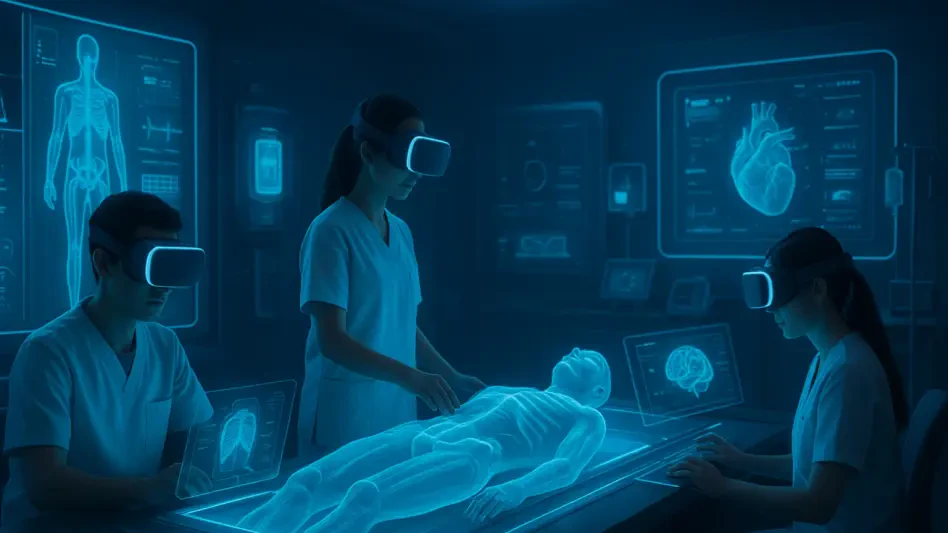

Healthcare and Technology Institute Inc. is providing the UbiSim VR platform to help 410 nursing students practice complex medical scenarios in a risk-free environment. This strategic move represents a pivot in how the Philippines approaches healthcare training, specifically through a two-year collaborative agreement with Colegio San Agustin-Bacolod (CSA-B). The partnership seeks to transcend the limitations of traditional, paper-based pedagogy by embedding a technology-enabled Healthcare Education System directly into the academic core. By focusing on the College of Health and Allied Professions, the initiative establishes a unified learning environment where classroom theory, high-fidelity simulation, and competency assessments are no longer treated as separate entities. This holistic integration ensures that students are not merely observers but active participants in their own professional growth, navigating the complexities of modern medicine through an ecosystem that values technical precision and emotional intelligence in equal measure.
Transforming the Student Learning Journey
Structured Implementation: Multi-Year Skill Development
The program is meticulously structured to follow a specific cohort of students to ensure continuity and depth of learning throughout their academic journey. Implementation is scheduled to begin with Level 2 nursing students during the 2026–2027 school year, providing them with early exposure to digital clinical environments. This same group will continue to utilize the system as they advance to Level 3 in the 2027–2028 academic cycle, allowing for a progressive increase in scenario difficulty and clinical complexity. By embedding these technologies during these critical formative years, the partnership prioritizes the development of sharp clinical judgment and rapid decision-making skills. Students have the chance to assess various patient conditions, identify subtle physiological changes, and prioritize medical interventions in a controlled setting. This immersive practice effectively shortens the learning curve, ensuring future nurses enter rotations with confidence.
Immersive Technology: Beyond Standalone Equipment
A key theme of this initiative is the fundamental shift from simply purchasing equipment to building a sustainable educational infrastructure. Traditionally, many institutions have acquired standalone tools—such as individual VR headsets or niche software—without a cohesive plan for long-term curricular integration. The model introduced by HCT challenges this fragmented approach by offering an interconnected suite of components designed to work in harmony. This includes high-fidelity clinical simulations via the UbiSim platform, physical training equipment, and digital study resources that simulate a diverse range of medical scenarios. This ecosystem allows for repeated practice without the risks associated with real-life clinical errors, fostering an environment where students can learn from mistakes safely. Such a comprehensive framework ensures that technology is not an auxiliary add-on but a core pillar of the nursing program, supporting students as they transition from theory to practice.
Clinical Reasoning: Mastering Complex Patient Care
Developing clinical reasoning is at the heart of the modern nursing curriculum, and the integration of virtual reality specifically targets this competency. Through the UbiSim platform, students are placed in high-pressure situations that mirror the atmosphere of a busy hospital ward or an emergency room. They must navigate the nuances of patient interaction, monitor vital signs in real-time, and make split-second decisions that directly impact patient outcomes. This type of experiential learning is difficult to replicate in a standard classroom, where the stakes are low and the scenarios are often static. The VR platform provides a dynamic environment where the consequences of actions are immediate and visible, allowing students to refine their bedside manner and technical skills simultaneously. By the time these students reach their clinical rotations in physical hospitals, they have already managed dozens of virtual patients, making them better prepared for the realities of modern nursing.
Driving Institutional Innovation and Global Standards
Institutional Excellence: Scaling Innovation and Accreditation
From an institutional perspective, the partnership offers significant advantages by organizing academic resources around a single, scalable platform. Instead of managing a disjointed collection of educational tools, CSA-B can streamline its investments and create a coherent academic model that is easier to maintain and upgrade. This data-driven approach allows the college to track student competency scores and faculty development progress with high precision. The robust documentation generated by the system serves as concrete evidence of innovation and quality improvement, which is invaluable during the accreditation process with regulatory bodies. By demonstrating a clear link between technology use and measurable learning outcomes, the institution solidifies its reputation as a leader in healthcare education. This strategic alignment ensures that innovation is not a temporary trend but a permanent improvement to the college’s capabilities, providing a clear roadmap for future academic growth.
Faculty Enablement: Training the Next Generation of Educators
The effectiveness of any educational technology is fundamentally linked to the proficiency of the instructors who manage it. Recognizing this, the collaboration includes a heavy focus on faculty onboarding and continuous implementation support. HCT provides specialized training to ensure that the educators at CSA-B can effectively translate digital tools into impactful learning experiences for their students. This involves not only technical training on how to operate the VR equipment but also pedagogical instruction on how to debrief students after simulation sessions. Debriefing is a critical component of simulation-based education, as it allows students to reflect on their performance and internalize key lessons. By empowering faculty with these advanced skills, the partnership ensures that the institution retains a high level of expertise in-house. This investment in human capital is what makes the technology sustainable, allowing the college to maintain high standards of instruction.
Global Connectivity: Aligning with International Standards
A significant component of this modernization effort is the emphasis on connecting Philippine nursing education with international expertise. HCT facilitates global engagement by bringing world-renowned leaders in healthcare simulation to the region, including experts from prestigious institutions like Stanford and Vanderbilt University. These leaders participate in knowledge transfer sessions that expose local faculty and students to the vanguard of educational design and assessment. Furthermore, the simulation program adheres to the INACSL Healthcare Simulation Standards of Best Practice®, ensuring that the training meets rigorous global benchmarks for safety and efficacy. This alignment with international standards means that graduates from CSA-B are not only competitive locally but are also prepared to work in diverse medical environments across the world. By following these established best practices, the college ensures that its curriculum remains relevant and effective.
Future Pathways: Sustaining Excellence in Healthcare Pedagogy
The strategic partnership successfully established a new benchmark for nursing education by prioritizing integrated technology over isolated tools. Stakeholders recognized that the future of medical training relied on the ability to merge virtual simulation with rigorous academic standards and faculty expertise. To maintain this momentum, institutions sought to expand their digital libraries and incorporate even more diverse clinical scenarios that reflected the changing demographics of global patient populations. The program demonstrated that sustainable innovation required a commitment to continuous assessment and the adoption of international best practices. Graduates emerged as tech-savvy professionals who possessed the clinical judgment necessary for high-stakes environments. Looking ahead, the focus shifted toward scaling this model to other allied health professions, ensuring that the entire healthcare workforce remained prepared for the complexities of the modern medical landscape.