
The modernization of Egypt’s clinical landscape has reached a pivotal moment where advanced medical facilities are no longer judged solely by their technical equipment but by their ability to provide a seamless, human-centric journey for every individual who walks through their doors. This paradigm shift is increasingly evident in the development of institutions like the Suez Medical Complex, which serves as a cornerstone for the nation’s broader healthcare evolution. By moving away from fragmented, purely clinical models, the Egyptian healthcare sector is successfully implementing a holistic framework that addresses the emotional, logistical, and medical needs of both domestic and international patients. For global healthcare facilitators, these developments signal a maturing market that is capable of competing with established medical hubs by offering a high-reliability environment where patient safety and satisfaction are paramount. The integration of empathy and strategic communication into the core of clinical delivery ensures that patients are treated as active participants in their own recovery, which significantly enhances long-term health outcomes and institutional reputation. As Egypt continues to invest in these advanced care models, it creates a new benchmark for excellence that balances high-tech interventions with the high-touch care required in a modern, globalized world. This evolution acknowledges that clinical excellence is most effective when patients feel respected and supported throughout their journey, from the first consultation to the final discharge.
Principles of Patient-Centered Excellence
Redefining the Provider-Patient Relationship
At the core of this transformation is a fundamental reassessment of the relationship between medical providers and those seeking care, moving toward a model where shared decision-making is the standard rather than the exception. This approach treats patients as individuals with distinct cultural backgrounds, personal values, and recovery goals, ensuring that every treatment plan is co-created through transparent dialogue between clinicians and the person receiving care. By fostering an environment of open communication, the facility reduces the information asymmetry that often leads to patient anxiety, particularly during complex surgical procedures or long-term therapeutic regimens. Clinicians are trained to go beyond the clinical chart, engaging in conversations that address the patient’s fears and expectations to establish a realistic and mutually agreed-upon roadmap for healing. This level of engagement is vital for building the trust necessary for successful medical outcomes, as it empowers patients to take ownership of their health journey while feeling supported by a team that respects their autonomy and unique perspective. Ultimately, this redefined relationship transforms the clinical encounter from a transactional event into a collaborative partnership that prioritizes the dignity and well-being of the patient at every stage of the medical process, ensuring that the human element remains at the center of the clinical experience.
Cultivating Transparency and Institutional Trust
Building on this foundation of partnership, the focus on cultivating institutional trust is reinforced through structured communication protocols that ensure consistency and reliability across all touchpoints of the care journey. Transparency is not merely a policy but a practical application seen in how medical data, potential risks, and expected outcomes are presented to patients and their families, leaving no room for ambiguity or confusion. For international medical travelers, this clarity is especially crucial as they navigate an unfamiliar healthcare system and rely heavily on the facility’s ability to bridge cultural and linguistic gaps through professional interpretation and culturally competent care. The implementation of dedicated patient advocacy programs further strengthens this trust by providing a specialized channel for feedback and conflict resolution, ensuring that patient voices are heard and acted upon in real-time. By prioritizing empathy alongside technical precision, the institution demonstrates a commitment to holistic care that extends beyond the operating room into the psychological and social spheres of recovery. This comprehensive approach to building trust not only improves the patient experience but also enhances the facility’s global standing as a reliable destination for high-quality medical services where every individual is treated with the highest level of professional and personal respect, fostering a sense of security and confidence in the care provided.
Physical and Technical Infrastructure
Centralized Specialties and Clinical Integration
The physical and operational structure of modern medical hubs is increasingly designed to mirror the integrated nature of the care being provided, with the Suez Medical Complex serving as a primary example of this centralized specialty model. By consolidating a vast array of medical disciplines—ranging from advanced cardiology and neurosurgery to specialized rehabilitation—under a single roof, the facility eliminates the logistical hurdles that traditionally fragmented the patient experience. This model is particularly effective for complex clinical cases that require a multidisciplinary approach, as it allows for immediate, face-to-face collaboration between specialists without the delays associated with inter-facility referrals or data silos. For the patient, this centralization translates into a much smoother journey where diagnostic imaging, lab tests, and surgical consultations occur in a logical, time-efficient sequence that minimizes physical strain and administrative stress. The ability to access world-class expertise in one location is a significant value proposition for international patients who need to maximize their time while abroad for medical reasons. Furthermore, this integrated structure allows for a more cohesive medical record, as all departments operate within the same institutional framework, ensuring that no detail of the patient’s clinical history is overlooked or lost in transition between various medical teams and facilities.
Architectural Efficiency and Operational Synergy
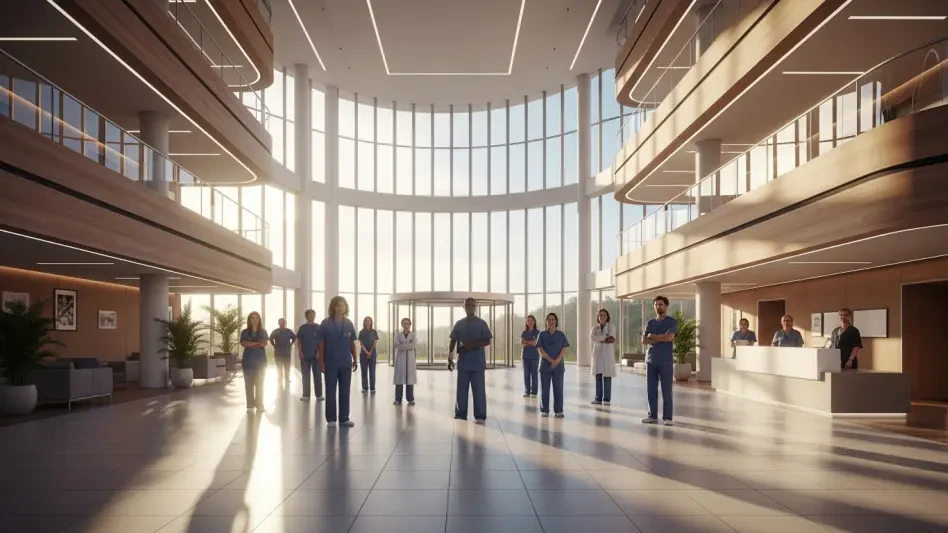
Complementing this centralization is an architectural philosophy that prioritizes operational synergy and patient flow, ensuring that the physical environment itself contributes to the healing process. The layout of the complex is intentionally organized to place related departments in close proximity, such as linking emergency trauma units directly to advanced imaging suites and operating theaters to shave critical minutes off response times. This design also considers the needs of the patient’s support system, providing comfortable spaces for families and clear wayfinding systems that reduce the sense of disorientation often felt in large medical institutions. Beyond the logistical benefits, the environment is engineered to foster collaboration through shared workspaces where surgeons, radiologists, and physical therapists can review cases together and adjust treatment plans in real-time. This interdisciplinary synergy ensures that the patient’s transition through various stages of care—from acute intervention to post-operative recovery—is seamless and well-coordinated, reducing the risk of clinical errors and improving the overall efficiency of the facility. By treating the physical space as a strategic asset rather than just a housing for equipment, the institution creates a calming, highly functional atmosphere that supports both the medical staff and the patients they serve, ultimately leading to a more positive and efficient clinical environment for everyone involved.
Digital Health and Data Management
Precision Medicine Through Digital Integration
In the current landscape of high-precision medicine, technology serves as the invisible thread that connects every aspect of care, with advanced digital health systems and Electronic Medical Records (EMR) acting as the definitive source of patient data. The transition to a fully digital environment ensures that every specialist involved in a case has instantaneous access to the most accurate and up-to-date information, ranging from real-time laboratory results to high-resolution diagnostic images. This level of connectivity allows for a degree of clinical precision that was previously unattainable, as treatment plans can be modified dynamically based on data-driven insights rather than static observations. For instance, AI-enhanced diagnostic tools assist clinicians in identifying subtle patterns in medical data, enabling early interventions that can significantly alter a patient’s prognosis for the better. This tech-driven approach is particularly beneficial for complex surgeries, where pre-operative digital mapping and intra-operative navigation systems provide a level of accuracy that minimizes risk and accelerates recovery. By standardizing these advanced technologies, the facility ensures that every patient receives a level of care that is tailored to their specific physiological needs, effectively moving away from a one-size-fits-all approach toward a truly personalized medical experience that leverages the full power of modern data analytics and medical science.
Technological Connectivity and Global Continuity
The benefits of this digital integration extend far beyond the walls of the facility, offering essential technological connectivity that ensures continuity of care for international patients once they return to their home countries. Modern platforms enable the seamless and secure sharing of medical records with primary care physicians abroad, ensuring that the transition from a specialized surgical center back to local monitoring is handled with the same level of precision as the surgery itself. Telehealth capabilities also play a critical role in this global continuity, allowing specialists at the Suez Medical Complex to conduct post-operative follow-ups and monitor recovery progress remotely through video consultations and wearable health monitors that track vital signs in real-time. This ongoing connection provides international travelers with a sense of security, knowing that they have continued access to the medical team that performed their procedure regardless of their geographic location. Furthermore, the adherence to global data security standards and privacy regulations ensures that patient information is protected with the highest level of integrity, which is a vital consideration for patients navigating international medical travel. This focus on long-term digital connectivity highlights the institutional commitment to the patient’s entire health lifecycle, prioritizing sustained wellness and effective communication over short-term clinical encounters, thereby bridging the gap between international medical centers and local healthcare providers.
The End-to-End Patient Lifecycle
Comprehensive Coordination for International Travelers
The comprehensive management of the international patient journey was successfully executed through a model that prioritized coordination and logistical transparency from the initial point of contact through to long-term recovery. By establishing dedicated international service departments, the facility managed the complex needs of foreign travelers, including visa assistance, language interpretation, and financial clarity, which mitigated the administrative burdens that typically shadowed medical travel. These teams acted as a bridge between the clinical staff and the patients, ensuring that every non-medical detail was handled with the same level of professionalism as the medical care itself. Pre-travel virtual consultations allowed for the thorough review of medical histories and the setting of realistic expectations before the patient ever departed their home country, creating a foundation of trust and preparedness. Once on-site, the seamless transition from airport arrival to hospital admission demonstrated the efficiency of a system designed to keep the patient’s focus entirely on their healing process. This structured approach to the end-to-end lifecycle ensured that no patient felt unsupported or lost within the system, setting a high standard for how medical tourism should be managed in a competitive global market, while providing a blueprint for other institutions to follow in enhancing the international patient experience through meticulous coordination and empathetic support.
Strategic Outcomes and Future-Ready Solutions
Strategic insights gained from this evolution pointed toward the necessity of continued investment in multidisciplinary training and cross-border digital health standards to maintain this upward trajectory in healthcare quality. The integration of advanced medical technologies and patient-centered philosophies proved that institutional excellence was achieved through a balance of technical prowess and human empathy. Future efforts were directed toward expanding these models into regional networks, ensuring that the high standards established at the Suez Medical Complex were replicated across other Egyptian healthcare facilities to create a unified national brand characterized by reliability and innovation. Policymakers and healthcare leaders emphasized the importance of maintaining strict international accreditation standards to ensure that global confidence remained high, while also exploring new ways to integrate genomic data and personalized nutrition into the standard of care. This forward-looking perspective transformed the Egyptian healthcare sector into a regional leader, offering actionable lessons for other emerging markets looking to modernize their clinical infrastructure. By prioritizing the holistic needs of the individual and embracing the possibilities of digital connectivity, the system established a resilient and scalable framework that continued to adapt to the changing needs of the global population, ultimately securing a sustainable future for the nation’s healthcare ecosystem through continuous improvement and strategic investment.