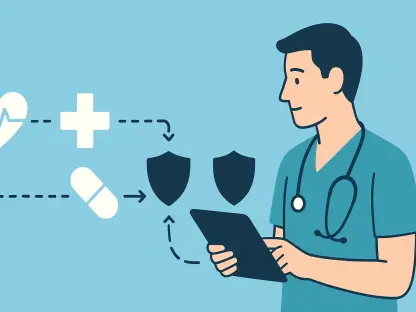

Advanced anti-malware defenses are specifically designed to prevent the unauthorized encryption of clinical files by sophisticated ransomware strains. This technical necessity arises as healthcare providers across the globe migrate their entire operational catalogs to cloud-native environments. The rapid digitization of healthcare has transformed patient care but has simultaneously introduced significant vulnerabilities to sensitive electronic health records. As organizations move away from paper-based systems, they face an evolving landscape of cyber threats, including targeted phishing attacks that bypass legacy firewalls. To protect the integrity and confidentiality of clinical data, healthcare providers must move beyond reactive measures and adopt a comprehensive, proactive security posture that covers every digital touchpoint from the network core to the individual device. This strategy requires a shift in perspective, viewing security not as a static barrier but as a dynamic, layered ecosystem.
Managing Identities to Eliminate Human Vulnerabilities
A successful defense strategy begins with the fundamental realization that human access is often the most exploited vulnerability within a clinical network. By implementing a granular identity management system, organizations can ensure that data is only accessible to those who truly need it for specific treatment tasks. This involves enforcing the principle of least privilege, where administrative and clinical staff are granted the minimum level of access required for their roles, effectively narrowing the attack surface. Such a framework ensures that a compromised set of credentials for a billing clerk cannot be used to gain entry into the surgical imaging database. When identity governs every interaction, the movement of data becomes predictable and auditable. This paradigm shift requires integrating directory services with clinical workflows so that permissions are updated in real time as staff change departments or exit the organization entirely, preventing the dangerous accumulation of access.
Coupled with mandatory multi-factor authentication, these measures create a robust barrier that prevents stolen credentials from becoming a gateway to a massive data breach. The move toward passwordless authentication, utilizing biometric scanners and hardware security keys, has further hardened the entry points into patient portals and internal electronic health record systems. This secondary layer of verification is essential because it neutralizes the effectiveness of social engineering and credential stuffing attacks that often bypass standard login protocols. Furthermore, the implementation of adaptive authentication allows the system to analyze the context of a login attempt, such as the geographic location and the device integrity, before granting access. By scrutinizing these variables, healthcare institutions can detect anomalies that suggest a compromised account long before any patient data is exfiltrated. This systematic approach to identity turns a potential liability into a verified checkpoint, ensuring that trust is never assumed but always earned.
Technical Safeguards: Encryption and Endpoint Protection
While controlling access is vital, protecting the data itself requires a fail-safe mechanism in case perimeter defenses are bypassed during a targeted intrusion. Encryption serves as this final layer of protection, rendering patient records unreadable to unauthorized parties even if a physical device is lost or a cloud environment is compromised. By applying full-disk encryption and maintaining consistent protocols across all platforms, healthcare entities ensure that sensitive information remains secure throughout its entire lifecycle. This applies whether the data is being stored in a central database or being transmitted across the network to a remote consultation site. Modern standards now mandate that data at rest be secured with advanced cryptographic algorithms that are resistant to brute-force attempts. This persistent state of encryption ensures that even if an attacker successfully navigates through the network layers, the actual clinical content remains locked away. It provides a crucial safety net for organizations navigating the complexities of hybrid cloud architectures.
In addition to securing the data, organizations must harden the diverse array of devices that interact with healthcare networks, from mobile tablets to diagnostic machines. Modern endpoint protection has moved far beyond traditional signature-based antivirus software to address complex threats like fileless attacks and memory-based exploits. By utilizing endpoint detection and response tools, security teams gain the visibility needed to investigate suspicious activities in real time across thousands of individual nodes. These advanced defenses are designed to stop ransomware and malware at the point of entry without disrupting the critical workflows that clinicians rely on to treat patients. This level of granular control allows for the isolation of a single infected laptop before it can spread a payload to the rest of the facility. The integration of behavioral analysis enables these systems to identify malicious patterns rather than just known malware signatures, providing a defense against zero-day vulnerabilities that have not yet been cataloged by global researchers.
Operational Resilience: Monitoring and Coordinated Response
The interconnected nature of modern medical systems means that a single point of failure can have a cascading effect across the entire organization, potentially halting critical care. To mitigate this risk, healthcare providers are increasingly focusing on real-time threat correlation and centralized visibility through advanced security operations centers. By monitoring identities, networks, and cloud infrastructures simultaneously, security teams can identify and isolate minor anomalies before they escalate into full-scale crises. This proactive stance is essential for maintaining the continuous availability of data required for high-quality medical care, ensuring that doctors have access to records exactly when they are needed. Centralized logging and the use of artificial intelligence to sift through millions of events allow for the detection of low and slow attacks that might otherwise go unnoticed for months. This comprehensive oversight ensures that every movement within the digital environment is accounted for, creating a transparent ecosystem where security and operations are aligned.
Despite the most rigorous preventative measures, a comprehensive strategy also included a well-defined plan for the inevitable moment when a security breach occurred. A structured incident response framework provided a roadmap for containment, recovery, and regulatory compliance, ensuring that all stakeholders knew their specific roles during a high-pressure event. Organizations that successfully navigated these challenges prioritized the establishment of clear communication channels between IT staff, legal teams, and clinical leadership. Regular simulations and tabletop exercises were conducted to refine these response protocols and ensure they remained effective against current threat profiles. Seeking specialized external support from forensic experts allowed facilities to recover their systems more quickly while preserving evidence of the attack. By building this resilient digital environment, healthcare providers balanced open clinical collaboration with the stringent demands of patient privacy. The ultimate success of these frameworks relied on a commitment to continuous improvement and the adoption of zero-trust principles.