
Faisal Zain, a seasoned healthcare expert specializing in medical technology and clinical innovation, has spent decades navigating the intersection of patient care and technical infrastructure. With a background rooted in the manufacturing of diagnostic devices and a deep commitment to health equity, Zain has witnessed firsthand the disparities facing the 85 million Americans living in rural communities. In this conversation, he explores the transformative potential of the $50 billion Rural Health Transformation grant, discussing how we can move beyond the “luck and ingenuity” of overworked providers to build a resilient, interconnected system that addresses everything from electronic health records to food insecurity.
The following discussion explores the logistical and emotional hurdles of rural healthcare, specifically addressing the extreme travel distances for specialty care and the exhaustion of the local workforce. Zain outlines a strategic roadmap for investing federal funds, emphasizing the necessity of robust data exchange and the evolution of telehealth into a clinician-to-clinician support tool. He also highlights the critical role of social determinants—such as housing and transportation—in creating a truly holistic model of care that leverages existing community spaces like schools and libraries.
Many rural patients are currently forced to travel over 100 miles for specialty care, a distance that often leads to skipped appointments and dire health outcomes. How does this logistical burden reshape the way we must think about the “front door” of the healthcare system?
When a person has to drive 100 miles just to see a specialist, the “front door” of healthcare effectively moves from the clinic to the patient’s driveway, and all too often, that door remains closed. We are talking about 85 million Americans who are often making a choice between a day’s wages and a life-saving consultation, which frequently results in the fatal consequences noted in recent public health research. To fix this, we have to stop viewing the rural clinic as an isolated island and start seeing it as a high-tech gateway that brings the specialist to the patient digitally. Imagine the relief of a patient who only has to travel 20 miles to their primary care provider, knowing that through integrated data and telehealth, the world-class expertise they need is already waiting for them in that room. It requires us to move away from a model of physical presence and toward a model of digital proximity where distance is no longer a primary indicator of survival.
With $50 billion in federal funding now available for rural health transformation, there is a massive opportunity to modernize these systems, yet the work remains exhausting for those on the ground. What specific infrastructure investments do you believe would most effectively alleviate the “tireless” burden placed on rural healthcare leaders?
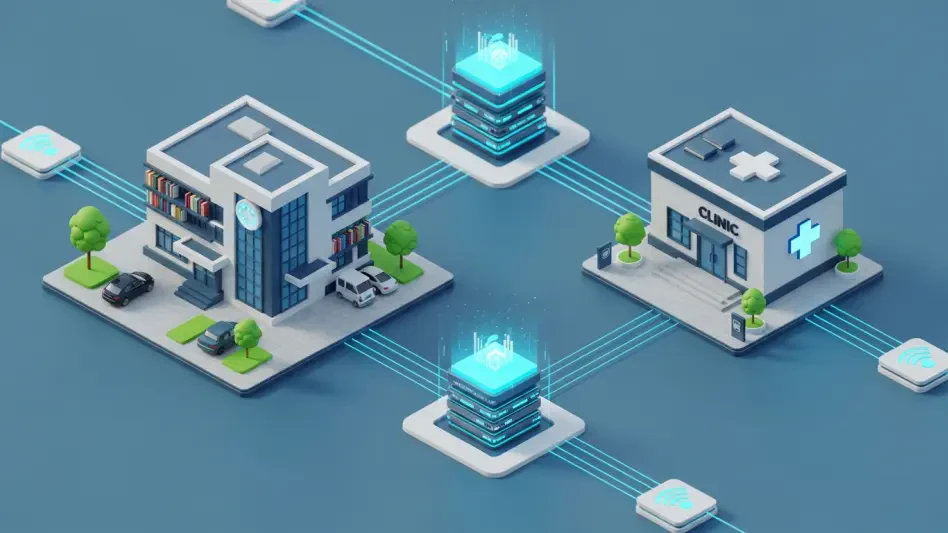
The most immediate relief comes from shoring up the technical infrastructure so that rural leaders aren’t forced to spend their limited energy on manual workarounds and “reinventing the wheel.” I believe the top priority should be upgrading Electronic Health Records and ensuring every provider is paid to connect to their state or local Health Information Exchange. When data flows seamlessly between a rural FQHC and a major metro hospital, it eliminates the frantic, middle-of-the-night phone calls and the hunt for missing lab results that contribute to provider burnout. We also need to use these funds to renovate clinical spaces, making them conducive to a clinically integrated network where equipment and staff can be shared across facilities. These aren’t just aesthetic upgrades; they are the literal foundation that allows a clinician to work at the top of their license rather than acting as an administrative clerk.
We often hear about telehealth as a way for doctors to talk to patients, but you advocate for a “clinician-to-clinician” model. How could this shift in perspective help bridge the specialty care gap in areas where the nearest movie theater is two hours away?
In remote areas where the nearest amenities are a two-hour drive away, recruitment is a constant uphill battle, but a clinician-to-clinician telehealth model allows the existing workforce to punch way above its weight class. Instead of a general practitioner being left to handle a complex procedure alone, they can have a world-class specialist present in the room via a high-definition remote link to guide them in real-time. This creates a powerful cross-training environment where rural providers are constantly expanding their skillsets while their patients receive specialized care right in their own zip code. It requires robust broadband and cellular services to support the high-bandwidth needs of surgical or diagnostic consultations, but the payoff is a community that feels safe and supported despite its geographic isolation. By fostering these remote partnerships, we can ensure that a provider’s location does not limit the quality of the care they are able to deliver.
Artificial Intelligence is a major buzzword in medical tech, but you’ve noted that an AI strategy is impossible without a foundation of data interoperability. Where are we seeing the most practical, “non-robotic” successes for AI in a rural clinical setting right now?
The most impactful AI applications in healthcare today are actually quite humble; they focus on the “paperwork” that steals time away from the patient-provider relationship. We are seeing incredible success with AI-driven document processing and systems that help clinicians draft responses in client portals, which they can then review and personalize. Before we can even dream of complex diagnostic AI, we must first establish the interoperability pathways that allow the data to move freely and cleanly between organizations. Using the Rural Health Transformation funds to create a state-wide interoperability roadmap is the “boring” but essential work that makes future innovation possible. When AI can handle the crushing weight of administrative documentation, it returns the sensory experience of medicine—eye contact, touch, and active listening—to the rural exam room.
Beyond the walls of the clinic, you’ve emphasized the importance of community-based models of care that involve libraries, schools, and faith-based organizations. How can a state’s technical infrastructure be used to weave these non-traditional spaces into the “connected fabric of care”?
Health doesn’t just happen in a clinic; it happens where people live, pray, and learn, which is why we must treat food insecurity, housing, and transportation as the core of the medical model rather than its periphery. By establishing technical referral systems with local food banks or rideshare providers—much like the successful models we’ve seen in New York—we can address the social determinants that often lead to hospital readmissions. Imagine a library or a local church being equipped with a secure telehealth booth, allowing a patient who lacks home internet to attend a follow-up appointment in a space they already trust. This requires a technical infrastructure that can bridge the gap between medical providers and community organizations, ensuring that a referral for a food program is tracked with the same urgency as a referral for a cardiologist. This “connected fabric” ensures that the $50 billion investment isn’t just buying machines, but is actually stitching the community back together.
What is your forecast for the future of rural health equity in America?
I believe we are standing at a historic crossroads where, for the first time, the combination of $50 billion in funding and mature data technology can finally break the cycle of “luck and pluck” that has sustained rural health for decades. Within the next ten years, I forecast a shift where “rural” no longer means “underserved,” as state-wide interoperability roadmaps turn isolated clinics into high-functioning nodes of a national healthcare network. We will see the rise of “hospital at home” models and community-based gathering spaces that use remote monitoring to keep the 85 million rural residents out of emergency rooms. If we learn from the execution mistakes of the past and focus on sustainable, data-driven infrastructure, the geographic lottery of healthcare will finally come to an end, ensuring that longevity and happiness are accessible to every citizen, regardless of how many miles they live from a metro center.