
Faisal Zain is a distinguished leader in medical technology with decades of experience navigating the complex intersection of healthcare manufacturing and rural policy. His work has consistently focused on how high-tech diagnostics and treatment tools can be scaled to serve populations that are often left behind by the rapid pace of urban medical advancement. In this discussion, we explore the controversial strategic shift in eight states—including Alaska, Louisiana, and South Carolina—to divert a portion of the Rural Health Transformation Fund into a specialized tech catalyst program. Our conversation examines the delicate balance between funding traditional brick-and-mortar hospitals and investing in early-stage startups that promise to solve chronic access issues through drones, AI, and remote diagnostic hardware. We also delve into the rigorous vetting processes intended to protect these public investments and address the sharp criticisms from those who argue that digital apps cannot replace the physical presence of a delivery room or an emergency clinic.
How do you justify diverting 10% of rural health transformation allotments toward private tech startups when many rural hospitals are struggling to keep their doors open?
The decision to allocate a tenth of these funds to the Rural Tech Catalyst Fund is a calculated move to address systemic failures that traditional funding models haven’t been able to fix. In states like Alabama and Nebraska, we are seeing that simply throwing money at old infrastructure doesn’t always bridge the gap in workforce shortages or the massive distances patients must travel. By diverting that 10%, we are essentially buying a ticket to the future of care, where technology acts as a force multiplier for the skeleton crews currently running our rural clinics. It is a pivot toward sustainability, ensuring that the remaining 90% of the funds are supported by modern tools that make operations more efficient. While it feels like a risk to move money away from a struggling hospital’s direct budget, the goal is to provide those same hospitals with innovations that reduce their long-term overhead and improve patient outcomes through better connectivity.
With $20 million on the line in Louisiana alone, what specific mechanisms are in place to ensure these tech companies don’t just take the money and fail to deliver meaningful results?
The vetting process for these startups is incredibly intense because we are acutely aware that we are playing with a “safety net” budget. In Louisiana, for example, we received 165 applications, and each one is being put through a multi-layered gauntlet of scrutiny by both economic development experts and clinical leaders. We aren’t just looking at whether a business is viable on paper; we are looking at whether the Louisiana Department of Health believes the tool solves a specific, boots-on-the-ground problem like chronic disease management. Beyond the initial award, there are strict benchmarks that these companies must hit to continue receiving their portion of that $20 million. If a rural provider finds that a software or hardware solution is cumbersome or ineffective, the funding is pulled immediately to protect the integrity of the Rural Health Transformation Fund.
There is a significant concern that “a phone app can’t deliver a baby or stitch a wound.” How do you respond to critics who say these technological investments ignore the basic physical needs of rural residents?
That is a very visceral and valid criticism, and it’s something that weighs heavily on every policy decision we make. We acknowledge that digital tools are not a substitute for a surgeon’s hands or a labor and delivery ward, but we have to look at the reality of hospital closures caused by inadequate payment systems from insurance plans. Since CMS rules currently limit a state’s ability to use this specific fund to simply pay off hospital debts or boost operational subsidies, we are forced to find creative ways to strengthen the services that still exist. Technology like the portable diagnostic tools being piloted in Alaska’s roadless regions or unmanned drones for medication delivery can keep a patient stable or provide a diagnosis that prevents a crisis. We are trying to build a digital scaffolding that supports the physical clinics, making it easier for them to manage the patients they do have without burning out their limited staff.
Can you paint a picture of how these pilot programs, such as the ones in Alaska involving drones and remote pharmacy units, actually change the day-to-day experience for a patient in a remote setting?
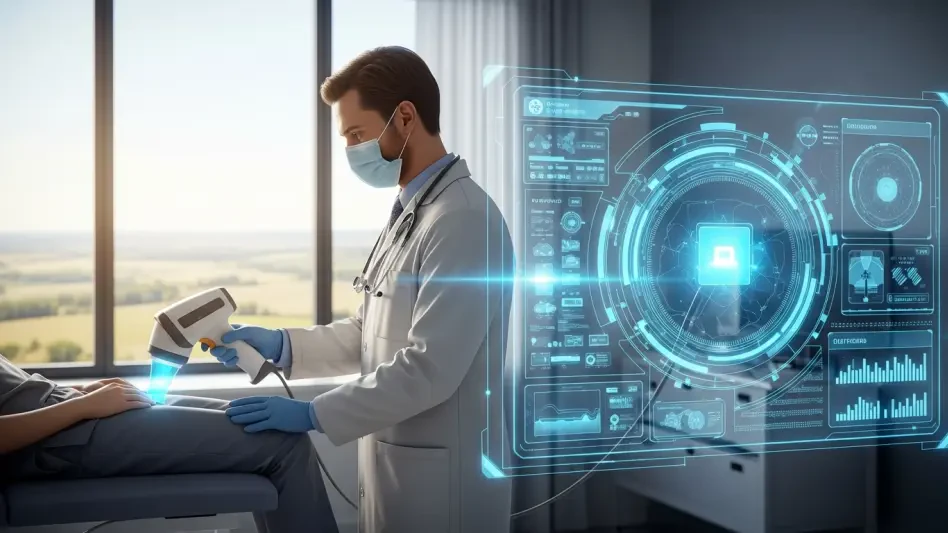
Imagine living in a community in Alaska that is completely disconnected from the main road system, where a simple prescription refill or a blood test requires a bush pilot and a day of clear weather. With the Rural Tech Catalyst Fund, we are testing unmanned drones that can bypass those geographical barriers to deliver life-saving medications directly to a village clinic in minutes rather than days. We are also deploying remote pharmacy dispensing units that allow a patient to get their heart medication through a secure, automated system while consulting with a pharmacist via a high-definition video link. For a patient, this means the sensory experience of healthcare shifts from one of isolation and fear to one of immediate connection and reliability. These portable diagnostic tools allow a local nurse to perform scans that previously required a five-hundred-mile flight, bringing the hospital’s capabilities to the patient’s doorstep.
How does the collaboration between state economic departments and health departments change the way we think about the “business” of rural healthcare?
This partnership is a radical departure from the siloed approach where the health department only looks at clinical outcomes and the economic wing only looks at job creation. In Louisiana, the collaboration between Louisiana Economic Development and the Department of Health means we are treating healthcare challenges as an opportunity for entrepreneurship that stays within the state. By bringing these two worlds together, we ensure that a tech startup isn’t just building a “cool” app in a vacuum, but is instead sitting across the table from rural doctors at summits to hear about their daily frustrations. This alignment ensures that the $20 million investment serves a dual purpose: it fosters a new industry of healthcare technology within the state and provides rural hospitals with a bespoke suite of tools they actually helped design. It turns the rural healthcare crisis into a catalyst for regional innovation, which in turn can attract more medical professionals back to these underserved areas.
Given the “great risk” mentioned by some national rural health advocates, what is your forecast for the future of the Rural Tech Catalyst Fund over the next five years?
I believe that over the next five years, we will see a “survival of the fittest” winnowing process where the 165 initial ideas are distilled down to four or five essential technologies that become standard across the country. We will likely see a shift in federal policy where CMS realizes that if they want to prevent hospital closures, they must allow more flexibility in how states spend their transformation allotments, perhaps blending tech innovation with direct operational support. My forecast is that the success of the “patient-centric” models—those focusing on early detection devices and easier navigation of care—will prove that technology can actually save the physical hospitals by catching illnesses before they become expensive, late-stage emergencies. Eventually, the data from these eight pioneer states will provide the evidence needed to make the Rural Tech Catalyst Fund a permanent fixture in every state’s rural strategy, moving us away from a “crisis-response” mindset and toward a “preemptive-care” model.