
The diagnostic landscape is currently undergoing a radical shift as traditional laboratories move away from the subjective nature of manual tissue analysis toward standardized, high-precision computational models. For over a century, pathologists have relied on light microscopes and glass slides to identify disease markers, a method that, while effective, introduces inherent variability and human error into critical healthcare decisions. By finalizing a definitive agreement to acquire PathAI, Roche aims to bridge the gap between historical pathology and a digitized future, creating an ecosystem where artificial intelligence serves as an essential partner to clinical expertise. This acquisition integrates sophisticated machine learning algorithms with a global diagnostic infrastructure, effectively turning every pixel of a digital tissue sample into a source of actionable data. Digitizing images is the first step in redefining the speed of patient care.
From Strategic Partnership to Integrated Acquisition
The journey toward this acquisition began in 2021 when the two organizations first established a collaborative framework to explore the potential of AI in clinical settings. Over the past several years, this relationship matured from initial pilot projects to a robust technical partnership that tested the limits of algorithm performance across diverse tissue types. By 2026, the success of these joint ventures proved that combining Roche’s hardware with PathAI’s software could solve complex diagnostic challenges that neither company could address alone. This period of long-term validation allowed for a seamless transition, as both teams had already aligned their technical standards and operational goals. The move from a strategic partnership to a full acquisition demonstrates a significant level of confidence in the technology. It signifies that AI is no longer an experimental tool but a permanent fixture within the modern laboratory environment.
Scaling Global Diagnostics Through Companion Tools
As the collaboration scaled, the focus shifted toward developing sophisticated algorithms specifically designed for companion diagnostics, which are vital for identifying the right therapy for the right patient. These tools enable clinicians to predict treatment responses by analyzing specific biological markers within tumor microenvironments with a level of granularity that was previously unattainable. Through this acquisition, Roche gains direct control over a pipeline of AI-driven diagnostic tools that can be deployed across its massive global network of healthcare providers. This integration ensures that the development of new pharmaceutical therapies is tightly linked with the diagnostic capabilities needed to implement them safely and effectively. Consequently, the synergy between these two entities creates a system where diagnostic data informs therapeutic development, and therapeutic needs drive further diagnostic innovation. This strategy positions the organization to lead in precision oncology.
Enhancing Laboratory Workflows: The Role of AISight
Central to this technological integration is the AISight system, a digital pathology platform that provides a unified environment for viewing and managing high-resolution tissue images. In a traditional setting, pathologists must physically handle glass slides and manually document observations, which is time-consuming and prone to logistical bottlenecks. The digital alternative allows for the instantaneous sharing of cases across different geographical locations, facilitating expert consultations and reducing the time required to reach a final diagnosis. By automating the preliminary stages of image review, the system highlights areas of interest for the pathologist, effectively triaging the workload and ensuring that the most critical cases receive immediate attention. This shift toward a digital-first approach does not replace the human expert but rather augments their capabilities, allowing them to focus on complex interpretation rather than repetitive manual tasks that consume valuable time.
Quantifying Disease Patterns via Machine Learning
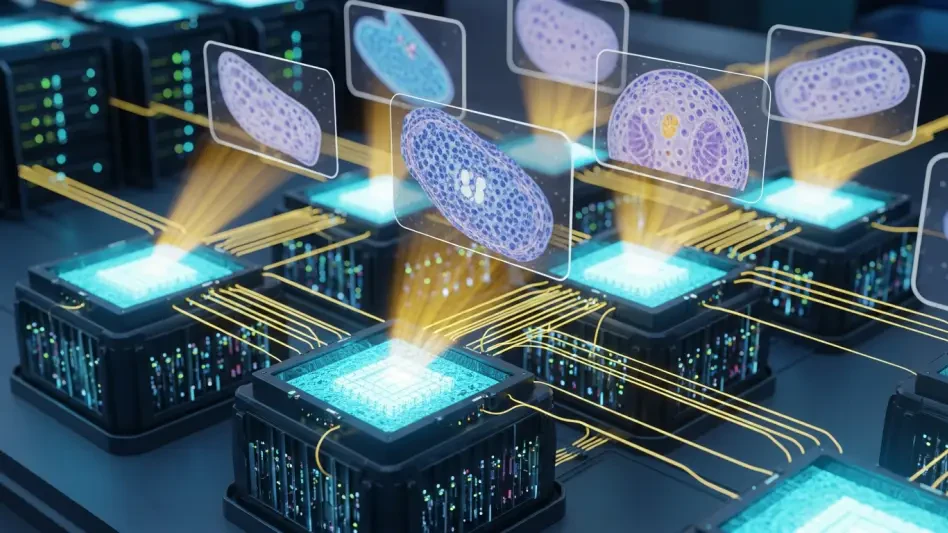
Furthermore, the transition to high-resolution digital imaging allows for the application of deep learning models that can identify subtle patterns invisible to the human eye. These algorithms analyze spatial relationships between cells and quantify biomarker expressions with mathematical precision, offering a level of objectivity that manual review cannot match. This data-driven insight is particularly valuable in cases where disease progression is subtle or where therapeutic decisions depend on precise protein quantification. By reducing the variability inherent in human observation, the organization provides more consistent results across different laboratories, ensuring that a patient in one part of the world receives the same quality of care as a patient elsewhere. The ability to extract quantitative data from every slide transforms pathology into a quantitative science. This evolution is essential for meeting the increasing demand for faster turnaround times and accurate results in cancer care.
Global Implementation of Digital Diagnostic Standards
The finalized acquisition established a clear precedent for how large-scale diagnostic entities could successfully internalize specialized artificial intelligence capabilities to enhance patient care. By prioritizing the integration of digital workflows, the organization provided a blueprint for other laboratories seeking to modernize their aging infrastructure and improve diagnostic throughput. These efforts confirmed that the path to better health outcomes relies on the seamless combination of human clinical judgment and the high-speed processing power of machine learning. Moving forward, laboratories began to adopt these automated systems not just for oncology, but for a wider range of therapeutic areas, including infectious diseases and neurology. Once the transaction concluded in late 2026, the rollout was planned to scale from 2026 to 2028, highlighting the importance of investing in digital literacy for professionals, ensuring they were equipped to interpret AI-generated data alongside traditional findings.
Strategic Recommendations for the Digital Transition
Institutions looking to leverage these advancements prioritized the standardization of data formats and the robust encryption of patient information to ensure that digital transformation did not compromise security. As AI tools became more prevalent, the focus shifted toward creating interoperable systems that allowed different diagnostic platforms to communicate effectively across diverse healthcare networks. This required a concerted effort from both technology providers and regulatory bodies to establish clear guidelines for the ethical use of machine learning in clinical decision-making. Future considerations also included the continuous monitoring of algorithm performance to prevent bias and ensure that diagnostic accuracy remained consistent across various demographic groups. By taking these proactive steps, the medical community fully realized the potential of digital pathology to provide equitable and high-quality care to all patients through innovation. This era of innovation redefined the boundaries of what was possible in laboratory medicine.