
The home healthcare sector is currently facing a transformative crisis as clinicians spend more than forty percent of their active working hours navigating antiquated documentation systems instead of providing direct patient support. This administrative bottleneck has historically contributed to high turnover rates among registered nurses and physical therapists who find themselves tethered to digital paperwork long after their clinical visits have concluded. Enzo Health has responded to this systemic challenge by introducing a revolutionary AI-native Electronic Health Record platform designed specifically for the unique demands of home-based medical services. Unlike traditional systems that were merely adapted from hospital-based software, this new solution utilizes a foundational intelligence layer to streamline the entire patient encounter. By integrating large language models directly into the core architecture, the platform effectively transforms the documentation process from a manual burden into an automated background function that supports clinicians in real time.
Technological Foundations: Engineering an Intelligent Clinical Ecosystem
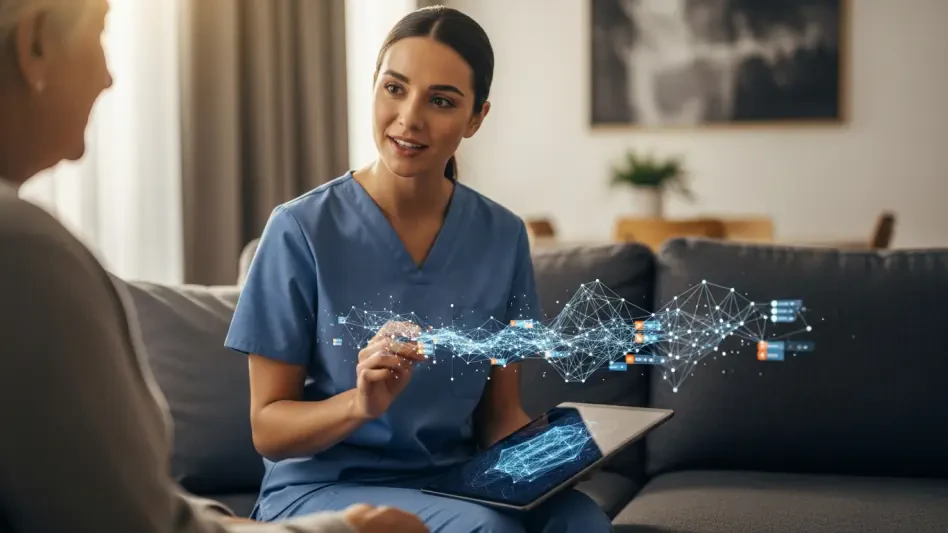
The core architecture of this platform relies on advanced natural language processing to capture and organize clinical data during the patient visit without requiring manual data entry. Ambient listening technology identifies relevant clinical details from the conversation between the nurse and the patient, automatically populating the medical record with accurate observations regarding wound care progress, medication adherence, and vital signs. This shift away from legacy click-through menus allows the clinician to maintain eye contact and build rapport with the patient, which is a critical component of effective home care. Furthermore, the system is engineered to recognize specific clinical contexts, ensuring that the captured information is mapped correctly to the appropriate sections of the medical record while maintaining high standards of data security and patient privacy throughout the entire encounter.
In addition to ambient documentation, the software addresses the complex regulatory requirements of home healthcare by automating the generation of Outcome and Assessment Information Set documents. These forms, which are essential for reimbursement and quality tracking, often require hours of meticulous labor, yet the new platform can draft these documents based on the captured clinical data for final review by the nurse. This capability significantly reduces the cognitive load on healthcare providers and minimizes the risk of compliance errors that can lead to claim denials or legal complications. By leveraging a native artificial intelligence engine, the system continuously learns from the clinician’s preferences and local agency protocols, becoming more efficient and accurate with each subsequent visit while ensuring that the agency remains in total alignment with federal and state regulations.
Strategic Implementation: Navigating the Transition to Automated Care Models
Health organizations that successfully integrated this technology observed a marked reduction in documentation time and prioritized clinical engagement over manual data entry. Leadership teams recognized that the implementation phase required a clear focus on data literacy and restructured their internal training programs to accommodate a more analytical approach to care. Agencies that moved early were able to stabilize their workforces, as nurses found greater job satisfaction when their primary focus returned to patient interactions rather than clerical tasks. These organizations also realized that the transition necessitated a thorough review of existing IT infrastructure to ensure that mobile devices were capable of supporting high-fidelity voice capture and real-time data synchronization across the entire network of home-based providers.
Administrators discovered that the shift to an AI-native system provided unprecedented visibility into clinical outcomes through real-time risk stratification and predictive modeling. This allowed management teams to allocate resources more effectively, intervening in high-risk cases before a patient required hospitalization or emergency services. To maximize the benefits of such a system, it was essential for agencies to cultivate a culture of technological agility and provide continuous support for staff as they moved away from traditional paper-based mindsets. The transition ultimately demonstrated that clinical excellence in the home setting is best achieved when digital tools operate as an invisible assistant, allowing medical professionals to exercise their expertise without the constant distraction of administrative reporting requirements.