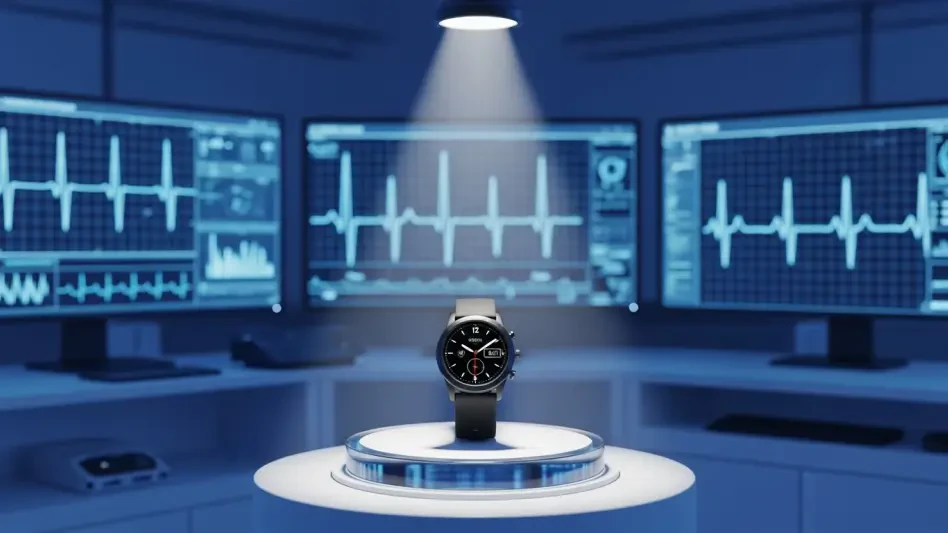

Dr. Kenneth Civello is a clinical cardiologist and cardiac electrophysiologist at Our Lady of the Lake Hospital, where he stands at the intersection of traditional cardiovascular care and the digital health revolution. With an MPH and a focus on heart rhythm disorders, he has dedicated his career to transforming how we detect risks using remote monitoring and artificial intelligence. As wearables transition from simple step-counters to medical-grade diagnostic tools, Dr. Civello provides a critical perspective on how clinicians can separate meaningful physiological insights from the overwhelming volume of data generated by modern smart devices.
The following discussion explores the evolving landscape of digital health, focusing on the necessity of data provenance and the rigorous validation standards required to bridge the gap between wellness gadgets and clinical instruments. Dr. Civello breaks down the importance of sensor fidelity, the impact of new reimbursement models like ACCESS, and the shifting expectations of an aging population that prioritizes reliability over novelty.
Many clinicians are facing an exponential rise in physiological data from smart rings and watches. How do you distinguish actionable clinical signals from simple noise, and what specific steps can health systems take to reduce the resulting administrative burden?
The primary challenge we face today isn’t a lack of data, but rather a lack of data we can trust at a massive scale. To distinguish actionable signals, we look for “medical-grade” quality—specifically focusing on whether the data can reliably guide a treatment decision at two o’clock in the morning without requiring a redundant in-person test. Health systems must implement sophisticated filtering layers, using AI and digital health platforms to aggregate data from multiple devices before it ever reaches a physician’s inbox. By streamlining these unfiltered streams into curated insights, we can mitigate provider burnout and ensure that the 24/7 monitoring actually prevents hospitalizations rather than just creating extra paperwork.
Performance in a controlled lab environment often fails to translate to real-world daily use. When evaluating a new wearable, how do you assess its data provenance and validation standards to ensure the information is reliable enough to influence a high-stakes treatment plan?
When I evaluate a new device, I look specifically for provenance, which means understanding exactly how the signal is captured and how it behaves across diverse populations in the wild. A device might show 99% accuracy in a quiet lab, but we need to see how those electrodes or optical sensors perform during exercise, sleep, or daily chores. Reproducible validation against recognized clinical standards is the only way a physician can feel comfortable moving a patient from observational monitoring to an active clinical intervention. Without this level of transparency, any data point remains purely observational and, frankly, a waste of everyone’s time.
The integration of ECG into consumer devices has shifted industry expectations toward medical-grade quality. Why is signal fidelity at the sensor level more critical than algorithmic compensation, and how does this affect diagnostic accuracy across diverse skin types and use conditions?
Trust must be designed into the hardware from the very first day, as algorithms can only enhance a signal; they cannot magically fix poor data quality at the source. Sensor design, including the specific placement of optical components and electrodes, determines the baseline fidelity that is necessary for diagnosing arrhythmias like Atrial Fibrillation. If the initial capture is weak, the resulting noise makes it nearly impossible to provide consistent accuracy across different skin tones or varying environmental conditions. Companies like Apple, Samsung, and AliveCor are pushing these boundaries because they recognize that high-fidelity hardware is the prerequisite for clinical credibility.
Remote monitoring frameworks and reimbursement models are expanding, yet many devices remain confined to the wellness market. What specific criteria must a wearable meet to bridge this gap, and how does clinical validation influence a company’s ability to engage older, high-risk demographics?
To move beyond the wellness tier, a device must demonstrate that it can participate in established reimbursement frameworks and help manage chronic conditions like hypertension. Older users, who often possess significant purchasing power and clear health motivations, are far less interested in novelty features and much more concerned with whether a device is reliable. Clinical validation acts as a bridge; it proves to the user and the doctor that the device is a legitimate tool for living a longer, healthier life. Devices that fail to meet these rigorous standards will find themselves stuck competing on price alone, while validated technologies become integrated into standard care.
Continuous monitoring can detect arrhythmias early but also risks increasing patient anxiety and provider burnout. Who should bear the ultimate responsibility when wearable data triggers a clinical intervention, and how can transparent validation protocols protect both the physician and the patient?
Accountability is a major hurdle, because whenever a data point influences a care plan, legal and ethical responsibility follows. Transparent validation protocols protect the physician by providing a verified evidence base for their decisions, ensuring they aren’t chasing ghosts created by sensor errors. For the patient, these protocols offer reassurance that an alert is a meaningful health event rather than a technical glitch, which helps manage the anxiety inherent in 24/7 monitoring. Ultimately, the responsibility is shared, but it must be anchored by technology partners who provide high-quality signal provenance to justify the clinical actions taken.
What is your forecast for wearable health technology?
I believe we are at a definitive inflection point where trust will replace feature-count as the most durable form of market differentiation. Over the next decade, the industry will split: companies that invested early in robust clinical validation for metrics like ECG will define the standard of care and lead the market. Meanwhile, those relying on inferred or unvalidated metrics will be relegated to the wellness tier, unable to cross the threshold into true healthcare relevance. We are moving toward a future where “medical-grade” is no longer a premium label but a baseline expectation for any device that claims to monitor human health.