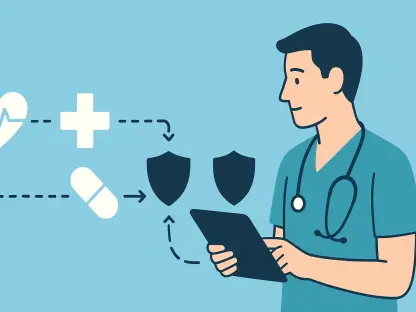

The healthcare industry is currently facing a silent epidemic that threatens the very people dedicated to healing others. While many see hospitals as sanctuaries of care, the data suggests a much harsher reality where frontline workers face a disproportionate risk of physical and verbal harm. As a specialist in medical technology and healthcare safety, Faisal Zain brings a unique perspective to this crisis, looking at how innovation and rigorous regulatory frameworks can bridge the gap between current vulnerabilities and a secure working environment. Our discussion explores the shifting landscape of federal and state laws, the psychological barriers to incident reporting, and the practical steps leadership must take to move beyond a culture that treats violence as “part of the job.” We delve into the nuances of hazard assessment, the rise of state-level mandates in the absence of federal action, and the critical importance of treating covert aggression with the same urgency as physical assault.
Healthcare workers account for nearly half of all workplace assaults despite representing a small fraction of the total workforce. Why does this discrepancy exist, and how can leadership address the culture of underreporting that obscures the true scale of these injuries?
The discrepancy exists because healthcare environments are high-stress pressure cookers where clinicians often interact with individuals in their worst moments, frequently involving cognitive impairment or substance issues. Despite healthcare workers making up only about 10% of the workforce, the nonfatal injury rate due to intentional harm rose sharply from 10.4 per 10,000 workers in 2018 to 15.2 in 2020, highlighting a trend that is moving in the wrong direction. We see a staggering underreporting rate, sometimes exceeding 89%, because many nurses and technicians feel that filing a report is a futile exercise that won’t lead to actual change. To break this cycle, leadership must move away from the “part of the job” mentality and implement confidential, easy-to-use reporting mechanisms that provide immediate feedback to the whistleblower. When staff see that a report regarding a patient’s aggressive behavior leads to a tangible change, like an updated care plan or increased security presence, the culture begins to shift from silent endurance to proactive prevention.
Federal rulemaking for workplace violence standards has shifted to long-term action status, delaying mandates for at least another year. In the absence of specific federal standards, what legal risks do facilities face today, and how should they use the General Duty Clause to guide current safety protocols?
The delay in federal rulemaking puts hospitals in a precarious position because the threat of violence doesn’t wait for a regulatory calendar, yet OSHA has already designated this as a “serious and longstanding concern.” Even without a specific standard, the General Duty Clause remains a powerful tool for enforcement, requiring employers to provide a workplace free from recognized hazards that could cause death or serious harm. Between 2011 and 2018, we saw an average of 20 deaths annually in this sector, totaling 156 lives lost, which serves as a grim reminder of what is at stake for facilities that fail to act. If a hospital experiences a predictable incident and hasn’t followed OSHA’s 2015 guidelines, they face significant litigation risks and heavy fines during a post-incident audit. Smart leaders are using this waiting period to align their protocols with those federal guidelines now, essentially future-proofing their organizations against the mandates that will inevitably arrive.
New requirements in certain states categorize violence into four specific types, ranging from criminal intent to personal relationships. How does identifying these distinct categories change a facility’s approach to risk assessment, and what specific engineering controls are most effective for mitigating patient-directed violence?
Categorizing violence into four distinct types, as seen in California’s Senate Bill 553, forces a facility to move away from a “one-size-fits-all” security plan and toward a nuanced, surgical approach. For Type 2 violence, which involves aggression from patients or visitors and is the most common in healthcare, we shift our focus toward engineering controls that physically separate the worker from the potential aggressor. This includes installing physical barriers at intake desks, ensuring rooms have two exits to prevent a staff member from being cornered, and integrating sophisticated panic buttons that alert security to a precise location. By identifying whether a threat is a criminal intruder (Type 1) or a personal relationship conflict (Type 4), security teams can tailor their access control and lighting in parking areas to address the specific vulnerability. These physical changes, when combined with a robust patient flagging system, create a multi-layered defense that catches risks before they escalate into physical encounters.
National accreditation standards have expanded the definition of workplace violence to include “covert” behaviors like sabotage, bullying, and verbal intimidation. What training methods effectively help staff identify these subtle red flags, and what steps should a multidisciplinary committee take to integrate these behaviors into a reporting system?
The Joint Commission’s shift to include covert behaviors like sabotage and nonverbal aggression recognizes that physical violence is often the final step in a long chain of escalating behaviors. Effective training must move beyond simple “hands-on” defense and into the realm of mindfulness and de-escalation, teaching staff to recognize the sensory cues of rising tension, such as pacing or a change in a patient’s tone. We recommend using simulation-based training where staff can practice responding to verbal intimidation in a safe environment, learning how to set boundaries before a situation boils over. A multidisciplinary committee, including direct-care staff and management, should then ensure the electronic reporting system has specific checkboxes for these subtle behaviors so they can be tracked as leading indicators. By treating a “near-miss” or a verbal threat with the same analytical rigor as a physical injury, the committee can identify departments where a toxic culture might be brewing and intervene with targeted support.
Risk levels vary significantly between departments, with emergency and psychiatric units often requiring more intensive intervention. How should a hospital conduct a unit-by-unit analysis to identify environmental hazards, and what are the practical trade-offs when implementing administrative controls versus physical engineering solutions like panic buttons?
A hospital-wide sweep is rarely enough; instead, teams must perform granular, unit-by-unit analyses that look at everything from the brightness of the lighting to the way furniture can be used as a weapon. In a psychiatric unit, the risk is persistent and internal, requiring heavy administrative controls like increased staffing levels and specific patient handover tools that prioritize the transfer of safety-related information. In contrast, an Emergency Department might benefit more from engineering solutions like controlled access points and security cameras that monitor high-traffic waiting areas where tensions often flare due to long wait times. The trade-off is often between the immediate protection of a physical barrier and the long-term sustainability of administrative protocols; while a panic button provides a safety net, it doesn’t solve the underlying staffing shortages that often trigger patient frustration. A balanced program uses engineering controls to provide the “hard” safety, while administrative controls like visitor management protocols address the “soft” behavioral triggers.
Successful prevention programs must include robust post-incident investigations and support for victims and witnesses. Can you walk us through a step-by-step framework for conducting a trauma-informed investigation, and what metrics should leadership track to ensure their corrective actions are actually reducing future occurrences?
A trauma-informed investigation begins with prioritizing the psychological safety of the victim, ensuring they have immediate access to employee assistance programs and are not grilled in an adversarial manner. The process should follow a clear path: first, secure the scene and provide medical care; second, gather statements in a supportive environment; and third, perform a root-cause analysis that looks at systemic failures rather than blaming individual staff members. Leadership must track more than just the raw number of assaults; they should look at the time between incidents, the ratio of “near-miss” reports to actual injuries, and the speed at which corrective actions are implemented. If the injury rate in a specific unit drops from 15.2 per 10,000 back toward the baseline after a new staffing protocol is introduced, that is a data point that proves the intervention’s success. This continuous loop of investigation and adjustment demonstrates to the workforce that their safety is a living priority rather than just a policy on a shelf.
What is your forecast for workplace violence prevention in the healthcare industry over the next five years?
Over the next five years, I expect we will see a massive shift from voluntary guidelines to mandatory, high-stakes compliance driven by both state legislation and the eventual finalization of the OSHA federal standard. We will see technology playing a much larger role, with AI-driven sentiment analysis and wearable panic devices becoming as common as stethoscopes in high-acuity units like the ER. However, the real transformation will be cultural; as more states follow California’s lead and require transparent, multidisciplinary involvement, the “code of silence” surrounding workplace violence will finally break. Facilities that have ignored these trends will likely face an exodus of talent as healthcare workers move toward organizations that can prove they prioritize staff safety through documented hazard assessments and zero-tolerance policies. Ultimately, the industry will have to accept that protecting the caregiver is the only way to ensure the long-term quality and safety of patient care.