
Residents in Vermont’s most isolated communities often find themselves hours away from the nearest hospital, forcing many to delay essential medical attention until minor symptoms escalate into life-threatening emergencies. This geographic isolation has long defined the state’s healthcare challenges, but the enactment of House Bill 588 is fundamentally altering this narrative by decentralizing clinical authority and expanding the utility of local pharmacies. By shifting the focus toward neighborhood retailers, the state is effectively transforming these spaces into frontline medical clinics equipped to handle much more than just traditional prescription fulfillment. This legislative pivot empowers pharmacists and pharmacy technicians to test, assess, and treat routine conditions such as influenza and strep throat, creating a new layer of clinical access for the public. As the primary care workforce continues to face significant shortages, this pragmatic evolution ensures that a patient’s zip code does not dictate the quality of their immediate care.
Bridging the Gap: The Evolution of Pharmacy Roles
From Advisory Functions: Direct Clinical Intervention
Historically, the community pharmacist occupied a middle ground where they possessed deep medical knowledge but lacked the legal authority to act on it without a physician’s formal signature. Patients would visit their local pharmacist for advice on over-the-counter remedies, yet if a diagnostic test was required, they were redirected to urgent care centers or primary doctors. This circular process often introduced unnecessary delays, particularly for acute illnesses that require immediate intervention to prevent the spread of contagion or worsening symptoms. House Bill 588 disrupts this inefficient cycle by allowing pharmacists to conduct point-of-care testing and prescribe treatment in a single session. This streamlined approach mirrors the historical shift that saw pharmacies become primary sites for immunizations, a transition that once seemed radical but is now a standard pillar of the American public health strategy. By removing these hurdles, the law ensures that treatment begins precisely when it is most effective.
Streamlining Diagnostics: The New Pharmacy Workflow
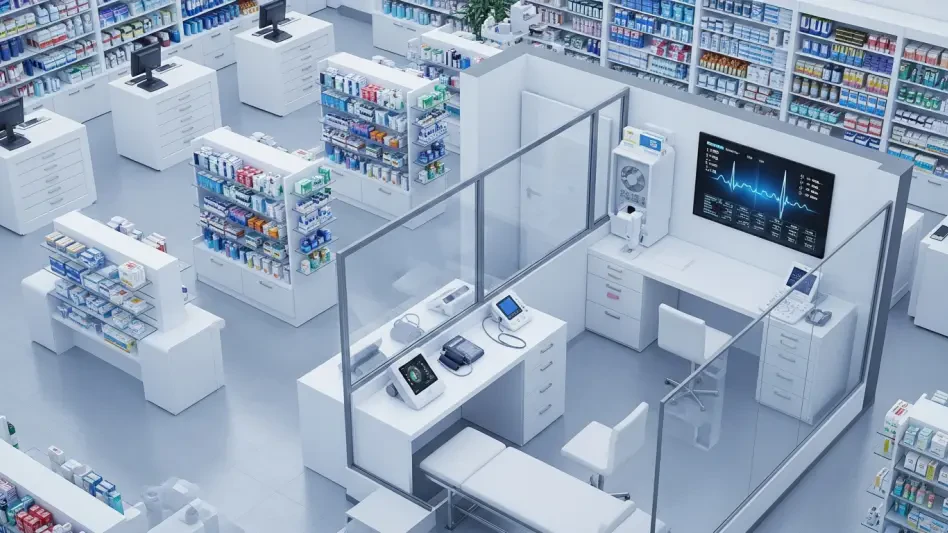
The expansion of professional scope for pharmacy technicians further supports this clinical shift by allowing these professionals to handle logistical and preparatory tasks, freeing pharmacists to focus on patient assessment. This team-based approach in a pharmacy setting mimics the workflow of a traditional doctor’s office, ensuring that diagnostic accuracy remains high while maintaining rapid service speeds. As patients become more comfortable with receiving medical results in a retail setting, the stigma associated with store-front medicine is rapidly evaporating in favor of practical outcomes. This cultural shift is particularly evident in younger demographics who prioritize efficiency and accessibility over traditional physician relationships for minor health concerns. Consequently, the pharmacy is no longer just a place to pick up a bottle of pills; it has become a diagnostic hub where clinical expertise is delivered with the convenience of a neighborhood business. This integration of testing and treating represents a significant milestone in modernization.
Strengthening Rural Resilience: Community and Economics
Overcoming Geographic Isolation: Fighting Medical Deserts
In the rugged terrain of rural Vermont, the local pharmacy often serves as the most frequent point of contact between residents and the medical establishment, with many locals visiting their pharmacist ten times more often than their physician. This high frequency of interaction builds a foundation of trust that is essential for effective healthcare delivery, as pharmacists are seen as accessible neighbors rather than distant institutional figures. However, this critical resource has faced mounting pressure as national chains and independent stores alike struggle against the rising tide of pharmacy deserts. Currently, approximately one-quarter of the state’s population resides more than ten miles away from the nearest pharmacy, a distance that can become an insurmountable barrier during the harsh winter months. House Bill 588 addresses this vulnerability by maximizing the utility of every remaining pharmacy site, ensuring that these locations provide a comprehensive suite of services that justify their continued operation.
Sustainable Infrastructure: Funding and Technological Integration
The successful implementation of House Bill 588 demonstrated that local pharmacies could effectively serve as clinical outposts without compromising the quality of patient care. By 2026, the state had already seen a measurable decrease in non-emergency room visits, as residents utilized their neighborhood pharmacists for routine diagnostics and immediate treatment. This shift was largely supported by the integration of advanced telehealth tools that connected rural pharmacies with specialists for more complex consultations. Moving forward, healthcare administrators should prioritize the expansion of this model to include chronic disease management, such as monitoring hypertension and diabetes, to further alleviate the burden on primary care physicians. Policy makers must also continue to refine reimbursement models to ensure that pharmacists are fairly compensated for their evolving role as clinical practitioners. Investing in interoperable data systems remains a critical next step to maintain a unified patient record across all medical touchpoints.