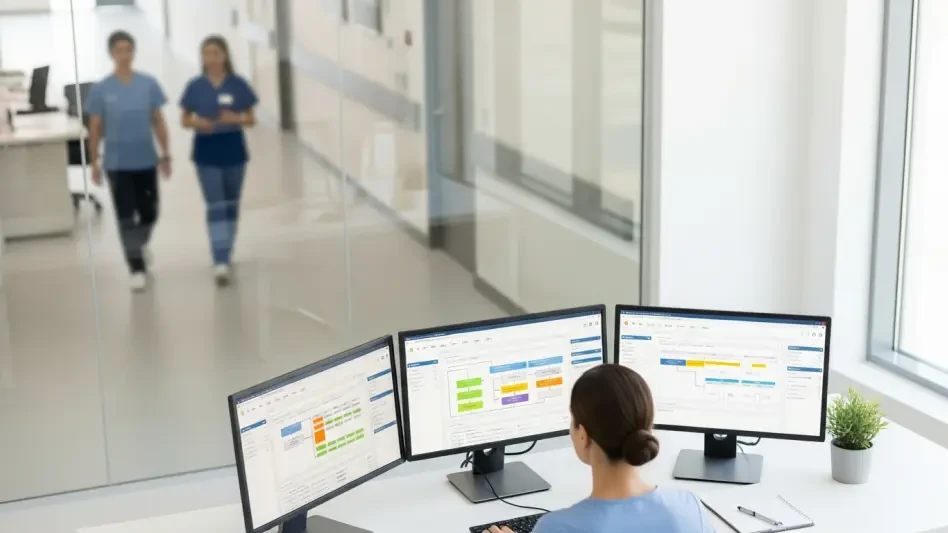

The paradox of modern healthcare lies in the fact that as we add more sophisticated digital tools to the patient journey, the experience often becomes more frustratingly fragmented for the end user. This review examines the shift from standalone digital tools to unified patient access AI, a technological evolution aimed at resolving the disconnect between automated systems and human care. The core objective of this technology is to create a seamless transition across various touchpoints, ensuring that the convenience of digital self-service does not come at the cost of clinical accuracy or operational coherence.
The Concept of Unified Patient Access AI
The technology under review departs from traditional siloed digital channels by prioritizing a unified workflow architecture. In the past, health systems frequently implemented chatbots, web portals, and intake forms as independent features, often managed by separate vendors. This fragmented approach created a “digital front door” that was effectively a collection of unrelated entry points. Unified patient access AI, however, functions as a cohesive layer that integrates these elements, ensuring that triage, scheduling, and patient intake operate as a singular, continuous process rather than a series of isolated tasks.
This emergence is a direct response to the friction inherent in modern patient intake, where digital tools often fail to communicate with human-operated contact centers. When a digital tool lacks the intelligence to hand off a complex case to a live agent, the patient is forced to start their narrative from scratch. By bridging this gap, unified access platforms aim to solve the structural mismanagement of patient navigation. The technology treats access not as a destination, but as a fluid journey that adapts to the complexity of the patient’s medical needs and the specific constraints of the healthcare provider’s scheduling logic.
Architectural Framework and Functional Components
Integrated Workflow Orchestration: The Central Nervous System
At the heart of this technology is an orchestration engine that maintains data continuity across every interaction. When a patient moves from an AI-driven chatbot to a live coordinator, the system preserves the context of the conversation, medical history, and specific inquiries already addressed. This persistence of information is vital because it eliminates the redundancy that often plagues traditional contact centers. By functioning as a central nervous system for patient access, the architecture ensures that every digital interaction informs the next step in the clinical pathway.
Performance metrics indicate that this architectural approach significantly reduces call handle times and patient frustration. Instead of spending several minutes re-verifying identity and symptoms, agents can immediately focus on higher-level problem solving or clinical guidance. This reduction in cognitive load for both staff and patients represents a fundamental shift in how health systems manage high-volume intake. The focus shifts from simply answering a call to effectively resolving a medical need through the most efficient channel available.
EHR Synchronization and the Single Source of Truth
The technical efficacy of a unified system depends heavily on its direct integration with Electronic Health Records (EHR). Unlike basic scheduling tools that merely sit on top of a website, AI-assisted workflows utilize real-time data to ensure clinical accuracy and adherence to provider-specific protocols. This synchronization allows the system to act as a “single source of truth,” pulling insurance data, prior authorizations, and clinical history directly into the scheduling logic. This ensures that a patient is matched with the right specialist based on real-time availability and medical necessity rather than just the first available time slot.
Moreover, the performance of these unified systems remains consistent across text, web, and phone channels. Because the underlying logic is tethered to the EHR, the patient receives the same guidance regardless of how they choose to interact with the facility. This consistency prevents the common issue of “channel hopping,” where patients call the office specifically because they do not trust the information provided by an automated web portal. Architectural integrity thus becomes the primary driver of trust and adoption in the digital patient experience.
Emerging Trends in Healthcare Access Technology
The healthcare IT market is currently undergoing a significant transition from purchasing individual “features” toward investing in comprehensive “infrastructure.” For years, health systems prioritized the novelty of standalone chatbots or flashy web interfaces. However, it has become increasingly clear that these tools offer diminishing returns if they remain disconnected from the broader operational environment. High-performing organizations are now looking for platforms that support the entire patient journey, treating the underlying workflow as a permanent asset rather than a temporary tech fix.
A critical focus within this trend is the optimization of the “handoff” space—the moment a patient transitions from a digital interface to human intervention. This transition point is where most patient dissatisfaction occurs. Modern access solutions are being designed to synthesize information so that staff possess total operational visibility. By moving toward a synthesis of data, healthcare administrators can manage their patient flow with a level of precision that was previously impossible when information was trapped in disparate vendor portals.
Real-World Implementation and Operational Impact
Large orthopedic networks and multi-specialty health systems have served as primary proving grounds for this unified technology. In these environments, fragmented vendor portals previously hindered efficiency, as staff were forced to log into multiple systems to track a single patient’s progress. Use cases involving platforms like Keona’s CareDesk demonstrate that a unified workflow can close these operational gaps in as little as 90 days. This rapid deployment is possible because the technology focuses on streamlining existing processes rather than forcing a total overhaul of the medical practice’s underlying clinical logic.
Furthermore, the operational visibility provided by these systems allows administrators to identify precisely where patients drop out of the digital journey. If a high percentage of patients abandon an online scheduling tool at a specific clinical question, managers can adjust the AI’s triage logic in real-time. This level of granular data ensures that the digital front door remains an evolving gateway rather than a static barrier. By understanding why patients return to traditional phone lines, health systems can continuously refine their digital offerings to better serve complex medical needs.
Addressing the Challenges of Fragmented AI Silos
Despite the advancements, technical hurdles remain, particularly regarding “category mistakes” where access points are still treated as independent silos. When a health system fails to integrate its phone logic with its digital triage, the resulting decline in patient satisfaction can negate any potential cost savings from automation. The market also faces obstacles concerning data accessibility, as valuable patient interaction history often remains trapped within proprietary vendor software. This lack of standardization makes it difficult for administrators to compare performance across different departments or specialties.
Ongoing development efforts are currently focused on mitigating these limitations by prioritizing architectural integrity over the novelty of standalone AI tools. There is a growing movement to establish standardized definitions for metrics such as “completed appointments” to ensure that data remains actionable. By focusing on the continuity of the narrative rather than the individual bot, developers are helping health systems move away from a “collection of tools” toward a unified ecosystem that prioritizes the patient’s long-term engagement with the provider.
The Future Outlook of Integrated Patient Engagement
The next phase of integrated patient engagement will likely focus on narrative-driven experiences where AI acts as a continuous assistant. Rather than a series of disconnected bots, patients will interact with a persistent intelligence that remembers their preferences, medical history, and previous questions throughout their entire lifecycle of care. Potential breakthroughs in predictive scheduling could further transform the landscape, allowing systems to anticipate patient needs before a symptom even becomes acute. This shift would represent a move from reactive intake to proactive health management.
Long-term staff retention and healthcare ROI are also expected to improve as these unified architectures become the industry standard. By automating the mundane aspects of data entry and appointment matching, medical staff can focus on high-value clinical interactions. Future “smart” handoffs will likely ensure that a nurse or coordinator is fully briefed on a patient’s entire digital history before a phone call even begins. This level of preparation will transform the patient access experience from a collection of hurdles into a seamless, data-driven journey that feels personal rather than mechanical.
Final Assessment of Unified Access Solutions
The necessity of closing the “seams” between digital tools and human care was the defining takeaway of this technological review. It was determined that the true value of unified patient access AI resided in the continuity of the patient experience rather than in any individual AI feature or algorithm. By focusing on integrated workflow orchestration and EHR synchronization, health systems successfully moved away from the fragmented silos that previously caused patient and staff frustration. The implementation of these systems allowed for unprecedented operational visibility, enabling administrators to refine the digital front door based on real-world patient behavior.
The transition toward infrastructure-based investments marked a critical turning point in how healthcare technology was evaluated and deployed. It was observed that organizations prioritizing the handoff space achieved far higher levels of patient satisfaction and staff efficiency than those that simply added standalone tools. Future advancements were poised to further automate the complexities of scheduling and triage, turning patient access into a strategic advantage rather than an operational bottleneck. Ultimately, the successful deployment of a unified architecture ensured that technology served as a bridge to care, effectively transforming a series of disconnected interactions into a cohesive, patient-centered narrative.