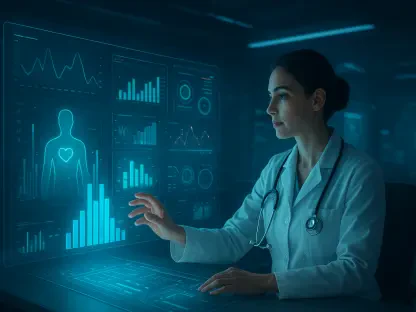

Healthcare systems currently face a critical supply-and-demand crisis driven by an aging global population and an increasing burden of chronic diseases requiring frequent monitoring. This fundamental transformation is pushing the field of radiology away from a century-long obsession with visual clarity toward a necessary focus on operational efficiency and intelligent logistics. Historically, the industry measured success through the sharpness of a computed tomography scan or the resolution of a magnetic resonance sequence, but today’s frontier is defined by the intelligent workflow. This shift represents a transition from an image-centric model to a holistic environment where innovation is judged by how well technology orchestrates the patient journey and reduces the burden on medical staff. Because clinicians are increasingly overwhelmed by administrative tasks and manual processes, the primary goal of modern medical technology is to automate labor and preserve human expertise for high-level decision-making. By moving the focus from the pixel to the process, healthcare providers are attempting to stabilize a system under immense pressure while ensuring that diagnostic accuracy remains at the highest possible standard.
The Rise of Connected Clinical Ecosystems
Orchestrating the Patient Journey: The Power of Integration
Major industry leaders are now moving toward a vision of radiology as a continuous, unified process rather than a collection of isolated events. By leveraging cloud-based tools and artificial intelligence, vendors aim to link acquisition, diagnosis, and follow-up into a single, seamless thread that follows the patient across different care settings. This approach ensures that the right information reaches the clinician at the right time, effectively removing the friction that traditionally slows down the diagnostic cycle. For instance, when an imaging study is completed, the data is no longer just sent to a siloed workstation; it is instantly integrated into the broader health record, triggering automated alerts for the referring physician and prepopulating relevant patient history for the radiologist. This level of orchestration allows for a more proactive approach to care, where the system anticipates the needs of the medical team. Building on this foundation, integrated platforms now allow for real-time collaboration between departments, ensuring that a cardiac scan or an oncological follow-up is viewed within the full context of the patient’s ongoing treatment plan rather than as a standalone data point.
Solving Workforce Challenges: The Impact of Remote Collaboration
A key component of this new ecosystem is the redistribution of human expertise through virtual technology, which directly addresses the shortage of specialized personnel. Remote scanning platforms, such as the Virtual Cockpit, allow senior technologists to support multiple clinical sites from a centralized hub, guiding less-experienced staff through complex procedures in real time. This model transforms the relationship between vendors and hospitals, shifting the focus from selling hardware to providing long-term digital twins and workforce support strategies. Instead of requiring a highly specialized expert at every satellite clinic, a central expert can monitor several scans simultaneously, ensuring high-quality results regardless of where the patient is physically located. This decentralization of expertise not only improves access to care for patients in rural or underserved areas but also helps mitigate burnout by allowing staff to work in more flexible, collaborative environments. Furthermore, this remote capability acts as a training tool, where junior technicians receive immediate feedback and mentorship during live procedures. By optimizing the distribution of the existing workforce, healthcare systems can maintain high throughput and diagnostic standards without requiring an unattainable increase in the number of qualified practitioners.
Technological Innovations Fueling Speed and Precision
Hardware Advancements: The Role of Photon-Counting Technology
While workflow is the priority, hardware innovation remains essential when it directly impacts the speed of clinical outcomes and the clarity of decision-making. Photon-counting computed tomography technology is a prime example of this synergy, providing richer anatomical detail and better tissue characterization with significantly lower radiation doses. Unlike traditional detectors that convert X-rays into light before turning them into electrical signals, these newer systems count individual photons, preserving the energy information of every particle. By offering more definitive information during the initial scan, this technology allows clinicians to bypass intermediate diagnostic steps, such as additional invasive tests or secondary imaging sessions. This creates a faster path from the emergency room to the operating suite, which is critical in time-sensitive cases like stroke or cardiac distress. The ability to distinguish between different materials, such as calcium and contrast agents, with high precision means that radiologists can make more confident diagnoses the first time. Consequently, the hardware itself becomes an engine for workflow efficiency, reducing the total time a patient spends in the diagnostic loop and freeing up the imaging suite for subsequent cases more rapidly.
Redesigning the Physical Space: Moving Equipment Around the Patient
The physical interaction between the patient and the machine is also seeing a radical redesign to improve throughput and ergonomics for both staff and patients. Instead of forcing injured, elderly, or mobility-challenged patients to position themselves around a fixed imaging system, new robotic equipment, such as the Adora DRFi, moves the machinery around the patient. This patient-centric design reduces the physical strain on technologists who previously had to manually lift or shift patients into precarious positions to get the necessary diagnostic angles. By using automation and pre-programmed robotic movements, these systems ensure consistent image quality and standard positioning regardless of the patient’s mobility level. This advancement significantly speeds up the time required to set up a room for a new exam, which in turn increases the number of patients that can be seen in a single shift. Moreover, reducing the physical burden on staff helps prevent workplace injuries, a major factor in the long-term retention of experienced technologists. When the equipment adapts to the person rather than the other way around, the entire clinical environment becomes more efficient, compassionate, and focused on the immediate needs of the individual receiving care.
Point of Care: The Expansion of Intelligent Portable Systems
The traditional concept of a centralized imaging room is being challenged by the proliferation of intelligent portable systems that bring high-end diagnostics directly to the bedside. High-quality diagnostic capabilities are now being pushed into intensive care units, neonatal wards, and rural clinics through portable X-ray systems equipped with 3D positioning cameras and onboard artificial intelligence. This decentralization minimizes the risks associated with moving critically ill patients through hospital hallways, which can often lead to clinical complications or delays in treatment. These portable units use AI-guided positioning to ensure that bedside imaging matches the quality of a fixed radiology suite, providing the medical team with reliable data within minutes. This integration of imaging into the immediate workflow of surgical and emergency departments allows for faster interventions, as doctors no longer have to wait for the patient to be transported and returned. By turning any hospital room into a potential diagnostic suite, healthcare facilities can manage patient flow more dynamically, reducing bottlenecks in the main radiology department. This shift toward “imaging at the point of care” ensures that diagnostic data is generated and acted upon where it is most needed, enhancing the overall agility of the hospital ecosystem.
Artificial Intelligence as a Cognitive Assistant
Enhancing Sensitivity: The Utility of the Second Set of Eyes
The maturation of artificial intelligence has moved past the outdated idea of replacing doctors, focusing instead on providing a cognitive assistant or a second set of eyes for the radiologist. AI now assists in image interpretation by flagging potential findings, such as small lung nodules or subtle fractures, for human verification. This increases diagnostic sensitivity and acts as a safety net against human fatigue, especially during long shifts where the volume of images can be overwhelming. This partnership ensures that radiologists can focus their mental energy on complex, high-priority cases while the software handles the initial screening for common abnormalities and normal results. In addition to detection, AI algorithms are increasingly used to prioritize the worklist, automatically moving urgent cases to the top of the queue based on the severity of the findings identified in the raw data. This triaging capability ensures that life-threatening conditions are addressed by a human expert in seconds rather than minutes or hours. By filtering out the noise and highlighting critical data, AI allows the radiology team to operate with a higher level of precision and confidence, ultimately improving the reliability of the entire diagnostic process within the clinical workflow.
Reducing Burnout: The Impact of Generative Documentation
Generative artificial intelligence is also revolutionizing the clerical side of the profession by automating the reporting process, which has traditionally been one of the most time-consuming tasks for radiologists. These systems, such as Mosaic Reporting, can draft medical reports in a radiologist’s specific style based on dictated findings and the data extracted directly from the images. This significantly reduces the time spent looking at a computer screen rather than the patient’s images, effectively cutting down on the administrative “pajama time” that many clinicians face at the end of their shifts. By offloading these repetitive administrative tasks, AI can increase overall productivity by as much as 50% while allowing clinicians to focus on actionable data and clinical judgment. The automation of the reporting workflow also standardizes the language used in medical records, making it easier for referring physicians to understand and act upon the results. As these tools become more integrated into the daily routine, the focus shifts from manual data entry to high-level clinical oversight. This reduction in the clerical burden is essential for maintaining the mental well-being of the workforce, ensuring that radiologists remain engaged and capable of providing the nuanced analysis that only a human professional can offer.
Evolution of the Human-Technology Partnership
Prioritizing Design: The Necessity of Intuitive Interfaces
For these technological advancements to succeed in a real-world setting, they must be intuitive enough to function in high-stress clinical environments without adding new layers of complexity. The industry consensus is that precision medicine is impossible without a precision workflow; high-resolution data is only valuable if it is accessible and actionable for the team on the ground. Consequently, every piece of new technology is now evaluated based on how well it supports the human professional operating at the top of their license. This means that software interfaces are being redesigned to minimize clicks and physical hardware is being refined to require less manual intervention. If a system is too difficult to use, it becomes a hindrance rather than a help, leading to workarounds that can compromise patient safety. Designers are now working closely with clinicians to create “frictionless” interfaces that provide the most relevant information at a glance. By prioritizing the human-machine interface, developers ensure that technology serves as a silent partner that manages the background logistics while the medical professional remains the primary decision-maker. This focus on intuitive design is the bridge that allows sophisticated advancements like photon-counting CT and generative AI to be adopted quickly and effectively across the global healthcare landscape.
Returning to Care: The Goal of Intelligent Productivity
The ultimate objective of intelligent productivity is to make radiology more human by removing the administrative and physical burdens that have come to define the modern healthcare experience. By creating a silent, supportive infrastructure to manage unnecessary work, technology allows medical professionals to spend more time interacting with their patients and collaborating with their colleagues. In this new era, the value of a radiology department is defined by its ability to move a patient efficiently through the care cycle using the image as a decision-support tool rather than an end in itself. When the technologist isn’t struggling with equipment and the radiologist isn’t buried in paperwork, they are free to apply their clinical expertise where it matters most: in the interpretation of complex cases and the direct management of patient outcomes. This human-centric approach acknowledges that while data is powerful, it is the application of that data by a skilled professional that truly saves lives. By automating the mundane, the industry is effectively reclaiming the original mission of medicine, which is to provide compassionate and timely care. This evolution ensures that even as imaging volumes increase, the quality of the interaction between the provider and the patient remains the top priority.
Next Steps: Adapting to a Changing Healthcare Landscape
As the industry moved forward, the imaging hardware effectively became a partner in the diagnostic process rather than just a standalone tool. This transformation represented the most significant evolution in the field since the digital revolution, ensuring that radiology remained the cornerstone of modern medicine. To maintain this momentum, healthcare organizations prioritized the adoption of interoperable software that allowed different systems to communicate without manual intervention. Leaders in the field also recognized that investing in staff training was just as important as upgrading the machines themselves, ensuring that the workforce could fully utilize the new AI-driven capabilities. By embracing a connected and workflow-driven ecosystem, providers successfully managed the increasing complexity of patient care while maintaining high standards of diagnostic accuracy. Moving forward, the focus must remain on the continuous refinement of these workflows to prevent the re-emergence of operational bottlenecks. Organizations that viewed the transition as a comprehensive cultural shift, rather than just a series of technical upgrades, found themselves better positioned to thrive in an era of high demand and limited resources. The successful integration of these technologies allowed for a more resilient healthcare system that prioritized patient outcomes over raw data volume.