
Pharmacy departments often receive incomplete information that requires them to work backward to reconstruct medication events for diversion monitoring. In the high-pressure environment of a modern operating room, clinicians prioritize patient outcomes, which sometimes leads to manual documentation being treated as a secondary task. This discrepancy creates a significant gap in the medication lifecycle, making it difficult for hospital administrators to maintain absolute oversight of controlled substances. When records are fragmented, the risk of diversion increases, and the potential for medication errors grows, threatening both patient safety and institutional compliance. Transitioning to a fully automated system is no longer just a convenience but a necessity for healthcare facilities aiming to eliminate these blind spots. By integrating technology directly into the clinical workflow, hospitals can ensure that every milliliter of a drug is accounted for, creating a seamless stream of data that bridges the gap between the pharmacy shelf and the patient’s bedside without adding undue burden to the surgical staff.
1. Preparation and Identification: Scanning at the Source
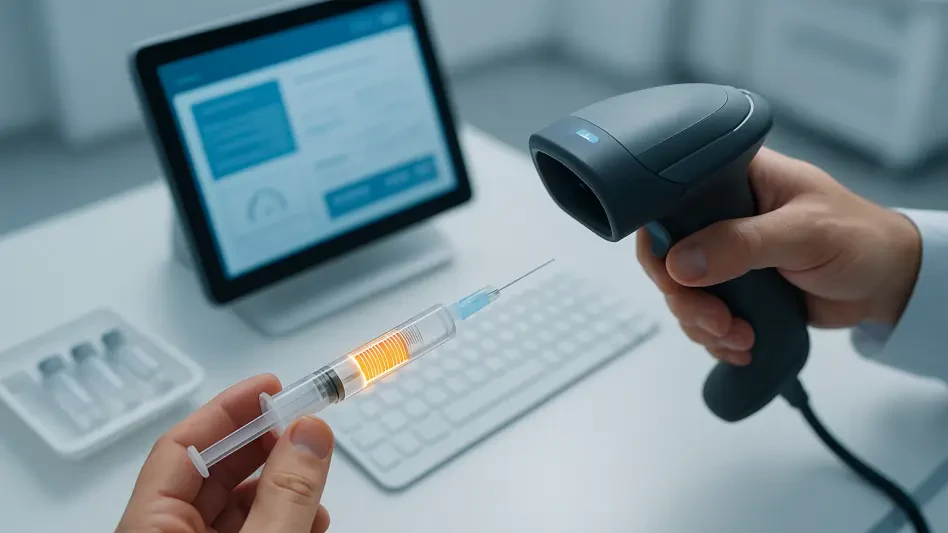
The process of securing the medication loop begins at the preparation stage, where the clinician scans the original manufacturer’s vial using a specialized barcode reader. This initial scan confirms the drug name and concentration against the facility’s internal database, immediately flagging any potential mismatches or expired items before they can reach the sterile field. By verifying this information electronically at the point of care, the system significantly reduces the likelihood of picking the wrong vial, a common source of medication errors in fast-moving environments. This digital verification step is critical because it moves the point of confirmation to the very beginning of the workflow, preventing errors before they have a chance to manifest. The automation ensures that data is captured accurately without requiring the clinician to type in complex names or dosages, which is often where manual transcription errors start. This high level of precision at the outset sets the stage for a fully traceable medication journey throughout the entire procedure.
1. Preparation and Identification: Standardized Digital Labeling
Following the initial scan, the system generates a standardized, barcoded label specifically designed for the syringe being prepared. This label contains all necessary pharmacological information, including the drug concentration and a unique identifier that ties the syringe back to the original vial and the specific clinical case. This standardized labeling eliminates the risks associated with handwritten notes or poorly labeled syringes, which can be easily misinterpreted during the hectic moments of a surgical operation. The barcode on the label serves as a digital key, allowing the syringe to be tracked through subsequent steps of administration and eventual disposal. By automating the labeling process, the platform ensures that every syringe in the surgical field is clearly identified and compliant with national safety standards. This not only improves clinical safety but also creates a reliable digital entry that serves as the basis for the patient’s medication record, ensuring that the documentation is both comprehensive and consistently accurate.
2. Administration and Documentation: Seamless Point-of-Care Entry
During the active phase of surgery, maintaining focus on the patient is paramount, making hands-free scanning a vital feature of modern medication administration. When the clinician is ready to deliver the drug, they simply pass the labeled syringe in front of a scanner located within their immediate workflow area. This action instantly identifies the medication and prepares the system to record the delivery event without requiring the clinician to touch a keyboard or interact with a screen. The automation captures the exact time of administration and the specific drug details, providing a real-time update to the clinical log. This seamless integration ensures that the clinician can remain focused on the surgical site and the patient’s vital signs, rather than being distracted by the need to manually document every dose. By reducing the cognitive load on the medical staff, the technology minimizes the risk of documentation omission or late entries, which are common issues in high-stress environments where multiple medications are given in rapid succession.
2. Administration and Documentation: Electronic Health Record Integration
The administration data captured by the system is automatically transferred into the hospital’s Electronic Health Record (EHR), creating a permanent and accurate record of the patient’s treatment. This direct communication between the medication platform and the EHR eliminates the need for redundant manual data entry, which often introduces transcription errors into the medical history. It ensures that the medication history reflected in the patient’s chart is an exact match to the physical actions taken in the operating room. This level of synchronization is crucial for postoperative care, as it provides subsequent care teams with a reliable and detailed account of what was administered during the procedure. Furthermore, the electronic documentation serves as a robust defense during institutional audits, as it provides a time-stamped, objective record of all medication events. By bridging the gap between the physical administration of a drug and its digital footprint, the system ensures that the record is always complete.
3. Syringe Recognition and Assessment: Post-Operative Verification
Once the surgical procedure has concluded, the system shifts its focus to syringe recognition and the assessment of any remaining substances. The clinician places the used or partially filled syringe into a specialized recognition device that immediately identifies the medication via the barcode on the label. This step is essential for closing the loop, as it links the discarded material back to the specific vial and administration event recorded earlier in the case. The device uses sophisticated sensors to confirm that the contents of the syringe match the label, ensuring that there has been no substitution of the substance. This automated identification process removes the subjectivity often associated with manual waste procedures, where clinicians must rely on visual inspection to identify drugs. By objectively verifying the syringe and its contents at the end of the case, the system provides a high level of assurance that the drugs are being handled correctly, leaving no room for medications to go missing during the cleanup phase.
3. Syringe Recognition and Assessment: Precision Chemical Analysis
In addition to identifying the drug, the platform performs a precise assessment of the liquid remaining in the syringe through advanced chemical analysis. It automatically calculates the volume of the residual medication and analyzes its chemical makeup to ensure the substance matches the original drug profile. This step is a powerful deterrent against diversion, as it ensures that the substance being wasted is exactly what was originally drawn from the vial rather than a substitute like saline. By measuring the volume and composition electronically, the system provides an objective data point that can be compared against the initial dose and the recorded administration. This automated analysis eliminates the need for manual estimation, which is often inaccurate and difficult to verify after the fact. The ability to confirm both the identity and the quantity of the waste substance in real-time provides the pharmacy department with absolute visibility, closing one of the most vulnerable gaps in the medication lifecycle.
4. Automated Disposal: Mechanical Security Protocols
After the system has successfully identified and verified the contents of the syringe, it proceeds with the automated disposal phase. The device mechanically draws the liquid out of the syringe, ensuring that the substance is completely removed in a controlled and standardized manner. This mechanical extraction is a significant improvement over traditional methods, where clinicians might manually spray waste into a container, potentially leading to spills or aerosols. The extracted liquid is then deposited into a secure, non-retrievable waste receptacle, where it is immediately rendered unusable and unrecoverable. This secure containment is a critical component of a comprehensive diversion prevention strategy, as it ensures that once a drug is designated as waste, it cannot be accessed again. The receptacle is designed to prevent any tampering or unauthorized removal, providing a final, secure destination for all discarded substances. This automated process minimizes human interference and ensures the waste is managed safely.
5. Strategic Implementation for Institutional Integrity
The transition to an automated perioperative medication platform represented a significant advancement in clinical safety and regulatory compliance. Organizations that adopted these systems successfully eliminated the risks of manual documentation and created a transparent, closed-loop process for every drug used. To achieve these outcomes, hospital leadership first identified the specific points in their workflow where documentation gaps were most likely to occur. They then implemented integrated scanning and analysis technologies that worked alongside clinicians rather than adding to their existing workload. This strategic approach ensured that the reconciliation of controlled substances was both effortless and accurate. Ultimately, the use of these platforms provided a defensible data set that strengthened the relationship between the pharmacy and the surgical department. By moving away from retrospective reconstruction, healthcare facilities established a more proactive and secure environment for patient care. These steps laid the foundation for a culture of accountability.