
The modern healthcare landscape has reached a critical tipping point where the administrative demands of electronic health records often supersede the fundamental human connection between a physician and a patient. At the University of Toledo Health, better known as UToledo Health, leadership recognized that this digital divide was no longer a sustainable way to deliver high-quality medical care to the local community. By implementing a sophisticated ambient artificial intelligence solution developed by Nabla, the institution has begun to bridge this gap, effectively automating the burdensome tasks of clinical documentation. This transition is not merely about adopting a new software tool; it is a fundamental shift in how the care journey is recorded and respected within the hospital walls. The technology acts as a silent observer, allowing providers to return to the essence of their profession. As documentation becomes a background process rather than a primary focus, the system moves closer to a model where data serves the clinician instead of demanding their constant, undivided attention during critical diagnostic moments.
Reclaiming the Clinical Narrative from Administrative Bloat
The High Cost: Documentation Burnout
Clinicians at UToledo Health previously struggled with the heavy burden of “pajama time,” a pervasive phenomenon where healthcare providers spend their late-night hours finishing patient charts long after the clinic has closed. This administrative weight does more than just exhaust the medical staff; it leads to severe cognitive fatigue and a measurable reduction in overall professional satisfaction. When a doctor is forced to spend three hours on a computer for every hour spent with a patient, the risk of burnout increases exponentially, threatening the stability of the entire healthcare workforce. This phenomenon creates a ripple effect, where the exhaustion of the provider eventually impacts the quality of care delivered. By the time 2026 arrived, the necessity of reclaiming these lost hours became the central focus of the health system’s operational strategy. Reducing this burden is essential for maintaining a resilient team that can focus on complex medical decision-making rather than data entry.
The human cost of this administrative bloat was perhaps most visible in the room during a standard patient visit, where the keyboard often felt like a barrier between two people. This digital wall fundamentally degraded the patient experience by forcing doctors to focus on screens and structured data fields rather than the human beings sitting in front of them. Patients often reported feeling unheard or rushed when their physician was distracted by the need to document every detail in real time to avoid falling behind. This lack of eye contact and presence can erode the therapeutic relationship, which is a cornerstone of effective healing and patient trust. To solve this, UToledo Health looked for a way to remove the physical and mental clutter of the computer from the exam room. The goal was to restore the clinical narrative, allowing the patient’s story to be told without the constant interruption of clicking and typing that has defined the modern era of electronic health records.
Systemic Risks: The Documentation Backlog
Beyond the immediate concerns regarding clinician well-being, the persistent accumulation of “open charts” created significant operational and financial risks for the health system at large. An open chart represents a patient record that remains incomplete or unsigned long after the clinical encounter has concluded, often due to the provider simply lacking the time to finish the narrative. These delays were not merely administrative nuisances; they introduced systemic vulnerabilities that could impact the continuity of care. When a medical record is not finalized promptly, other members of the care team may lack the necessary information to make informed decisions during follow-up visits or emergencies. Furthermore, inconsistent documentation quality directly threatened the health system’s compliance standing and its ability to accurately reflect the complexity of the care provided. Addressing this backlog became a primary institutional priority to ensure that the medical record remained a reliable and timely source of truth.
The financial implications of a documentation backlog are equally serious, as they directly impact coding accuracy and threaten the stability of the revenue cycle performance. In the complex landscape of 2026 healthcare finance, delays in completing patient records lead to slower billing cycles and an increased likelihood of insurance claim denials. If the documentation does not clearly and accurately support the services rendered, the health system faces the risk of under-coding or failing to meet strict regulatory requirements. This creates a precarious situation where the long-term financial health of the institution is tied to the administrative efficiency of its busiest clinicians. By streamlining the documentation process through ambient AI, UToledo Health sought to stabilize its financial operations while ensuring that every clinical encounter was documented with the precision required for modern billing and auditing. This strategic move was designed to protect the institution’s resources, allowing them to be reinvested into patient care and advanced medical technologies.
A Strategic Transition to Ambient AI Solutions
Real-Time Capture: How Ambient Intelligence Works
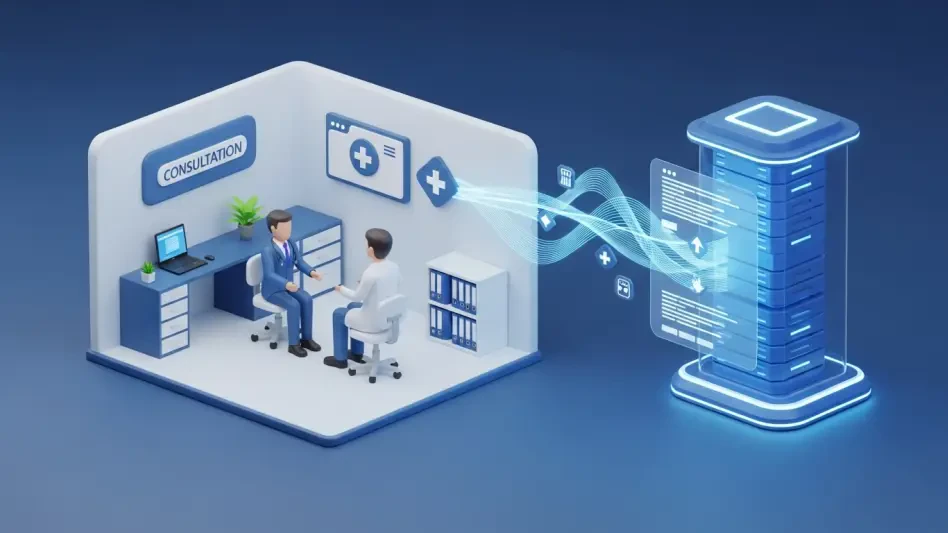
The transition to a more efficient documentation model centered on a sophisticated system that functions by “listening” to clinical conversations in real time to generate structured medical notes. Unlike traditional dictation software, which requires a physician to speak clearly into a microphone after the fact, this ambient technology shifts documentation from an active, manual task to a passive, background process. The AI assistant is designed to identify key clinical elements within a natural conversation, distinguishing between casual rapport and pertinent medical information such as symptoms, histories, and treatment plans. This allows the clinical narrative to unfold naturally without requiring the physician to pause for specific voice commands or cumbersome data entry. By capturing the essence of the visit as it happens, the technology ensures that the resulting note is a comprehensive reflection of the encounter, free from the biases or omissions that can occur when a provider tries to remember details hours later.
The operational beauty of this ambient approach lies in its ability to handle the complexity of medical language across various specialties without constant human intervention. The Nabla solution used at UToledo Health was built to recognize the nuances of different clinical workflows, ensuring that the generated notes meet the specific requirements of both primary care and specialized medicine. This flexibility is vital because a surgical consultation requires a different documentation structure than a routine pediatric check-up. By providing a tool that adapts to the provider rather than forcing the provider to adapt to the tool, the health system has reduced the “friction” that often accompanies new technology adoptions. The result is a more fluid office environment where the technology supports the medical mission rather than dictating the pace of the day. This shift toward “invisible” technology represents a major milestone in the evolution of healthcare informatics, proving that AI can be a collaborative partner in the delivery of care.
Seamless Integration: Within Existing Workflows
A critical component of the implementation strategy was the deep and seamless integration of the AI tool within the health system’s existing Epic electronic health record environment. One of the most common pitfalls in medical technology adoption is the requirement for clinicians to use parallel platforms or “copy-paste” information between different systems, which often creates more work than it saves. By ensuring that AI-generated content flows directly into the standard Epic workflow, UToledo Health avoided this inefficiency, allowing providers to review and finalize notes within the interface they already use daily. This “invisible scribe” approach minimizes the cognitive load on the physician, as they no longer have to navigate multiple windows or manage disparate data streams. The integration ensures that the right information is in the right place at the right time, maintaining the integrity of the patient record while significantly speeding up the time it takes to move from an encounter to a completed chart.
This level of integration also supports better collaboration across the entire medical staff, as the AI-generated notes are immediately available for review and signature within the familiar EHR structure. When the technology works in harmony with existing tools, it becomes a natural extension of the clinician’s workflow rather than a disruptive add-on. This synergy is essential for widespread adoption, as clinicians are more likely to embrace tools that demonstrably make their jobs easier without requiring extensive retraining. The partnership between Nabla and UToledo Health focused on this frictionless experience, ensuring that the technological infrastructure supported the provider’s primary goal of patient care. By removing the administrative barriers associated with data entry, the health system has empowered its staff to work at the top of their licenses. This integration serves as a foundational element of the system’s broader digital transformation, setting a high standard for how future AI tools should be incorporated into the clinical environment.
Measuring Success Through Workflow Transformation
Rapid Results: Drastic Backlog Reduction
During an intensive eight-week pilot phase, 40 providers across a wide range of medical specialties utilized the ambient AI assistant during more than 3,000 patient encounters with transformative results. The impact on administrative efficiency was immediate, with some departments seeing their backlog of over 400 open charts slashed to fewer than 30 in a remarkably short timeframe. This rapid reduction in the documentation backlog proved that the technology could effectively handle the high volume and complexity of a major academic health system. Because the AI generates a structured and highly accurate note by the time a visit concludes, clinicians were able to finalize and close their charts almost immediately after seeing the patient. This shift from delayed documentation to real-time completion has virtually eliminated the need for “pajama time,” allowing providers to leave the office with their work truly finished for the day.
The success of the pilot demonstrated that the implementation of ambient AI is not just a theoretical benefit but a practical solution to one of the most persistent problems in modern medicine. The ability to close charts in real time has profound implications for the health system’s operational flow, as it ensures that patient data is current and accessible for any necessary follow-up care. Moreover, the significant drop in open charts has eased the burden on administrative staff who previously had to track down missing documentation for billing and compliance purposes. By solving the documentation crisis at its source, UToledo Health has created a more streamlined and efficient organization that is better equipped to handle the demands of a busy patient population. The quantitative data gathered during the pilot serves as a powerful testament to the efficacy of the Nabla system, providing a clear roadmap for the full-scale expansion of the technology across the entire health system in the coming months.
Restoring the Human Element: Future Considerations
The experience at UToledo Health underscored a broader trend toward using artificial intelligence as a background utility that effectively removed the administrative tax on healthcare delivery. By solving the complex documentation problem, the health system simultaneously improved its operational integrity and its core clinical mission of providing patient-centered care. Leaders found that the proximity of documentation to the actual encounter significantly improved the quality and accuracy of medical notes, which in turn reduced the likelihood of errors caused by memory lapses or fatigue. This timeliness created a stronger foundation for coding and billing, leading to a noticeable decrease in insurance denials and administrative friction. Most importantly, clinicians reported feeling more present and engaged during their visits, as the removal of keyboard-tethered tasks virtually eliminated the distraction of the screen, allowing for a more profound connection between the provider and the patient.
Moving forward, the health system established a blueprint for how modern technology could be deployed to restore the human-centric focus of the therapeutic relationship while maintaining high standards of data accuracy. The implementation demonstrated that AI, when used thoughtfully, acted as a bridge rather than a barrier, facilitating a more efficient and compassionate healthcare environment. Future considerations involved refining these AI models to better serve highly specialized departments and exploring how the captured data could be used to provide real-time clinical decision support. The success of this initiative provided actionable insights for other health systems looking to balance the demands of digital documentation with the need for clinician well-being and patient satisfaction. By prioritizing the human element of medicine through technological innovation, UToledo Health successfully navigated the challenges of the modern era, ensuring that the focus remained on the health and recovery of the individuals they served.