
Faisal Zain is a leading voice in healthcare strategy and medical technology, bringing nearly a decade of experience from major organizations like Quest Diagnostics and Jefferson Health. Throughout his career, he has focused on the intersection of diagnostic manufacturing and digital transformation, moving beyond simple efficiency toward systemic disruption. In this conversation, we explore how the transition from hospital-centric “sick care” to decentralized, AI-driven wellness is rendering legacy models obsolete and why the industry must stop confusing accounting shifts with genuine innovation.
Many digital tools merely redistribute costs between providers and payers rather than lowering the total expense of the system. How can organizations distinguish between true transformation and simple accounting shifts, and what metrics should they prioritize to ensure they are actually reducing the global cost of care?
To distinguish between theater and transformation, we must look at whether a tool lowers the total cost of the healthcare system or simply moves the bill from a hospital’s balance sheet to a payer’s premium. For example, if an AI tool saves a hospital $1 million but results in $1.2 million in new administrative fees for the payer, we have not innovated; we have merely engaged in a shell game. Organizations should prioritize “total cost of care per capita” as their primary metric, noting that the U.S. currently spends twice as much per capita as other high-income nations while yielding inferior results. True transformation is evidenced when we move away from the “more for more” model and see a reduction in redundant infrastructure and administrative overhead. We must measure success by the elimination of unnecessary clinical steps rather than the speed at which we process existing ones.
Combining physiological data from wearables with cellular-level blood biomarkers creates a continuous stream of health insights that may soon replace the annual physical. How does this shift change the patient’s role in managing chronic conditions, and what specific hurdles do providers face when integrating this constant data flow?
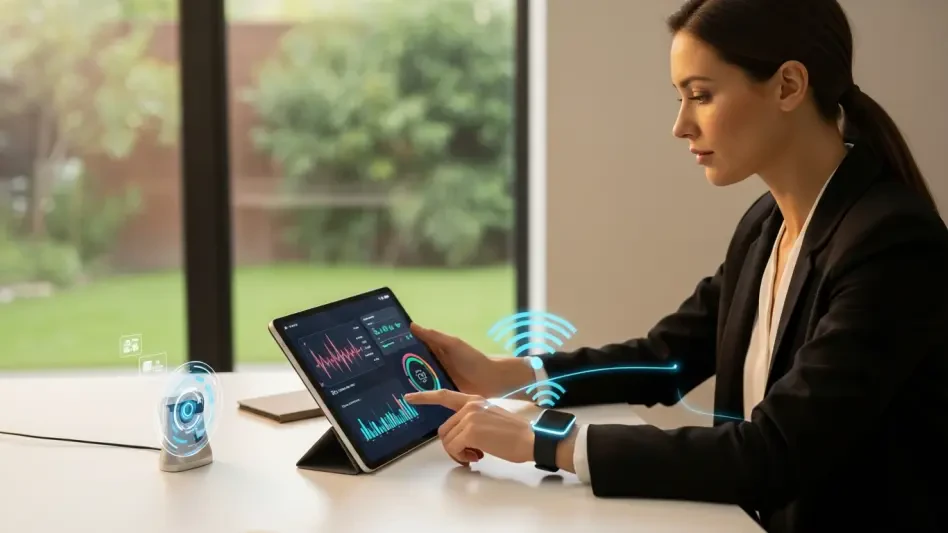
This shift fundamentally rebrands the patient as the primary manager of their own biological data, moving the center of gravity away from the physician’s office. To integrate this, providers must first establish automated data pipelines that ingest wearable metrics—like heart rate variability and sleep—alongside cellular-level insights from blood biomarkers. The second step involves layering AI over this stream to filter “noise” from “signals,” ensuring clinicians aren’t overwhelmed by thousands of data points that have no clinical relevance. Third, the provider must transition to a proactive outreach model where they only intervene when the data suggests a deviation from the patient’s personalized baseline. The primary hurdle is the sheer volume of information; doctors cannot spend their day looking at 30-second snapshots from a smartwatch, so the system must be designed to present only actionable, precision insights.
Autonomous AI agents are now capable of coordinating follow-up care, monitoring post-discharge recovery, and explaining complex lab results without human intervention. What are the practical steps for deploying these systems safely, and how do they fundamentally alter the labor requirements within a typical primary care setting?
Deploying these systems safely requires a phased approach: starting with low-risk administrative tasks, then moving to post-discharge monitoring, and finally allowing AI to explain complex results in plain language. We are seeing companies like Hippocratic AI use these agents to proactively schedule appointments and track recovery, which drastically reduces the need for large administrative nursing pools. In a typical primary care setting, this labor shift allows the human staff to focus exclusively on high-complexity clinical cases rather than routine follow-ups. Efficiency gains are significant, as these agents operate 24/7, ensuring no patient “falls through the cracks” after they leave the clinic’s four walls. By automating the “prescribe and hope” follow-up cycle, we can manage larger patient populations with a fraction of the traditional support staff.
Direct-to-patient ecosystems are increasingly bypassing traditional hospital infrastructure to manage everything from diagnosis to medication delivery. How do these “unscaled” models remain economically viable compared to legacy clinics, and what are the primary barriers preventing existing health systems from adopting this decentralized approach?
These “unscaled” models, such as Ro or Transcarent, remain viable because they lack the massive fixed costs and “crumbling foundations” of physical hospital real estate. They leverage a “healthcare-at-any-address” philosophy, utilizing digital platforms to align incentives directly between the patient and the solution, bypassing the middle layers of traditional clinics. Legacy systems struggle to adopt this because they are tethered to a hospital-centric model that relies on high-margin elective procedures and physical bed occupancy to stay solvent. Shifting to a decentralized approach would effectively cannibalize their own revenue streams, creating a “disruptor’s dilemma” where they cannot embrace the future without destroying their current financial base. This structural obsolescence is why we see new entrants growing rapidly while traditional systems face a funding crisis and impending Medicaid cuts.
In the coming years, continuous health monitoring may become as standard an employee benefit as a retirement plan. How should companies restructure their healthcare packages to reflect this change, and what are the consequences for firms that cling to reactive, snapshot-based insurance models?
Companies must move away from reactive, snapshot-based insurance and toward packages that subsidize continuous biological monitoring and AI health agents. I forecast that by 2030, an employer failing to offer these tools will struggle to recruit talent just as much as a company without a 401(k) would today. Restructured packages should focus on “Health Assurance,” providing employees with wearable technology and biomarker panels that catch issues long before they become expensive chronic conditions. Firms that stick to the old model will face skyrocketing premiums and a workforce with higher rates of preventable illness, leading to a competitive disadvantage in both productivity and long-term healthcare spending. The shift is moving from a “sick care” benefit to a proactive wellness partnership that keeps employees out of the hospital entirely.
What is your forecast for healthcare innovation?
My forecast is that by 2032, at least one-third of today’s physical primary care offices and urgent care centers will be shuttered or completely reimagined, replaced by virtual-first models backed by continuous data streams. We will see the “annual physical” become a historical relic as AI health agents provide constant, personalized oversight that renders the once-a-year office visit medieval by comparison. This isn’t just about better apps; it’s a categorical shift where the consumer gains more actionable intelligence than the traditional system can offer. Those who continue to polish the brass on the sinking ship of hospital-centric care will find themselves economically indefensible within the decade. The future belongs to those who build the decentralized, data-driven lifeboat that is already floating right next to us.