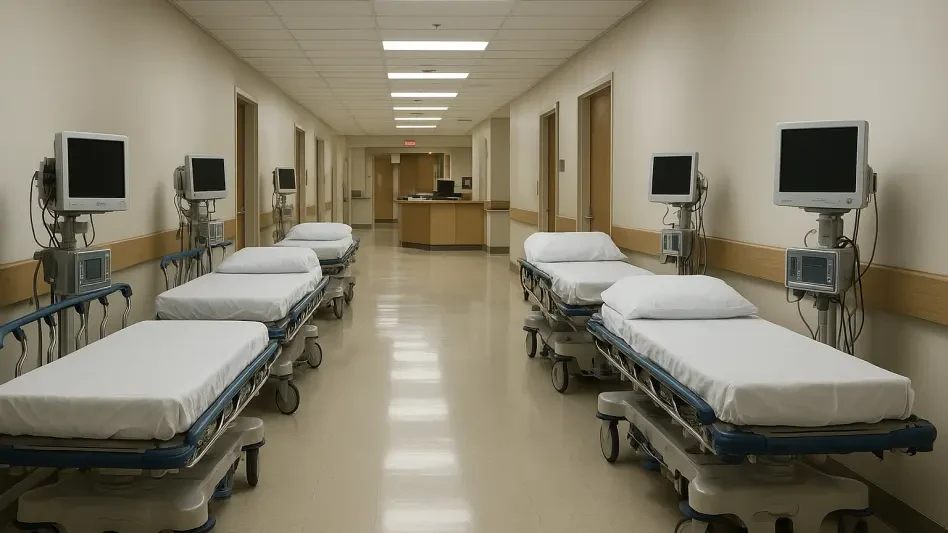

Public utilization of virtual care and urgent care clinics is rising, leaving emergency departments to focus almost exclusively on a higher concentration of life-threatening and complex medical conditions. This evolution in healthcare consumption, while intended to alleviate pressure on primary facilities, has inadvertently exposed deep-seated structural vulnerabilities within the Illawarra Shoalhaven Local Health District (ISLHD). Recent data from the Bureau of Health Information (BHI) illustrates a system under extreme duress, where the primary challenge is no longer just the volume of incoming patients but rather the inability to move them through the system effectively. This phenomenon, known as the “flow-on effect,” creates a severe bottleneck that starts with the inability to discharge patients to external care settings and ends with significant delays in emergency care. As hospitals like Wollongong and Shellharbour hit record-breaking occupancy levels, the medical infrastructure faces a critical point where the physical availability of beds dictates the speed of life-saving interventions.
Systemic Bottlenecks: The Impact of Bed Block
The Growing Crisis: Stranded Patients in Acute Care
The phenomenon of “bed block” has reached a critical threshold, effectively paralyzing the movement of patients from acute care settings into long-term support environments. Currently, there are 133 individuals within the Illawarra region who are clinically ready for discharge but remain confined to hospital beds because they are awaiting placement in Commonwealth-funded aged care or National Disability Insurance Scheme (NDIS) programs. These “stranded patients” represent a significant portion of the capacity shortfall, with Wollongong Hospital alone hosting nearly 20 such cases during the peak periods of the last quarter. When these beds remain occupied by patients who no longer require acute medical intervention, the entire facility loses the flexibility needed to respond to new emergencies. This lack of external discharge options has pushed bed occupancy to unprecedented levels, with Wollongong Hospital recording over 64,000 bed days, marking the highest volume in the facility’s operational history in 2026.
Capacity Overload: Peak Occupancy at Regional Facilities
Building on the issue of stranded patients, the data reveals a significant blowout in access block, where individuals face grueling waits from arrival in the Emergency Department until they are successfully admitted to a ward. At Wollongong Hospital, the median wait for admission has stretched to 12 hours and 42 minutes, while the most delayed ten percent of patients wait over 28 hours for a bed. Shellharbour Hospital has faced similar constraints, with an average length of stay reaching 10.8 days, which is nearly double the average seen at larger metropolitan facilities. New South Wales Health Minister Ryan Park has characterized this situation as unsustainable, noting that the systemic gridlock not only depletes essential hospital capacity but also negatively impacts the recovery and quality of life for patients stuck in clinical environments. This backup at the ward level forces the emergency department to function as a de facto holding area, which significantly limits the space available for incoming walk-in patients.
Shifting Demand: Response and Future Trajectory
Rising Acuity: The New Profile of Emergency Cases
A fundamental shift in the nature of healthcare demand has significantly altered the operational landscape for hospitals in the Illawarra region. Although the total number of visits to emergency departments has shown signs of stabilization, the medical complexity and severity of these presentations have reached record levels. Both Wollongong and Shellharbour hospitals have reported historic highs in the T2 (Emergency) and T3 (Urgent) triage categories, which represent life-threatening or severe conditions requiring immediate intervention. Conversely, lower-urgency cases categorized as T4 and T5 have reached record lows, indicating that the public has successfully transitioned to using alternative care pathways like urgent care clinics for minor injuries. This transition means that each individual requires more staff time, more diagnostic resources, and more specialized equipment than in previous years. The concentration of high-acuity patients in the ED necessitates a more robust and specialized clinical response.
Workforce Initiatives: Safe Staffing and Recruitment
In an effort to mitigate the risks associated with these systemic pressures, the ISLHD has prioritized “Safe Staffing Levels” through a major recruitment drive. More than 74 full-time equivalent nurses have been integrated into the local workforce, allowing for a strategic reorganization of care delivery. This initiative ensures a one-to-one nursing ratio for resuscitation beds and a one-to-three ratio for general treatment spaces within the emergency department. Such staffing enhancements are vital for maintaining patient safety during periods of high-volume presentations and ensure that clinicians are not spread too thin when managing life-threatening emergencies. Mark Garrick, the ISLHD Clinical Operations Executive Director, has emphasized that these additions are about creating a sustainable environment for the workforce. By bolstering the frontline, the district aims to prevent staff burnout and maintain high clinical standards, even as the “bed block” crisis continues to hinder the movement of patients.
Strategic Outcomes: Resolving the Placement Crisis
The regional health crisis in the Illawarra demonstrated that operational efficiency within hospital walls could not fully offset the impact of broader systemic failures in the social care sector. It became clear that the resolution of the bed block crisis required a multi-tiered strategy focused on the immediate placement of stranded patients into appropriate federal care programs. By identifying the specific bottlenecks in the aged care and NDIS transition processes, administrators laid the groundwork for a more fluid movement of patients between different levels of care. These actions were paired with the continued expansion of urgent care clinics, which successfully redirected low-acuity cases away from emergency departments, allowing specialists to focus on high-complexity medical needs. Moving forward, the focus transitioned toward permanent enhancements in discharge planning and the integration of predictive analytics to manage ward occupancy better through the current period from 2026 to 2028.