
Confronting the Hidden Financial Drain of Musculoskeletal Disorders
The corporate landscape currently grapples with a silent financial hemorrhage as musculoskeletal conditions transform from minor employee complaints into a primary driver of soaring healthcare expenditures. For decades, organizations treated back pain and neck strain as isolated medical incidents rather than predictable outcomes of a flawed physical environment. As of 2026, the expenditure on these conditions frequently ranks as the second-highest cost for employer-sponsored healthcare plans, trailing only oncology. This financial burden reflects a reactive management style that prioritizes expensive clinical interventions over the foundational redesign of the workspace. Transitioning from a model of financing insurance claims to one of active injury prevention through smart infrastructure represents the most viable path toward economic stability and workforce longevity.
The necessity of this shift becomes apparent when examining how traditional office layouts interact with human physiology. Current market data suggests that the “implementation gap”—the space between knowing one should move and actually doing so—remains the largest hurdle in corporate wellness. Even the most health-conscious employees find their physical self-awareness superseded by the cognitive demands of deep work, leading to hours of static immobility. By integrating movement-centric principles into the very fabric of the office, businesses can mitigate the risk of chronic injury before it manifests as a surgical requirement. This exploration examines the intersection of biomechanics, ergonomic technology, and corporate strategy to reveal how a well-designed environment acts as a proactive healthcare tool.
The Evolution of the Sedentary Workspace and Its Economic Toll
Historically, the development of the modern office prioritized the centralization of administrative tasks and the optimization of communication, often at the expense of the human frame. As the global economy moved away from manual labor toward digital knowledge work, the desk became the primary theater of professional life. However, this transition inadvertently created a sedentary trap that now accounts for approximately $90 billion in avoidable healthcare costs annually. Statistics indicate that musculoskeletal disorders affect nearly half of all individuals within employer-sponsored health plans, signaling a systemic failure in how workspaces accommodate biological needs. The legacy of the 20th-century office is one of rigid postures and prolonged sitting, a combination that has proven devastating to spinal health and muscular balance.
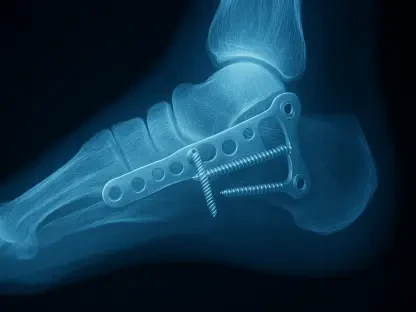
Furthermore, the traditional corporate response to rising injury rates has focused on late-stage medical treatments rather than early-stage environmental corrections. High-cost interventions, such as spinal surgeries, can exceed $200,000 per instance, yet a significant percentage of these procedures are deemed unnecessary upon secondary review. The cycle of “pain recidivism” is particularly troubling, as employees often return from medical leave to the exact same workstation configurations that precipitated their injury in the first place. This historical reliance on reactive medicine has ignored the reality that the environment itself is the primary pathogen. Addressing this crisis requires a departure from the “fix it when it breaks” mentality toward a future where the office serves as a guardian of physical integrity.
Analyzing the Market Factors: The Biomechanics of the Modern Desk
The Physical Load of Digital Work
The mechanical reality of working at a computer involves stresses that are often invisible until structural damage occurs. While aging is frequently blamed for back and neck issues, nearly 90% of musculoskeletal cases are classified as non-specific, meaning they result from cumulative lifestyle habits rather than a singular traumatic event. A primary factor is the leverage of the human head, which weighs roughly 12 pounds in a neutral position. When a worker tilts their head forward just 15 degrees to view a laptop or document, the effective weight on the cervical spine increases to 27 pounds. Over a standard 40-hour work week, this constant tension leads to “tissue creep,” a phenomenon where ligaments and tendons gradually deform under sustained load, losing their ability to support the skeletal structure.
Moreover, the lack of movement during prolonged sitting periods inhibits the essential nutrient exchange required for spinal health. Unlike other tissues, intervertebral discs lack a direct blood supply and rely on a process called “imbibition,” which requires physical movement to pump nutrients in and waste products out. Without regular movement, these discs begin to dehydrate and degenerate, leading to chronic pain and reduced mobility. The data increasingly suggests that the health risks of static sitting are comparable to those of long-term smoking, affecting not only the musculoskeletal system but also metabolic function. A workspace that does not facilitate frequent postural shifts is, by definition, a contributor to long-term physical decline.
The Inadequacy of External Wellness Models
Many organizations have historically attempted to outsource employee health by providing subsidized gym memberships or off-site fitness classes. While these benefits are well-intentioned, they frequently fail to solve the underlying problem because they do not address the “active couch potato” phenomenon. Research demonstrates that a brief period of intense exercise cannot neutralize the physiological damage caused by eight hours of continuous immobility. Employers find themselves in a contradictory position where they are subsidizing fitness efforts while simultaneously maintaining a work culture that undermines those very investments. The focus must shift from what the employee does after work to what the environment allows the employee to do during work.
The failure of the external model is also rooted in the psychological disconnect between health intentions and professional pressures. In a high-stakes corporate environment, the drive for productivity often pushes physical well-being to the periphery of an employee’s attention. When a worker is absorbed in a complex task, they are unlikely to consciously decide to stand or stretch unless the environment makes that transition effortless. Therefore, wellness programs that rely solely on individual willpower are destined to have low engagement rates. True intervention occurs when the infrastructure of the office—the desks, chairs, and common areas—is engineered to prompt movement without requiring a conscious break from the flow of work.
Technological Interventions and Real-Time Feedback
To address the implementation gap, the market is seeing a surge in integrated technological solutions that provide real-time feedback to workers. Privacy-safe sensors and Artificial Intelligence are now being embedded into ergonomic hardware to monitor posture and duration of stillness. These systems act as digital health assistants, providing gentle “nudges” to adjust positions or transition to a standing height. Unlike generic timers, AI-driven tools can analyze the user’s specific habits and provide interventions that are timed to be helpful rather than intrusive. This represents a significant leap from traditional ergonomics, which provided static equipment but no guidance on how to use it dynamically throughout the day.
The integration of these technologies into office design is helping to dismantle the cultural misconception that stillness is synonymous with productivity. By providing objective data on physical activity levels, both employees and managers can begin to view movement as a vital component of professional performance. These tools also allow organizations to gather anonymized data on how their space is being used, providing insights into which areas promote movement and which areas contribute to sedentary behavior. This data-driven approach allows for the continuous refinement of office design, ensuring that the workspace evolves in alignment with the physiological needs of the workforce.
Future Horizons in Ergonomic Infrastructure and Culture
The future of the workplace is defined by a “biopsychosocial” model where the physical environment is an active participant in maintaining health. We are witnessing a transition toward “prevention infrastructure,” where height-adjustable workstations and movement-centric layouts are no longer luxury perks but baseline requirements. Regulatory bodies and environmental, social, and governance standards are increasingly looking at ergonomic benchmarks as a measure of corporate responsibility. In the coming years, the normalization of “micro-breaks”—short, 30-second movement resets every half hour—will likely become a standard operational procedure, facilitated by smart furniture that adjusts automatically to the user’s needs.
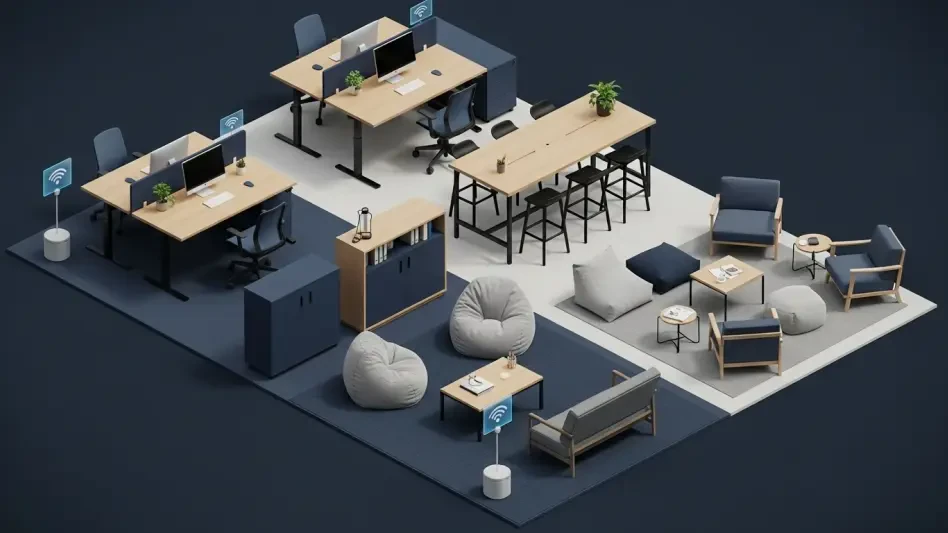
Furthermore, the shift toward hybrid work models is forcing a reevaluation of the role of the central office. The office of the future is being redesigned as a hub for collaborative movement, featuring standing meeting zones, walking tracks, and varied seating options that discourage static behavior. This evolution is driven by the realization that a healthy workforce is a more resilient and productive one. As the link between physical health and cognitive performance becomes more established, office design will focus on creating environments that enhance both. The goal is to move beyond simple comfort to a state where the work environment actively promotes longevity and prevents the onset of chronic conditions that lead to early retirement or disability.
Strategic Recommendations for a Healthier Workplace
To effectively address the musculoskeletal crisis, businesses must adopt a comprehensive strategy that integrates hardware, culture, and policy. First, the provision of high-quality ergonomic hardware should be treated as a fundamental business-critical investment rather than an optional expense. This includes not only adjustable desks and chairs but also monitor arms and peripherals that allow for a perfectly customized setup. Second, leadership must model and encourage a culture of movement. Normalizing walking meetings and standing presentations sends a powerful signal that the organization values health as much as output. Breaking the cycle of sedentary behavior requires a top-down endorsement of movement as a professional virtue.
Third, companies should implement formal micro-break policies that encourage employees to reset their posture frequently. These short intervals are essential for facilitating the nutrient exchange in spinal discs and reducing the risk of tissue creep. Fourth, the use of feedback technology can help bridge the gap between employee knowledge and daily habits. By providing workers with the tools to track their own movement, organizations empower them to take control of their physical well-being. Finally, treating musculoskeletal health as a core business metric allows for more accurate tracking of the return on investment for ergonomic upgrades. By focusing on prevention, organizations can significantly reduce their surgical claims and absenteeism, leading to a healthier bottom line.
Rethinking the Workplace as a Catalyst for Longevity
The analysis identified that the musculoskeletal crisis necessitated a profound shift in how the corporate world perceived the office environment. It was clear that the financial drain caused by sedentary work patterns was no longer sustainable, and reactive medical treatments failed to address the root causes of the problem. By prioritizing ergonomic infrastructure and movement-centric cultures, forward-thinking organizations transformed their workspaces from sources of disability into centers of wellness. The transition toward integrated technology and AI-driven feedback provided the necessary support to bridge the gap between employee intent and physical action.
This strategic evolution moved the responsibility for health from the individual alone to a shared corporate commitment. The evidence suggested that addressing the physical environment was a more effective and humane approach than simply financing the consequences of a broken system. Ultimately, the redesign of the workplace served as a catalyst for employee longevity, ensuring that the professional environment contributed to physical health rather than detracting from it. This comprehensive approach provided a clear roadmap for businesses to navigate the complexities of the modern workforce while securing their own financial future.