
The global healthcare landscape is currently crossing a definitive threshold where sophisticated mathematical models are no longer confined to experimental simulations but are actively dictating the rhythm of clinical workflows and emergency interventions. This shift represents a fundamental pivot from reactive medicine—where treatment begins only after symptoms manifest—to a predictive architecture that anticipates patient needs before a crisis occurs. As hospital systems struggle with the dual pressures of chronic staffing shortages and an aging demographic, artificial intelligence has emerged as a critical infrastructure component rather than a luxury elective. This article examines the movement from theoretical algorithmic potential to localized clinical utility, the necessity of standardized data frameworks, and the expanding horizon of passive patient monitoring.
The significance of this transition cannot be overstated, as it marks the end of the “pilot program” era and the beginning of enterprise-wide deployment. Traditionally, the medical community viewed digital innovation with healthy skepticism, primarily due to the high stakes of diagnostic error. However, the recent surge in FDA-cleared algorithms and the successful integration of machine learning into electronic health records have demonstrated that these tools can reliably augment human judgment. By automating administrative burdens and streamlining the diagnostic pipeline, AI is providing clinicians with the cognitive breathing room necessary to focus on complex decision-making and empathetic patient interaction.
The Current State of Clinical AI Adoption and Real-World Use
Data-Driven Growth: The Shift Toward Clinical Utility
The trajectory of AI adoption has moved rapidly from the academic laboratory to the hospital floor, driven by a newfound focus on clinical utility over mere statistical accuracy. In the past, a model might have boasted high performance on cleaned, historical datasets, yet failed when confronted with the chaotic reality of live clinical environments. Today, the focus has shifted toward how these tools perform in high-stakes scenarios where data may be incomplete or biased. Modern healthcare systems are increasingly prioritizing “real-world evidence,” demanding that AI providers demonstrate not just theoretical precision, but the ability to improve actual patient outcomes in diverse settings.
Statistical trends indicate a massive consolidation of digital health tools, moving away from fragmented apps toward integrated platforms that reside directly within the physician’s primary interface. This systemic integration is vital because it removes the friction that previously hindered adoption; doctors no longer need to toggle between different software to receive an AI-generated insight. Instead, the analysis is delivered at the point of care, ensuring that the technology supports the natural flow of medical practice. As hospital networks invest more heavily in these digital backbones, the gap between high-tech urban centers and rural facilities is beginning to narrow, provided the infrastructure remains accessible.
Practical Applications: Diagnostic Innovations in Practice
Radiology stands at the forefront of this evolution, where AI functions as a tireless first responder by prioritizing urgent cases in a crowded imaging queue. When an algorithm detects a potential intracranial hemorrhage or a pulmonary embolism on a scan, it can automatically escalate that file to the top of a radiologist’s list, saving precious minutes that define the difference between recovery and permanent disability. This is not about replacing the specialist but rather ensuring that their expertise is applied where it is most critically needed at any given moment.
Beyond imaging, predictive analytics are transforming how hospitals manage patient deterioration and chronic disease. For instance, early detection systems are now capable of identifying “digital biomarkers” through subtle changes in a patient’s speech or movement patterns, which can indicate the onset of neurodegenerative conditions long before traditional cognitive tests. Similarly, sepsis or cardiac failure prediction models now monitor vital signs in real-time, providing nursing staff with a three-to-four-hour lead time before a patient reaches a critical state. These case studies represent the move from retrospective analysis to a proactive defensive stance in patient management.
Expert Perspectives on Deployment Challenges and Responsibility
The Transparency Requirement: Breaking the Black Box
One of the most significant hurdles to widespread clinical trust remains the “black box” nature of complex deep-learning models. Industry leaders and clinical ethicists emphasize that for an AI recommendation to be actionable, it must be explainable; a surgeon is unlikely to change a treatment plan simply because a computer said so without a clear rationale. This has led to the rise of “Explainable AI” (XAI), which provides visual heatmaps or textual justifications for why a specific diagnosis was reached. Transparency is now viewed as a prerequisite for safety, ensuring that the human practitioner remains the final, informed arbiter of care.
Addressing Model Drift and Interoperability
Experts frequently warn about the phenomenon of “model drift,” where an algorithm’s performance degrades over time as patient demographics, hospital protocols, or even the underlying hardware changes. Unlike a traditional medical device that remains static after purchase, AI requires constant lifecycle management and periodic recalibration to remain accurate. Furthermore, the persistent problem of data silos—where information remains trapped in incompatible systems—continues to stifle the full potential of integrated care. Thought leaders argue that until universal interoperability standards are strictly enforced, the true power of AI to track a patient’s journey across different providers will remain partially obstructed.
The Future Path: Passive Monitoring and Long-Term Evolution
Continuous Patient Observation and Ambient Sensors
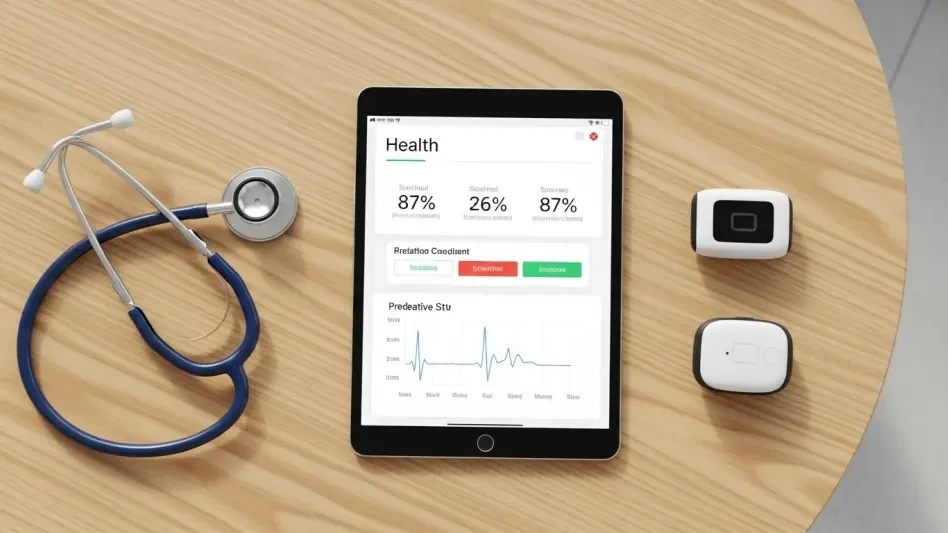
The next phase of the medical revolution will likely see a departure from the traditional model of episodic office visits toward a regime of continuous, passive observation. Utilizing ambient sensors and sophisticated wearables, the home environment is being transformed into a secondary clinical space. These sensors can track gait, respiratory rate, and sleep quality without requiring active input from the patient, providing a much more accurate picture of their daily health status. This transition allows for the management of chronic conditions through micro-adjustments in treatment rather than waiting for a major health event to trigger a hospital admission.
Bridging the Validation Gap: Actionable Interventions
A critical challenge for the near future involves bridging the “validation gap,” where the influx of data from continuous monitoring must be translated into meaningful medical action. There is a risk that an overabundance of alerts could lead to “alarm fatigue” for both patients and providers, resulting in important signals being ignored. To combat this, new clinical pathways are being designed to ensure that AI-generated alerts are filtered through a logic layer that suggests specific, evidence-based interventions. This ensures that technology serves to reduce the noise of modern medicine rather than adding to it, focusing strictly on data points that have a direct impact on longevity and quality of life.
A Pragmatic Approach to the AI Medical Revolution
The transition of artificial intelligence from a speculative concept to a foundational medical tool was characterized by a move toward rigorous validation and human-centric design. Healthcare stakeholders recognized that technical brilliance alone was insufficient; success depended on the seamless synthesis of algorithmic power with established clinical workflows. By prioritizing transparency and addressing the ethical complexities of data privacy, the medical community established a framework where technology served to enhance, rather than replace, the essential human element of healing.
Future strategies should focus on the aggressive standardization of data pipelines to ensure that AI-driven insights are available to underserved populations, thereby preventing a digital divide in healthcare outcomes. Investment in robust oversight mechanisms will be required to manage the lifecycle of these models, ensuring they adapt to the changing realities of human biology and institutional practice. As the role of the physician continues to evolve, the emphasis will shift toward interpreting complex AI outputs and providing the emotional support that remains exclusively human. Ultimately, the integration of AI has set the stage for a more equitable and efficient system, provided that the focus remains steadfastly on the safety and dignity of the individual patient.