
Predictability in collective arousal patterns, measured through electrodermal regularity, serves as a significant marker for high performance in elaborate clinical interactions. This fundamental insight underscores a shift in how medical researchers evaluate team dynamics, moving from superficial checklists to deep-seated biological markers. In the fast-paced environment of a modern trauma center or maternity ward, the traditional understanding of teamwork often falls short of explaining why some groups thrive under pressure while others falter. Recent advancements in neuroergonomics suggest that the secret lies in the unspoken physical resonance between professionals during high-stakes events. By analyzing the intersection of physiological data and behavioral patterns, experts are now able to see the invisible threads that bind a medical team together. This approach does not merely look at what people say or do, but how their bodies react in tandem to the life-threatening challenges they face every day.
Methodology and Participant Diversity in Simulations
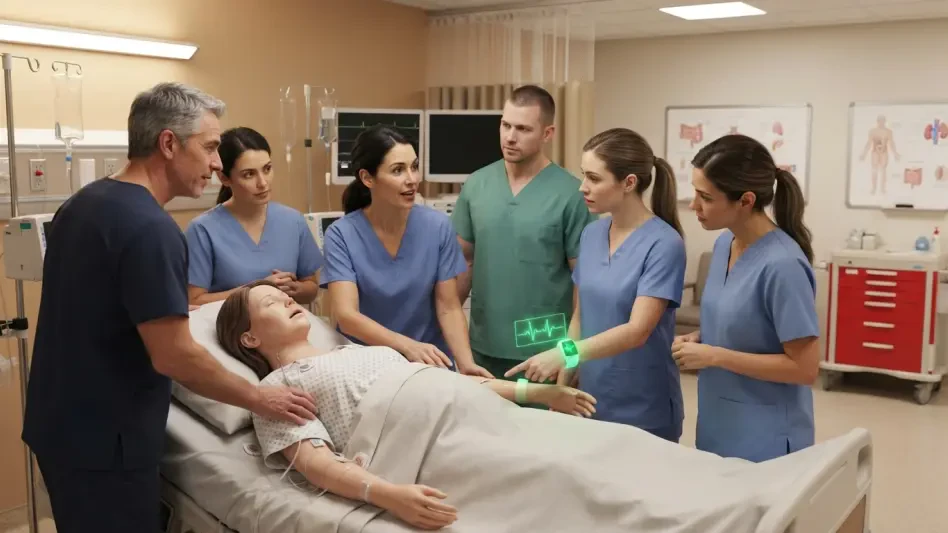
The investigation into these biological undercurrents involved a sophisticated quasi-experimental design featuring 150 seasoned healthcare professionals across two prominent hospitals in the Netherlands. These participants were organized into 19 distinct teams, representing a cross-section of the medical hierarchy including nurses, midwives, physician assistants, residents, and various medical specialists. Over the course of the study, these teams managed 37 high-fidelity simulation scenarios designed to replicate a wide spectrum of critical conditions, from septic shock to complex obstetric emergencies. This diverse sample ensured that the resulting data reflected the reality of multidisciplinary collaboration in modern medicine. By placing experienced practitioners in controlled yet highly stressful environments, the researchers were able to capture the authentic rhythms of crisis management without the unpredictable variables of an active emergency department.
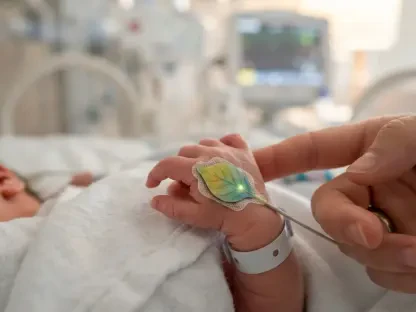
To gather the necessary data, each simulation was recorded using 360-degree cameras to capture every nuance of verbal and non-verbal communication between team members. Simultaneously, each professional wore medical-grade wrist sensors to monitor their heart rate and electrodermal activity throughout the session. This methodology allowed for a precise mapping of physiological responses to specific behavioral shifts, providing a granular view of how stress and engagement fluctuated in real-time. The use of wearable technology is particularly relevant in 2026, as sensors have become unobtrusive enough to be worn during intense physical activity without interfering with clinical tasks. By integrating these objective physical metrics with subjective performance reviews, the study created a robust framework for identifying the physiological signatures of effective teamwork during both routine procedures and unexpected medical crises.
Measuring Behavioral Pattern Complexity
A vital component of this research involved identifying Team Behavioral Interaction Patterns, or TBIPs, through a rigorous method known as T-pattern analysis. This technique identifies recurring sequences of behavior that are organized in time and order, such as a nurse asking for clarification followed by a physician providing an immediate instruction. The researchers categorized these interactions based on whether they involved the exchange of vital information or the coordination of specific physical actions. Furthermore, they distinguished between explicit communication, where needs are stated clearly, and implicit coordination, where team members anticipate each other’s needs without speaking. By analyzing the frequency and structure of these interactions, the study moved beyond simple communication tallies to examine the strategic architecture of how medical teams navigate a crisis successfully.
The complexity of these patterns was defined by their hierarchical depth and structure, which provided a window into the team’s cognitive load. A simple, two-element routine might represent a standard clinical task, while a highly complex interaction could involve up to thirteen behavioral elements and multiple layers of decision-making. These sophisticated sequences often emerge when a team must pivot to handle unexpected complications, requiring more than just a routine response to stabilize a patient. The study found that interactions ranged from brief, two-element routines to elaborate, multi-stage exchanges reaching up to seven levels of complexity. This level of detail is essential for understanding how teams reorganize themselves on the fly, as the ability to shift from simple procedures to complex problem-solving is what defines high-level clinical performance in unpredictable and high-pressure environments.
The Nuance of Physiological Coordination
The study utilized two primary metrics to quantify physiological coordination among the medical professionals: synchrony and regularity. Synchrony, often referred to as coherence, measures the extent to which team members’ heart rates or stress levels move in unison, essentially indicating if they are physically on the same wavelength at any given moment. Regularity, on the other hand, utilizes multidimensional recurrence quantification analysis to assess the predictability and repetitiveness of the team’s collective physiological states over time. While synchrony focuses on the immediate alignment of signals, regularity provides a broader view of how stable the team’s shared arousal remains throughout a scenario. Together, these metrics offer a comprehensive picture of the physiological bond that forms between team members, revealing whether their physical responses are chaotic or organized during a clinical crisis.
Analyzing these high-resolution signals required rigorous filtering to account for the inherent noise found in physiological data, such as artifacts caused by physical movement during a resuscitation. The researchers specifically focused on behavioral patterns that lasted at least thirty seconds to ensure the data was meaningful and statistically sound. This allowed them to see if the team’s physical responses remained steady and coordinated throughout a specific interaction or if their physiological alignment shifted as the clinical situation became more demanding. For these patterns, a sixty-second window was often used to calculate coordination, ensuring that the physiological activity being measured was directly relevant to the behavioral sequence occurring in the simulation. This meticulous approach to data processing ensured that the findings were based on reliable biological indicators rather than random fluctuations.
Stress Dynamics and Crisis Management
As tasks transitioned from routine procedures to highly complex and non-routine crisis management, the relationship between physiology and performance changed significantly. During these high-pressure moments, lower synchrony in electrodermal activity—a key measure of the body’s stress and arousal—was actually associated with better team adaptation. This suggests that in a true medical emergency, it may be detrimental for every team member to be equally stressed or focused on the same exact thing. If everyone’s stress levels spike simultaneously, it could signal contagious panic rather than organized, professional action. Therefore, a certain amount of physiological de-synchronization may be necessary to allow for creative problem-solving and the distribution of cognitive load, ensuring that at least some team members remain calm while others manage the most intense aspects of the crisis.
This phenomenon of physiological divergence during complex interactions highlights the importance of specialized role-taking in medicine. When a team faces a multifaceted challenge, such as a sudden postpartum hemorrhage combined with respiratory failure, different members must focus on distinct, complementary tasks. Lower stress synchrony indicates that the team is effectively distributing its mental and emotional resources, preventing a collective breakdown. Furthermore, the study noted that while synchrony decreased, the regularity of these stress signals remained vital. For the most complex interaction patterns, greater predictability in electrodermal activity was linked to superior performance ratings from clinical trainers. This indicates that while team members should not be in identical stress states, their individual arousal patterns must remain stable and predictable to support the intricate decision-making required.
Future Considerations: Context-Aware Clinical Monitoring
The research concluded that physiological coordination was a multidimensional phenomenon that must be interpreted through the lens of the specific behavioral context. It was observed that heart rate synchrony favored simple tasks, while skin-conductance asynchrony was a hallmark of success during complex reorganizations. These findings challenged the common assumption that high synchrony is a universal sign of a high-performing team. Instead, the data supported a contingency-based model of teamwork where the ideal physiological state shifted as the environment became more volatile. The researchers established that there was no single physiological signature for success, but rather a dynamic dance between physical alignment and specialized independence. This nuanced perspective provided a new framework for understanding how the human body reacts to the unique demands of professional medical collaboration.
Healthcare organizations moved toward integrating these insights into training protocols to enhance patient safety. Developers of wearable monitoring systems for medical teams were advised to move away from simple synchrony scores and toward context-aware analytics. These next-generation systems aimed to identify the complexity of a team’s current interaction before interpreting their physiological data, providing more accurate real-time feedback. Training programs began focusing on physiological flexibility, teaching teams how to transition from the synchronized states of routine care to the specialized, independent states required for crisis management. Future research investigated how shared mental models influence these biological rhythms in diverse clinical settings. By prioritizing the stability of arousal patterns over simple synchrony, medical educators established a more sophisticated path for improving team resilience.