
Cardiovascular disease remains the most formidable adversary to global longevity, claiming nearly twenty million lives annually through a complex interplay of genetic factors and lifestyle choices. Many of these fatalities stem from conditions that are notoriously difficult to capture during a standard ten-minute physician consultation because they manifest as transient events. Atrial fibrillation and other silent arrhythmias often disappear before the patient can reach a clinical setting, creating a diagnostic void that leaves high-risk individuals vulnerable to strokes or heart failure. To bridge this critical gap, engineers and medical researchers from the Kaunas University of Technology and Teltonika Telemedic have introduced the TeltoHeart system. This medical-grade wearable device provides a sophisticated solution for continuous cardiac rhythm monitoring, moving beyond the superficial data offered by standard consumer fitness trackers. It represents a paradigm shift in how chronic heart conditions are managed outside the hospital walls, ensuring patient safety through daily oversight.
Bridging the Gap: Part 1. Limitations of Diagnostics
Standard clinical diagnostic tools frequently provide an incomplete picture of a patient’s true cardiac health, largely because a typical electrocardiogram (ECG) only records activity for a few moments. While this snapshot is useful for detecting permanent abnormalities, it is fundamentally ill-equipped to identify paroxysmal disturbances that happen randomly throughout the day or night. Holter monitors offer a slight improvement by extending the recording period to forty-eight hours, yet even this window often proves too narrow to catch infrequent symptoms. Patients are frequently sent home without a definitive diagnosis because their heart behaved normally during the observation period. This creates a cycle of uncertainty and repeated testing that consumes valuable medical resources without providing the necessary clarity for treatment. Consequently, there was an urgent need for a device that could be worn for weeks without interfering with the user’s quality of life or daily activities.
Bridging the Gap: Part 2. The Necessity of Surveillance
As the global population ages, the prevalence of chronic heart conditions has entered a phase of steady growth, making traditional, episodic clinical checks increasingly insufficient for effective management. This demographic reality, extending from 2026 into the coming decade, necessitates a transition toward proactive health surveillance that integrates seamlessly into a patient’s routine. Monitoring must be persistent rather than reactive to prevent the onset of severe complications that often follow undiagnosed arrhythmias. The TeltoHeart device fulfills this requirement by maintaining a constant vigil over the wearer’s heart rhythm, ensuring that no irregularity goes unrecorded simply because it occurred at home instead of in a clinic. By shifting the focus from hospital-centric care to continuous home-based monitoring, healthcare providers can now maintain a long-term data stream that reveals patterns invisible to traditional methods. This approach is vital for the early detection of issues that would otherwise remain hidden.
Precision Engineering: Part 1. Real-Time Alerts and ECG Integration
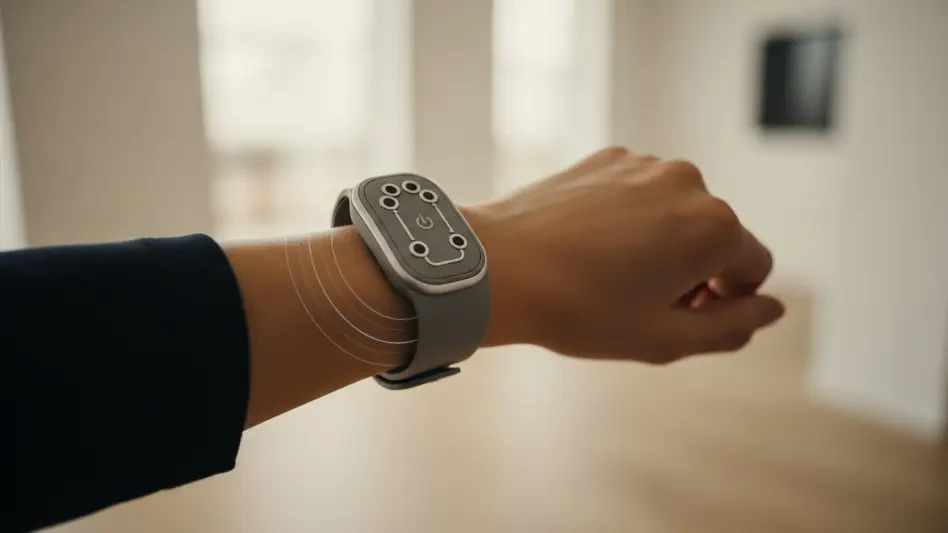
The technological foundation of the TeltoHeart system relies on a sophisticated interaction between autonomous sensing and user engagement to ensure clinical-grade data collection. When the device’s internal algorithms identify a potential irregularity in the heart rhythm, it immediately alerts the wearer via a distinct vibration or an on-screen notification. This real-time feedback loop allows the patient to take immediate action by placing their fingers on the wristband’s integrated electrodes. This simple gesture initiates a sixty-second, high-fidelity ECG recording that captures a comprehensive view of the heart’s electrical activity at the precise moment a symptom occurs. By providing this gold standard diagnostic capability in a wearable format, the system eliminates the ambiguity often associated with general-purpose smartwatches. The resulting data provides physicians with a multi-directional perspective on the heart’s behavior, allowing for a more accurate diagnosis of tachycardia.
Precision Engineering: Part 2. Advanced Signal Processing and Filtering
Beyond basic detection, the system introduces a proprietary arrhythmia aggregation parameter which allows medical professionals to assess the density and frequency of cardiac episodes over time. This metric is crucial because it helps doctors determine whether irregularities are isolated incidents or if they are beginning to cluster, which significantly increases the risk of embolic strokes. To maintain the integrity of this data, the wearable utilizes advanced multi-stage signal processing techniques designed to filter out the electrical noise generated by the user’s physical movements. In traditional wearables, simple activities like walking or reaching can distort the signal, leading to false positives or unreadable data. However, the TeltoHeart filters ensure that only high-quality, actionable information reaches the physician’s dashboard. This level of precision transforms the device from a gadget into a medical tool that supports informed decision-making and helps prioritize patients who require immediate help.
Clinical Integration: Part 1. Improving Post-Stroke Care Outcomes
One of the most critical applications for this technology is found in post-stroke recovery, where identifying atrial fibrillation is essential for preventing a second, potentially fatal event. For these patients, the absence of bulky wires and adhesive electrodes represents a significant improvement in comfort, encouraging them to maintain the monitoring regimen over the long term. The non-invasive nature of the wristband ensures that surveillance can continue indefinitely without the skin irritation or mobility limitations caused by traditional Holter devices. This capability is instrumental in the ongoing shift toward decentralized healthcare, where the burden on physical hospital infrastructure is reduced by moving diagnostic processes into the home environment. By facilitating remote consultations, the system allows cardiologists to manage larger patient populations more effectively while providing personalized care based on real-time data. This transition was a fundamental restructuring of digital health.
Clinical Integration: Part 2. Establishing Global Telemedicine Standards
The successful integration of the TeltoHeart system into medical institutions in Lithuania served as a blueprint for the expansion of remote cardiac monitoring across international borders. Healthcare administrators recognized that the primary challenge shifted from technical development to the creation of sustainable reimbursement policies for telemedicine services. For this technology to reach its full potential, it was necessary for national health insurance programs to categorize long-term wearable monitoring as a standard reimbursable procedure. This change empowered elderly and high-risk populations to access state-of-the-art diagnostics without facing prohibitive out-of-pocket costs. Furthermore, the data gathered during these initial deployments informed new clinical guidelines that prioritized early intervention over reactive surgery. Stakeholders emphasized that future improvements had to focus on refining predictive capabilities. This ensured that heart monitoring became a cornerstone of preventative medicine for the global community.