
Faisal Zain has spent years at the intersection of medicine and technology, witnessing first-hand how digital skeletons now hold up the muscle of modern healthcare. From the intricate manufacturing of diagnostic devices to the vast networks of patient data, he understands that a hospital’s pulse is often measured in bits and bytes as much as heartbeats. In this discussion, we explore the critical role of digital infrastructure, the vulnerabilities of electronic health records, the necessity of rigorous cybersecurity, and the shift toward remote care models that demand unwavering connectivity.
Healthcare facilities now rely on digital systems for everything from scheduling to test results. When these platforms fail, what are the immediate consequences for the medical staff and the patients they serve?
When a technical system goes dark, it feels like the oxygen has been sucked out of the room for the medical staff. Doctors and nurses suddenly lose their window into a patient’s history, meaning they can’t see previous allergies, medication adjustments, or the latest lab results that dictate the next hour of treatment. The administrative delays create a brutal domino effect; if the central platform goes down, five or six different departments—from the pharmacy to the imaging lab—are instantly paralyzed. It forces highly skilled clinicians to revert to manual coordination, which is slow and prone to error, highlighting just how much our modern safety standards depend on a reliable digital backbone.
Electronic health records are the backbone of modern care, but they require constant oversight. How do you approach the challenge of keeping these massive databases accurate while ensuring they remain accessible to the right people?
Managing these records is a continuous, rhythmic process that involves much more than just clicking ‘save’ on a digital file. We have to ensure that the physical servers, the network connections, and the specific applications are all receiving regular maintenance to prevent the system from lagging or crashing during a crisis. It is a delicate balance of providing fast, easy access for authorized professionals while maintaining rigid permissions so that sensitive data doesn’t end up in the wrong hands. We also need very specific protocols for scrubbing duplicate information and correcting errors, because having two conflicting files for one patient can lead to catastrophic errors in the operating room or the pharmacy.
With healthcare data being such a high-value target for cyberattacks, what does a truly effective security strategy look like beyond simply installing the latest antivirus software?
Effective security in a medical environment has to be multi-layered and deeply integrated into the daily habits of every employee. While we rely on heavy-duty tools like multi-factor authentication, encrypted communications, and constant network monitoring, the human element is often the most vulnerable link. A single nurse or clerk, stressed and rushing between patients, might accidentally click a suspicious link or respond to a misleading login request, which can compromise the entire hospital network. That is why staff training must be practical and frequent, and we must have systems in place to instantly revoke access the moment an employee changes roles or leaves the organization.
The expansion of remote and community care has been a lifeline for many, but it relies heavily on technology. What are the primary technical hurdles in ensuring these virtual consultations remain effective and reliable?
The success of a remote care model hinges entirely on the stability of the digital bridge we build between the provider and the patient’s home. If a video appointment is plagued by a poor internet connection or a portal that is too confusing to navigate, the patient may miss critical advice or feel discouraged from seeking help altogether. This is especially challenging when we consider older patients or those with disabilities who may have limited digital skills and need a platform that is exceptionally intuitive. Our technical support teams have to work behind the scenes to test equipment and maintain secure connections, ensuring that the technology facilitates the healing process rather than becoming a barrier to it.
Integrating different departments—like labs, pharmacies, and clinics—seems essential for efficiency. Why is it often so difficult to get these various systems to talk to one another effectively?
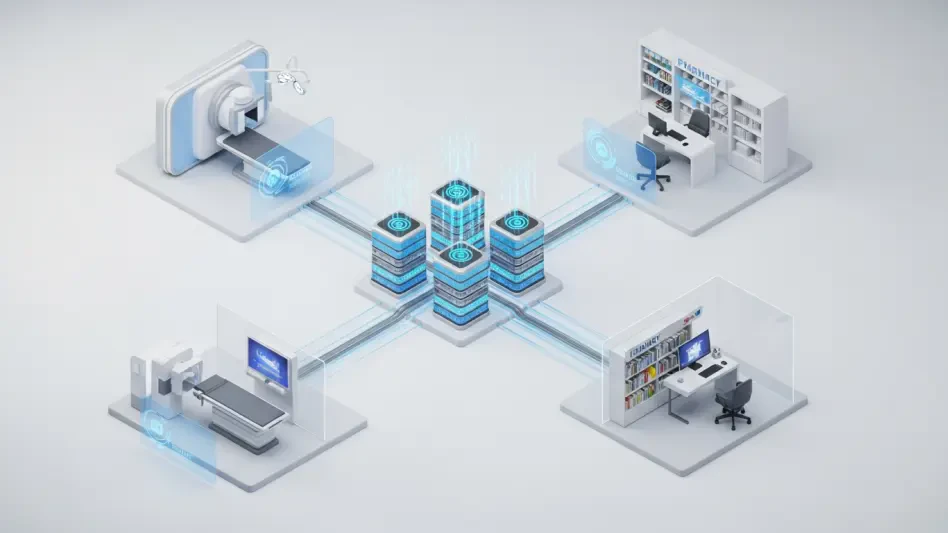
Integration is a massive puzzle because many healthcare organizations are running a mix of cutting-edge new platforms and older, legacy software that simply wasn’t designed to share data. When these systems don’t communicate, you end up with fragmented records, where a pharmacist might not see a medication conflict flagged by a specialist in a different department. IT services have to spend a significant amount of time on data migration and rigorous system testing to ensure that when a lab technician uploads a result, it populates in the patient’s main record instantly and accurately. Without this careful planning, the goal of a “seamless” workflow remains out of reach, leaving staff to manually bridge the gaps between disconnected software.
Disruptions from power failures or cyber incidents are a constant threat. What are the most critical steps a facility can take to ensure they can keep treating patients when their primary systems are offline?
Resilience comes from a culture of preparation where business continuity plans are treated as living documents, not just checkboxes for an audit. We have to move beyond the assumption that our backups will work and actually run regular exercises to test our recovery procedures under simulated pressure. In those moments when the screens go black, the staff needs a clear, practiced chain of command and a temporary pivot to paper-based processes so that life-saving work doesn’t stop. By identifying weaknesses in our recovery plans before an actual outage occurs, we can ensure that a technical failure doesn’t turn into a clinical tragedy.
What is your forecast for the future of digital infrastructure in the medical field?
I anticipate a shift where digital infrastructure is no longer viewed as a peripheral IT concern but as a foundational, essential part of the care environment itself. We are moving toward a reality where systems will not only store data but proactively reduce the administrative burden on staff, allowing them to dedicate their full attention to patient safety and recovery rather than fighting with software. As we refine our security protocols and integration strategies, the technology will become so seamless that it feels invisible, yet so robust that it can withstand even the most sophisticated cyber threats. Ultimately, the next decade will be defined by sustainable operations that prioritize long-term planning and maintenance, ensuring that every digital tool serves the ultimate goal of better, safer clinical outcomes for everyone.