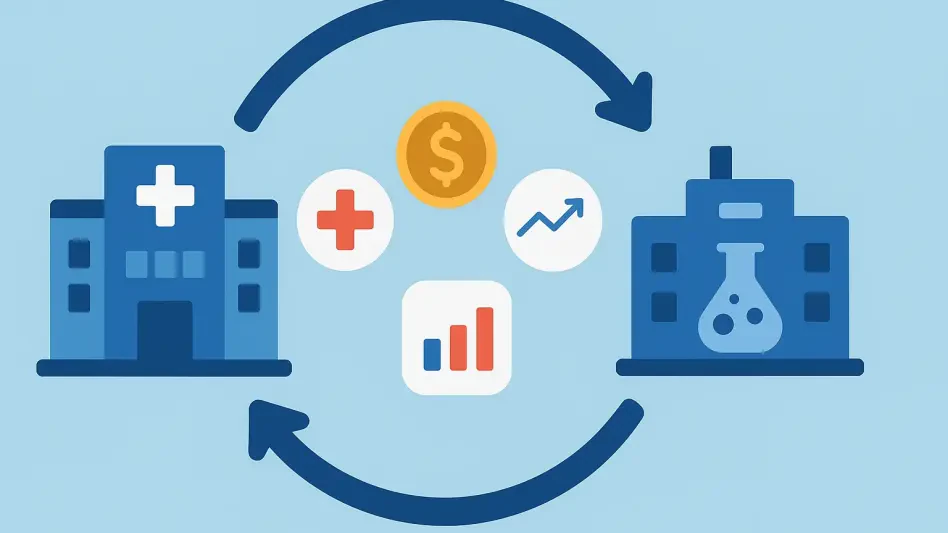

The existing global health data economy is currently built upon a precarious foundation where the immense costs of capturing medical information are borne by clinical systems while the financial rewards are largely harvested by external technology giants. This structural value asymmetry creates a significant disconnect between the entities that generate high-quality data and those that profit from its downstream application in artificial intelligence and pharmaceutical development. As the industry moves through 2026, it becomes increasingly clear that the current model of one-way extraction is unsustainable, threatening the long-term viability of the very healthcare systems that fuel innovation. To rectify this, a fundamental shift toward an outcome-oriented value sharing architecture is required, ensuring that the economic benefits of data utilization circulate back to the patients and providers who provide the essential inputs.
From Extraction to Stewardship: Redefining the Health Data Landscape
The historical approach to health information has largely treated medical records as a byproduct of care rather than a strategic asset. Consequently, the market has settled into a flat-fee, input-based pricing model that fails to account for the ongoing costs of data maintenance. Patients and providers are currently expected to shoulder the administrative burden of data entry and quality control, yet they rarely see a return on the secondary use of this information. This creates a scenario where the value is realized only at the end of the supply chain, leaving the primary generators of that value underfunded and disincentivized to maintain high standards of record-keeping.
To move beyond this extractive phase, the industry must transition toward a model that prioritizes sustainable outcomes over one-time transactions. By shifting the focus from the quantity of inputs to the quality of medical outcomes, the healthcare ecosystem can foster a more equitable distribution of wealth. This requires a pricing strategy that is not static but rather scales with the success of the products or insights derived from the data. Such a transition ensures that if a dataset leads to a breakthrough therapy, the original contributors of that data are recognized as active partners in the discovery process.
Reframing the metaphor of data is central to this evolution. While the previous decade frequently described data as the new oil, this comparison is fundamentally flawed because data is a non-rivalrous and regenerative resource. A more appropriate comparison is to view data as soil, a living asset that requires constant cultivation and stewardship to remain productive. Unlike oil, which is consumed upon use, health data becomes more valuable the more it is enriched, linked, and reused, provided that the underlying “soil” is properly managed by those who understand its clinical context.
The role of data labor is often the most overlooked component of this economy. Transforming raw, unstructured medical records into research-ready datasets requires immense clinical and administrative effort that currently remains largely unfunded. Clinicians must ensure accuracy, privacy experts must oversee de-identification, and technologists must maintain the infrastructure for secure access. Recognizing and remunerating this labor is essential for creating a high-fidelity data environment that can reliably support the next generation of medical algorithms.
Market Dynamics and the Evolution of Digital Health Assets
Emerging Paradigms in Data Utilization and Consumer Participation
The rise of data cooperatives and trust models represents a significant shift in how individual health information is governed. Initiatives such as MIDATA and Salus Coop are leading the way by providing platforms where patients can maintain collective control over their information. These models empower individuals to decide how their data is used, ensuring that research participation aligns with their values and that any economic gains are shared among the community. This collective approach prevents the fragmentation of data and provides a unified front for negotiating with commercial entities.
Data sovereignty is also becoming a critical factor in how local populations interact with global health tech firms. By focusing on local ownership, regions can develop population-specific AI tools that are more accurate and relevant to their specific demographic needs. This move toward sovereignty ensures that medical innovation is not just something that happens to a community, but something that happens with it. The implementation of personal return licenses further solidifies this by creating legal mechanisms that funnel a portion of commercial profits directly back to the original data contributors.
Growth Projections and the Impact of Secondary Data Use
The secondary use of health data is undergoing a period of rapid expansion, particularly in the realm of real-world evidence. Pharmaceutical research and development are increasingly relying on longitudinal datasets to validate clinical trials and monitor drug safety in diverse populations. Market indicators for 2026 suggest that the demand for linkable, high-quality data repositories will continue to grow as companies seek to reduce the time and cost associated with traditional drug development cycles. This demand is driving the valuation of well-curated data assets to new heights.
As the market matures, outcome-based contracting is expected to become the standard for health-tech collaborations. Forecasts indicate a rise in tiered access models where initial research costs are kept low, but milestone-driven payments are triggered as products move toward regulatory approval. These performance indicators for data maturity, such as the depth of follow-up and the precision of patient phenotypes, will determine the long-term economic viability of data repositories. Entities that invest in longitudinal data enrichment today will be the most competitive players in the evolving digital health market from 2026 through 2030.
Navigating the Obstacles to a Circular Data Economy
A primary barrier to a functional data economy is the “thin data” problem caused by chronic underfunding at the source. When healthcare systems are stretched thin, data entry becomes a secondary priority, resulting in fragmented and poorly coded records. These gaps in the data lead to biased algorithms that may not perform accurately across different ethnic or socioeconomic groups. Without a financial model that supports high-quality data generation, the industry risks building its future on a foundation of incomplete and unreliable information.
Previous attempts to share value have often been clumsy and ineffective, particularly those tied to equity-based returns. Many healthcare organizations discovered that taking stock in a startup in exchange for data access was a poor strategy, as financial market volatility often had little to do with the actual utility or medical impact of the data. This disconnect proved that equity is an unstable proxy for the value of health information. A more robust approach involves direct value sharing that is tied to specific research milestones or clinical improvements rather than speculative company valuations.
The threat of digital colonialism also looms large over the global health landscape. There is a real risk that data will be extracted from developing regions to train algorithms that are then sold back to those same regions at a high cost, without any local medical or economic benefit. Overcoming this requires a commitment to reciprocity where the extraction of data is always accompanied by an investment in local healthcare infrastructure and research capacity. This ensures that the benefits of the digital revolution are distributed globally rather than concentrated in a few technology hubs.
Furthermore, the tension between data utility and individual privacy must be resolved through advanced technological solutions. The implementation of pseudonymous linkage and secure processing environments allows researchers to extract insights without ever seeing identifiable patient information. These technologies provide the necessary safeguards to maintain public trust while still enabling the large-scale analysis required for medical breakthroughs. Balancing these competing needs is essential for moving toward a circular economy where data flows freely and securely.
The Regulatory Framework and the Architecture of Trust
The European Health Data Space serves as a landmark regulation that is currently reshaping how cost-recovery and data access are handled across borders. By standardizing the rules for secondary data use, the regulation reduces the administrative hurdles for researchers while ensuring that data holders are fairly compensated for the costs of making data available. This framework provides a blueprint for other regions looking to balance the need for open innovation with the necessity of protecting patient rights and institutional interests.
National authorities are playing an increasingly important role in facilitating secure data handshakes. Finland’s Findata is a prime example of an agency that acts as a trusted intermediary, managing the flow of information between public hospitals and private researchers. These governance models ensure that data access is granted only for legitimate purposes and that the exchange of value is transparent and fair. By centralizing the oversight of secondary use, these authorities can maintain high standards of security and ethical compliance.
Transparency is the bedrock of any successful health data economy, and the “account of impact” is a vital tool for building this trust. Patients are more likely to opt into data-sharing programs when they receive clear reports on how their information contributed to specific medical advancements. Robust reporting standards that detail the outcomes of research projects help to demystify the data economy and demonstrate the tangible benefits of participation. This openness fosters a culture of collaboration where patients see themselves as contributors to a greater public good.
Compliance with regulations like GDPR is no longer just a legal hurdle; it has become a primary market driver. Companies that prioritize data sovereignty and adhere to strict transfer protocols are finding it easier to establish international research collaborations. As local laws continue to evolve, the ability to navigate complex regulatory environments will be a key differentiator for successful health-tech firms. Trust is now a quantifiable asset that determines which organizations will have access to the most valuable datasets in the global market.
The Future of Global Health Innovation and Value Distribution
The next phase of innovation will likely be defined by AI-driven localization. Rather than relying on generic global models, healthcare providers will increasingly utilize hyper-local algorithms that are trained on the specific nuances of their own patient populations. This shift will improve diagnostic accuracy and treatment efficacy, particularly for rare diseases and diverse groups that are often underrepresented in large-scale studies. Localization ensures that the data generated by a community directly serves the health needs of that same community.
Non-monetary reciprocity is set to become a more prominent feature of fair value exchange. Instead of simple cash transfers, many hospitals and clinics will negotiate for access to the very AI tools and research capabilities that their data helped create. This model ensures that the clinical environment is continuously upgraded with the latest technology, creating a feedback loop where data generation leads to better tools, which in turn lead to better data. This form of reciprocity is often more valuable to a struggling healthcare system than a one-time payment.
Decentralized technologies, such as blockchain and distributed ledgers, offer promising solutions for tracking data provenance and automating milestone payments. These tools can create an immutable record of how data was used and by whom, ensuring that every contributor in the chain is recognized when a commercial success is achieved. By automating the distribution of value through smart contracts, the system can reduce administrative overhead and ensure that payments are made accurately and on time. This technological layer adds a new level of accountability to the data economy.
Ultimately, the goal is to establish a circular economic model where value is never truly extracted but rather circulates to sustain the source. In such a system, the wealth generated by medical innovation is reinvested into the healthcare providers and patients who provided the original data. This creates a regenerative cycle that supports the long-term health of the global population. As the industry moves forward from 2026, the success of the health data economy will be measured not by the profits of a few, but by the resilience and sustainability of the entire healthcare ecosystem.
Strategic Recommendations for a Balanced Healthcare Ecosystem
The comprehensive evaluation of the data landscape indicated that the shift from a one-way extractive model to a regenerative, outcome-based economy was a fundamental necessity. This investigation determined that the historical reliance on operational cost-recovery was insufficient for maintaining high-quality data environments. Policymakers and industry leaders recognized that without a mechanism to return value to the source, the clinical labor required for data stewardship remained an unfunded mandate. The findings highlighted that long-term innovation depended on the creation of frameworks where all participants shared in the ultimate success of medical discoveries.
The analysis revealed that regulators moved toward implementing policies that encouraged true value-sharing rather than simple transactional fees. Investment prospects were identified in areas such as governance technology and longitudinal data enrichment, which became the new benchmarks for data valuation. Stakeholders prioritized the development of secure, transparent infrastructures that allowed for the tracking of data utility across multiple research cycles. These actions were essential for bridging the gap between resource-poor and resource-rich settings, ensuring that digital colonialism was replaced by a model of global cooperation and mutual benefit.
Strategic decisions focused on the implementation of hyper-local medical algorithms and the adoption of non-monetary reciprocity as a standard for fair exchange. The research underscored that the rebalancing of the health data economy was not merely a financial challenge but a critical governance issue of the 21st century. By establishing a circular economic model, the global community ensured that the healthcare systems generating the data were the same ones that benefited from its insights. This shift transformed the data economy from a source of friction into a sustainable engine for global health improvement.