
Volunteers gave blood, scans, and the secrets of their DNA to help science cure disease, yet the same data traveled across borders, landed on an e-commerce site, and revealed how easily controlled access can turn into copyable stock that outlives promises, policies, and platforms. The UK Biobank episode—listings for sale by three Chinese academic institutions, rapid takedowns, and a pause on exports—showed how much is at stake when cores of modern biomedicine are protected more by contracts than code.
This report examines whether centralized genomic repositories can be operated safely at scale, why the UK Biobank incident marked a systemic rather than isolated failure, and how AI-era incentives strain de-identification and governance. It evaluates operational design, legal frameworks, and market dynamics, and then sets out a path that delivers research value while reducing copyable exposure.
The Scale, Stakes, and Structure of Centralized Genomic Repositories
Centralized genomic databases aggregate vast, multimodal records to drive discovery, accelerate drug development, and feed AI models that need breadth and depth. Their promise is simple: concentrate rare signals, harmonize formats, and enable reproducible science that single sites cannot achieve alone.
The ecosystem spans population biobanks like UK Biobank and All of Us, direct-to-consumer genetics firms, hospital-linked and academic biobanks, and international consortia. Core assets include whole-genome and exome data, high-resolution imaging, longitudinal EHRs, biomarkers, lifestyle surveys, and linkable registries with decades of follow-up.
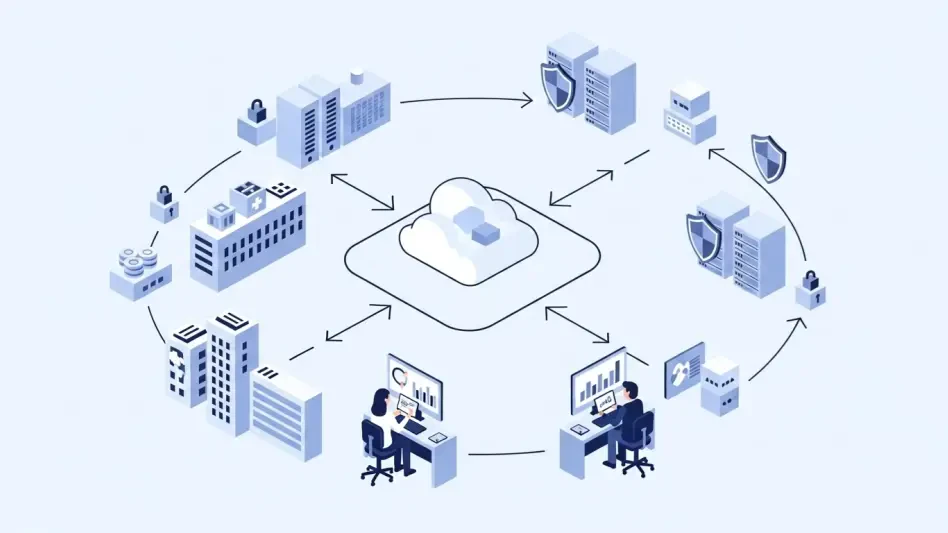
Technically, these repositories now rely on cloud platforms, managed research workspaces, API endpoints, compute-to-data designs, and layered export controls. Funders, universities, health systems, AI companies, publishers, and data brokers each impose distinct incentives that tug on access rules and timelines.
Regulation shapes operations through GDPR/UK GDPR, HIPAA and the Common Rule, cross-border transfer tools, and bespoke data-sharing agreements. Yet the UK Biobank incident exposed a hard truth: despite contractual bans on bulk exports, pathways existed, and automated outbound checks are not expected until late 2026. Because genomes are immutable and familial, the consequences differ from ordinary data leaks; deletion cannot truly unwind harm.
Evidence of a System Under Strain: Trends and Trajectories
The Alibaba listings were not an outlier; they were a flare revealing a larger drift from “controlled access” to uncontrolled replication. According to an independent tally, this was roughly the 198th known exposure in a single year, and mirrors persisted beyond takedowns, including on public code-sharing sites.
De-identification stands on a cliff edge. High-dimensional genomes tied to rich phenotypes are linkable with modern techniques, undermining assurances that anonymity can hold. AI has intensified demand for large, diverse health data, while norms of cloud sharing and model training have outpaced consent forms drafted under assumptions from a different era.
From Walled Gardens to Runaway Copies: How “Controlled Access” Leaks in Practice
Leakage recurs because governance rests on paper rather than hard technical enforcement. Institutions were accredited, projects approved, and export bans stated—but bulk downloads still happened in practice, sometimes years after policy changes intended to confine analysis to central workspaces.
Outdated consent compounds the issue. Volunteers agreed under expectations from 2006–2010, yet today’s pipelines involve rapid code reuse, cloud mirroring, and model training workflows that can memorize data. Without compute-to-data by default and non-exfiltration controls, “walled gardens” become staging grounds for copies.
What the Numbers Signal: Access Volumes, Exposure Counts, and Forward Scenarios
Cohorts now number in the hundreds of thousands with petabytes of multimodal data. Accredited institutions span continents, project approvals run high, and export logs reveal more movement than the public appreciates. Exposure pathways include sanctioned but overbroad transfers, internal mirrors, and unauthorized uploads, with detection often lagging weeks or months.
If modalities and AI demand continue to expand, unmanaged risk rises faster than incremental controls can contain it. Performance targets for a resilient system should include near-zero bulk leakage, minute-scale anomaly detection, and day-scale containment with documented provenance, none of which can be achieved by contracts alone.
Fault Lines Revealed by the UK Biobank Episode—and What Could Actually Help
Design gaps mattered: the platform permitted exports despite prohibitions, and automated outbound screening arrived slowly after years of known pressure points. Technical limitations also weighed heavy—de-identification fragility, model memorization, membership inference, and inversion attacks make even “anonymized” data leaky once models are trained.
Operationally, accreditation functioned as a proxy for security, audits lacked depth, and red-teaming was limited. Misaligned incentives—high data value for AI and commercialization versus research-only consent—pulled against restraint. This misfit set conditions where a single breach could multiply through mirrors and markets.
Mitigations are practical if enforced. Compute-to-data with non-exfiltration by default and denied bulk downloads changes the threat surface. Tiered, purpose-bound slices with strong provenance narrow exposure. Privacy-enhancing technologies—vetted secure enclaves, federated analysis, MPC/HE for narrow tasks, and differentially private aggregates—provide targeted relief. Continuous workspace monitoring with mandatory egress inspection, meaningful penalties, and public disclosures create deterrence. Post-leak playbooks—model quarantine, recall attempts, and coordinated takedowns—limit downstream harm.
Law, Policy, and the Enforcement Gap in Cross-Border Genomic Research
Under GDPR/UK GDPR, genomic data is special-category, requiring explicit bases, DPIAs, and structured transfer mechanisms. Layered on top, HIPAA, the Common Rule, ethics approvals, and access committees set norms but often emphasize paperwork over enforceable controls.
Security certifications such as ISO/IEC 27001, SOC 2, and NHS DSPT help baseline operations, yet research settings differ from steady-state IT; analytics sprawl, bring-your-own-code, and rapid collaboration strain static audits. Cross-border realities—export restrictions, data localization, and vendor jurisdiction risk—further complicate oversight and remediation.
The UK Biobank episode surfaced hard questions about adequacy of approvals, supervision of accredited institutions, and the timelines for mandated safeguards. Accountability in practice needs verifiable logs and technical enforcement, not just attestation; otherwise sanctions land late, after copies fan out.
The Road Ahead: Building Research Value Without Centralized Vulnerability
A shift in architecture can preserve value while shrinking blast radius. Federated and hybrid models keep raw data local and move compute, not copies. Secure enclaves with non-exfiltration guarantees, reproducible pipelines, and verifiable logs enable auditability without mass export. Data minimization and selective use of synthetic data help, though fidelity and leakage caveats remain.
Model-era controls must evolve. Provenance and data nutrition labels track lineage; watermarking and canary records aid misuse detection. Model governance—registries, retention limits, membership privacy audits, and red-team evaluations—places a check on memorization and leakage from outputs and embeddings.
Consent also requires rethinking. Dynamic, revocable, purpose-limited consent clarifies downstream use, while community governance and benefit-sharing restore legitimacy. For particularly sensitive modalities, opt-out defaults may be warranted. Market levers—investor and publisher requirements, insurance that prices exfiltration risk, and global collaboration compacts—can align incentives and speed collective response.
Bottom Line and Next Steps: What This Episode Means for Security, Trust, and Investment
The Alibaba listings were a symptom of systemic leakage, not a one-off betrayal. De-identification has practical limits, genomes are permanent, and AI pipelines can learn and reveal what policies say should remain hidden. Contract-centric custodianship fell short under real-world pressure.
Immediate steps were clear: freeze bulk exports, harden egress with real-time monitoring, and commission independent audits with live-fire red-teams. Near-term priorities included automated outbound checks at scale, compute-to-data defaults, and penalties with public consequences. Over the longer arc, migration to federated and hybrid models, consent overhauls, and model quarantine and takedown mechanisms formed the spine of a sustainable approach.
For donors, the risk calculus shifted toward demanding transparency, control, and evidence of technical safeguards. For stewards, trust moved from contract to architecture. For researchers and publishers, methods that minimize raw data movement and validate privacy claims became the standard. For policymakers and funders, approvals and grants needed to hinge on demonstrable enforcement, not intent. Taken together, the industry’s path forward depended on architectures that reduced copyable exposure while keeping research productive, because centralized genomic databases as implemented had not been fully securable in practice.