
The global humanitarian landscape has undergone a profound transformation as displacement events that were once viewed as temporary emergencies have evolved into protracted crises lasting for decades rather than months. While the immediate response to a refugee influx has historically focused on mitigating the spread of infectious diseases and addressing acute malnutrition, the demographic shift within displaced populations has necessitated a radical reassessment of how modern medicine handles non-communicable diseases. Cancer care, in particular, represents a burgeoning health crisis that the current international aid framework was never designed to manage, leaving millions of vulnerable individuals in a state of clinical limbo. As the world acknowledges the resilience of those forced from their homes by conflict or environmental collapse, it is becoming increasingly evident that the absence of sustainable oncology services is no longer a peripheral concern but a central ethical failure of the global health community. This shift demands a move away from the traditional model of crisis medicine toward a more integrated approach that recognizes the right to complex, long-term treatments as a fundamental component of human rights for all people, regardless of their legal status or geographic location.
Structural Obstacles to Effective Oncology Management
Late-Stage Diagnosis and Economic Rationing
One of the most significant drivers of poor survival rates among displaced populations is the high frequency of late-stage presentations, which often renders curative treatment impossible. Data from Syrian refugees residing in Turkey illustrates a staggering trend where an overwhelming majority of patients—estimated between 70% and 76%—are diagnosed only when their cancer has reached stage III or IV. This delay is rarely a matter of personal choice; rather, it is the direct result of systemic barriers including language differences, a lack of awareness regarding host-country medical systems, and the sheer logistical difficulty of navigating complex referral pathways while living in temporary housing. By the time a refugee manages to secure an appointment with a specialist, the window for effective surgical intervention or early-stage chemotherapy has often closed, leaving palliative care as the only remaining option. This creates a cycle of late detection that not only increases mortality but also places a massive financial burden on the host country’s healthcare infrastructure, which must then manage more complex and expensive terminal cases.
The situation is further complicated by the high cost of oncology, which forces humanitarian organizations to engage in painful ethical rationing that would be unthinkable in more stable environments. Groups like the United Nations High Commissioner for Refugees (UNHCR) often rely on specialized committees to decide which patients receive funding based on the likelihood of a positive outcome and the projected cost of treatment. This creates a heartbreaking paradox: patients with the most advanced diseases are often denied financial support because their prognosis is deemed too poor to justify the expense, yet their disease only reached that critical stage because they lacked access to early screening and support in the first place. This utilitarian approach to healthcare prioritizes “value for money” in a way that fundamentally clashes with the principle of medical equity. It forces physicians and aid workers to act as gatekeepers of life-saving resources, choosing who lives and who dies based on budgetary constraints rather than clinical potential.
Information Gaps: The Erosion of Care Continuity
A profound knowledge gap continues to hide the true scale of the refugee cancer crisis, making it difficult for global health planners to allocate resources effectively. Because displacement fragments medical records and disrupts national registries, it is nearly impossible to track the actual prevalence of various malignancies within these populations with any degree of accuracy. Current estimates vary wildly across different regions, not because the biological health of refugees differs so significantly, but because the methods for collecting and reporting data are inconsistent, fragmented, and chronically underfunded. Without a standardized, international registry to monitor cancer rates and treatment outcomes among displaced persons, international donors remain hesitant to commit the long-term capital required to build a robust oncology infrastructure. This lack of data creates a “silent” epidemic where the suffering of thousands remains invisible to the policymakers who have the power to implement systemic change.
Timing is the most critical factor in cancer survival, yet it is often the first casualty of movement across borders. Displacement acts as a physical barrier that stops chemotherapy cycles mid-stream, delays essential radiation therapy, and prevents the meticulous long-term follow-up care required for patients in remission. These interruptions are not merely logistical inconveniences; they are severe clinical setbacks that lead directly to drug resistance and higher mortality rates. For a displaced patient, even a few weeks of transit without access to specialized medication can mean the difference between a treatable condition and a fatal one. The erosion of care continuity means that even when a patient has the good fortune to restart treatment in a new country, the biological momentum of the disease has often gained a permanent advantage. Addressing this requires a total reimagining of medical documentation, moving away from paper files that are easily lost toward a more resilient and portable form of health information management.
Examining Inequities in Health Outcomes
High-Risk Malignancies and Pediatric Vulnerability
Recent evidence suggests that breast cancer and leukemia are the most prevalent malignancies among refugee populations, accounting for a disproportionate share of the reported disease burden. The high prevalence of breast cancer highlights a desperate need for gender-specific screening and early intervention programs in refugee camps and urban host communities where women may face cultural or social barriers to seeking care. Similarly, the frequent occurrence of leukemia emphasizes the urgent requirement for advanced diagnostic tools and specialized hematology units, both of which are rarely prioritized in temporary humanitarian settings. These high-risk malignancies require a level of multidisciplinary care that is often absent in the regions where refugees are most concentrated, leading to outcomes that are significantly worse than those seen in non-displaced populations with the same diagnoses.
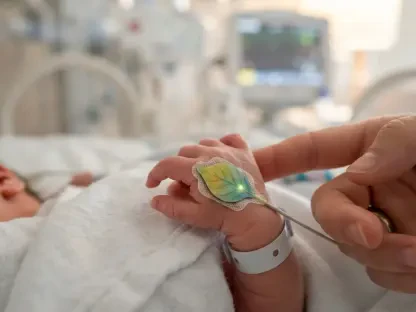
The disparity in medical outcomes is particularly stark among pediatric patients, who represent some of the most vulnerable individuals in the global health crisis. Research indicates that refugee children often experience much worse survival rates than local children, even when they are treated in the exact same medical facilities. These poor outcomes are frequently driven by indirect factors rather than a lack of medical technology or physician expertise. Families living in poverty often cannot afford the transportation costs to reach distant specialized clinics, or they struggle with a lack of nutritional support during intensive chemotherapy regimens. Furthermore, profound language barriers often prevent parents from fully understanding complex treatment protocols, leading to unintentional non-compliance or missed follow-up appointments. This gap in pediatric care demonstrates that providing medical equipment is not enough; the social determinants of health must be addressed if refugee children are to have a fair chance at surviving cancer.
Systemic Integration: The Inefficiency of Parallel Health Systems
There is a growing consensus among global health experts that the traditional parallel system model—where refugees are treated in separate, temporary clinics managed by non-governmental organizations—is fundamentally failing cancer patients. These separate systems are rarely equipped with the high-end technology, such as linear accelerators for radiation or advanced pathology labs, that are necessary for modern oncology care. Instead, they often provide a lower standard of service that leads to fragmented care and poor communication between different providers. Experts now argue that the only sustainable solution is to fully integrate refugees into the existing national health systems of their host countries. This approach allows displaced persons to access established centers of excellence while simultaneously providing an opportunity to strengthen the host country’s overall medical capacity through international investment and shared resources.
The transition toward integrated health systems is not without its challenges, particularly in countries that are already struggling to provide care for their own citizens. However, maintaining two separate, unequal medical systems is both inefficient and ethically dubious in the long run. When refugees are integrated into national insurance schemes and hospital networks, the administrative costs of managing their care are reduced, and the quality of treatment is standardized. This integration also fosters social cohesion by ensuring that refugees and local residents are treated in the same facilities, reducing the perception of “special treatment” that can sometimes lead to tension in host communities. By viewing the refugee health crisis as an opportunity to upgrade national health infrastructures, the international community can create a legacy of improved medical access that benefits both the displaced and the residents who welcome them.
Strategic Initiatives for Global Reform
Digital Innovation: Technological Solutions and Medical Portability
To ensure that a refugee’s medical history is not lost at the border, the implementation of digital “medical passports” and cloud-based health records became a cornerstone of the reform efforts initiated from 2026 to 2028. These interoperable systems were designed to allow oncology teams in different countries to access a patient’s diagnostic history, imaging results, and previous treatment plans instantly through secure, encrypted platforms. By ensuring that a new doctor in a host country could pick up exactly where the last one left off, these digital tools prevented the dangerous and expensive duplication of tests while keeping life-saving chemotherapy cycles on schedule. The move toward medical portability represented a significant shift in how the world viewed the “sovereignty” of health data, prioritizing the survival of the patient over antiquated paper-based systems that were never meant to cross international boundaries.
The deployment of these technologies also allowed for the expansion of tele-oncology, which bridged the gap between remote refugee settlements and urban centers of medical excellence. Specialists were able to review pathology slides and provide consultation on complex cases from thousands of miles away, ensuring that a patient in a rural camp received the same expert advice as one in a major city. This technological leap did more than just move data; it decentralized expertise, making high-quality cancer care accessible regardless of a patient’s physical location. These innovations were supported by international partnerships that provided the necessary satellite internet infrastructure and hardware to clinics that were previously offline. This digital revolution in humanitarian aid proved that while borders might stop people, they should no longer be allowed to stop the flow of life-saving medical information.
Proactive Strategy: Sustainable Financing and the Role of Prevention
The international community recognized that the status quo was untenable and began implementing structural reforms to bridge the gap between emergency aid and chronic disease management. Policymakers established a framework where medical records became portable through secure technologies, ensuring that no patient was forced to restart their diagnostic journey upon crossing a border. Significant investments were channeled into national health infrastructures in host countries, effectively ending the era of isolated, under-equipped camp clinics that struggled to provide even basic palliative care. This transition favored the integration of refugees into universal health coverage schemes, which not only reduced individual mortality rates but also stabilized the health economics of the regions involved. By prioritizing early detection through subsidized screening programs and expanding the reach of preventative vaccinations, the global community successfully reduced the long-term cost of oncology care.
Moving away from short-term emergency grants toward sustainable financing was the only way to cover the multi-year trajectory of cancer treatment effectively. Stakeholders explored innovative models like multi-year philanthropic partnerships and dedicated insurance schemes specifically designed for displaced persons, ensuring that funding did not evaporate before a patient completed their multi-year treatment plan. Strengthening primary care and prevention—such as providing HPV and Hepatitis B vaccinations—was identified as the most cost-effective way to reduce the future cancer burden within these populations. These coordinated efforts transformed the narrative of displacement from one of inevitable medical decline to one of resilience and restored health. These steps proved that high-quality cancer care was achievable even in the most challenging environments when the global community committed to proactive justice rather than reactive charity.