
Faisal Zain is a distinguished leader in the medical technology and pharmaceutical manufacturing sectors, with a career dedicated to bridging the gap between complex laboratory innovations and scalable patient solutions. His expertise lies in the intricate processes of developing diagnostic tools and therapeutic devices that tackle some of the most persistent autoimmune challenges. Today, he joins us to discuss a significant breakthrough in the treatment of celiac disease—a monoclonal antibody that promises to change the lives of millions who have long been told that a strict diet was their only defense.
Our discussion centers on the transformative potential of targeting specific signaling proteins to halt internal damage, the rigorous clinical testing involving real-world dietary challenges, and the broader medical implications for various skin and digestive disorders. We also examine the competitive landscape of the biotech industry, the financial milestones driving these advancements, and what the future holds for patients awaiting the first FDA-approved therapy for this chronic condition.
The reality for many people living with celiac disease is that even a strict gluten-free diet doesn’t always prevent painful symptoms or internal damage. How does this new therapeutic approach change the conversation for those 5.1 million patients who feel they’ve run out of options?
For the 5.1 million people across the United States and the major European markets, celiac disease is a constant shadow over every meal. It is heartbreaking to realize that roughly 50% of these patients continue to endure persistent symptoms and intestinal inflammation despite their best efforts to avoid gluten entirely. This is because the disease isn’t just about what you eat; it’s about a runaway immune response that targets the villi, those vital, tiny projections in the small intestine responsible for nutrient absorption. By shifting the focus from mere dietary avoidance to the biological source of the inflammation, we are finally looking at a way to protect the gut from the inside out. This isn’t just a lifestyle adjustment; it’s a fundamental change in how we preserve the physical integrity of the digestive system against a relentless autoimmune attack.
The development of TEV-53408 specifically targets interleukin-15. Could you explain the significance of this pathway and why the dosing schedule of this drug is considered a major leap forward for patient care?
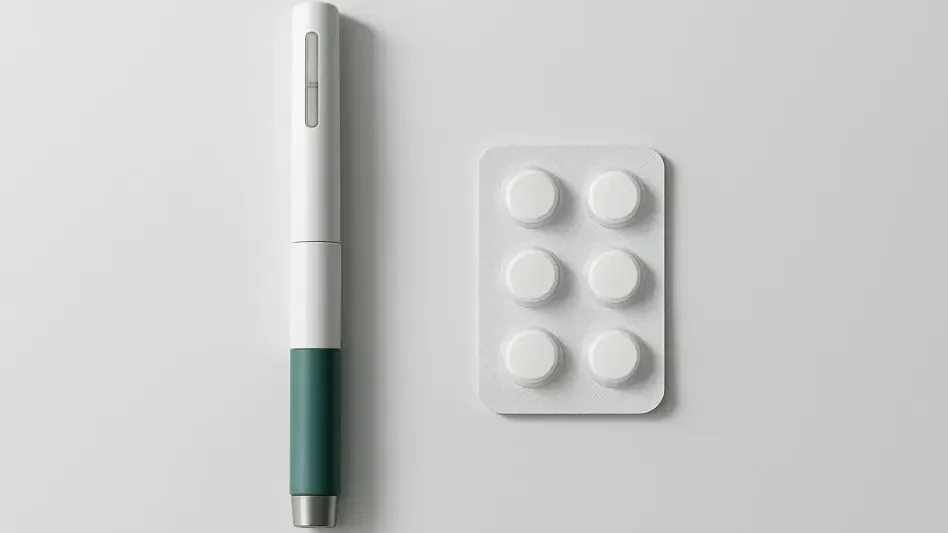
Interleukin-15, or IL-15, acts like a central switchboard for the inflammatory signals that lead to the destruction of the intestinal lining in celiac patients. By utilizing a monoclonal antibody to block this specific protein, we can essentially mute the immune system’s overreaction before it leads to the painful degradation of tissue. One of the most exciting aspects of this specific drug, discovered right in Teva’s own labs, is its subcutaneous delivery and remarkably long half-life. We are looking at a potential dosing interval of once every three months, which is a massive win for patient adherence and quality of life. Imagine moving from the daily anxiety of hidden gluten to a therapeutic regimen that only requires attention four times a year—it’s a sensory and emotional relief that cannot be overstated.
In the Phase 2a trial, participants underwent what is known as a “gluten challenge.” What does this process involve, and what did the biopsy results reveal about the drug’s effectiveness?
The gluten challenge is a demanding part of the clinical process where 50 brave adult participants, who were previously stable on a gluten-free diet, began intentionally consuming gluten daily for six weeks. This started just two weeks after they received a single dose of the study drug, creating a high-stakes environment to see if the therapy could actually withstand a direct assault on the immune system. When the researchers performed biopsies at the end of the eighth week, the results were nothing short of clinical milestones, showing statistically significant prevention of intestinal damage compared to those who took a placebo. Beyond the microscopic data, the patients reported lower gastrointestinal symptom scores, meaning they didn’t just look better on a slide—they felt better in their daily lives. We are now continuing to monitor these individuals through week 80 to ensure that the safety and durability of the drug hold up over the long term.
While the focus today is on celiac disease, there are indications that this IL-15 inhibitor could have a much broader impact. How are the recent findings in other conditions like vitiligo shaping the future of this treatment?
The beauty of targeting a fundamental pathway like IL-15 is that its influence extends far beyond the gut, into the very pigment of our skin and the health of our hair follicles. Just two months ago, we saw promising Phase 1b results for this same drug in treating vitiligo, a condition where the immune system attacks the skin’s pigment-producing cells. Because the drug proved safe and effective there, it is already moving into Phase 2b testing, and the company is eyeing other inflammatory conditions like alopecia areata, atopic dermatitis, and eosinophilic esophagitis. From a manufacturing and strategic standpoint, this versatility is incredible, with projected peak sales reaching between $1.5 billion and $2 billion for celiac disease alone. It proves that when we find a key that fits the IL-15 lock, we can potentially open doors for patients across a wide spectrum of immunological disorders.
The biotech space is becoming increasingly crowded with competitors targeting similar receptors, such as the CD122 subunit. How does Teva’s specific focus on IL-15 compare to the broader approaches we are seeing from other firms this year?
The competition is certainly heating up, which is ultimately a victory for patients because it accelerates the pace of innovation. We’ve seen massive moves in the market, like the $2.2 billion acquisition of Forte by Argenx, which centers on an antibody that blocks the CD122 subunit shared by both IL-2 and IL-15 receptors. Some analysts suggest that targeting both pathways, as seen with First Track Biotherapeutics’ ANB033, might offer a more “comprehensive” shield against inflammation, but that remains a hypothesis until the clinical data is fully matured. First Track has already completed enrollment for its own gluten challenge cohort this year, with preliminary data expected in the fourth quarter of 2026. Teva’s approach is highly specialized, and the $500 million agreement with Royalty Pharma signed earlier this year provides the financial runway needed to push through a multiple-dose Phase 2 study and into Phase 3.
What is your forecast for the treatment of autoimmune intestinal disorders over the next few years?
My forecast is that we are entering an era where “dietary restriction only” will be viewed as an archaic approach to celiac disease. Within the next few years, I expect the successful transition of TEV-53408 into Phase 3 trials will pave the way for the first-ever FDA-approved therapeutic that offers true mucosal protection. As we refine the dosing regimens through 2026 and beyond, we will likely see a shift toward personalized immunotherapy where a single injection every quarter provides a safety net for those with accidental gluten exposure. The financial commitment from major players and the successful validation of the IL-15 pathway suggest that by the end of this decade, celiac patients will finally have the medical tools to live without the constant fear of long-term intestinal damage. This will not only improve individual health outcomes but will also reduce the massive economic burden of untreated autoimmune complications globally.