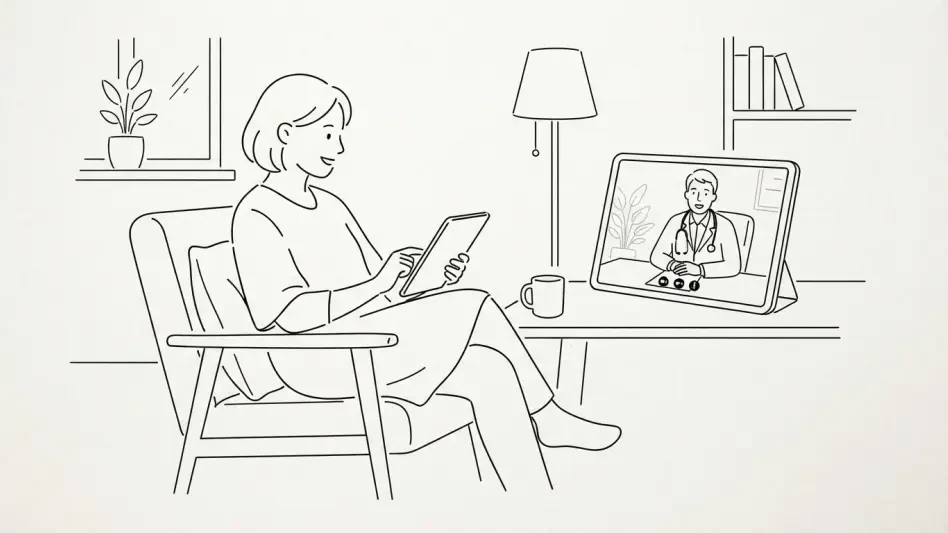

The Evolution of Allergy Care: Telemedicine and Sublingual Immunotherapy
Recent analytical breakthroughs in longitudinal clinical monitoring have finally provided the long-awaited evidence that moving specialized respiratory care from the clinical setting directly into the patient’s living room is both safe and sustainable. The healthcare landscape is undergoing a radical shift as patient-centric models move chronic disease management from the clinic to the home environment. Sublingual Immunotherapy (SLIT) has emerged as a transformative, disease-modifying alternative to traditional allergy shots, offering a non-invasive path to long-term relief for millions. As digital health platforms expand, the integration of telemedicine into allergy care has bridged significant gaps in accessibility across diverse demographics.
This segment is currently defined by a move toward decentralized specialty care, where technological monitoring and remote consultations allow for highly personalized treatment plans. Regulatory bodies and market players are increasingly recognizing these remote models, provided they can maintain the high safety standards established by traditional in-person protocols. By placing therapy under the tongue, patients avoid the logistical burden of weekly office visits and the physical discomfort of needles. This transition is not merely about convenience; it represents a fundamental change in how immunological tolerance is built and maintained.
Longitudinal Data and Market Trends in Remote Immunotherapy
Analyzing a massive cohort with data finalized in 2026 reveals that remote platforms can handle extensive patient volumes without compromising clinical integrity. The study scrutinized over 18,398 adherence-adjusted patient-years, providing a granular look at how patients interact with these therapies over long durations. This longitudinal perspective is essential for identifying rare events that might be missed in shorter clinical trials. The data suggests that as patients become more comfortable with remote tools, the quality of self-reported data improves significantly.
Market data indicates a robust upward trajectory for the telemedicine-delivered SLIT sector as providers move beyond simple consultations to comprehensive treatment journeys. The scalability of these platforms is perhaps their most significant advantage, allowing for a much broader reach into rural or underserved populations that previously lacked access to allergy specialists. By removing geographic barriers, providers can now offer disease-modifying treatments to a more diverse demographic than ever before.
Digital Health Integration and the Rise of Home-Based Treatments
The primary trend driving the industry is the shift toward hospital-at-home models, fueled by evolving consumer behaviors that prioritize convenience without sacrificing clinical outcomes. Emerging technologies, such as automated patient monitoring systems and AI-driven adherence tracking, are making it possible to manage complex therapies like SLIT remotely. These market drivers are creating new opportunities for specialty telehealth platforms to scale and integrate into broader health systems.
Furthermore, the adoption of these digital tools is supported by real-time data collection that allows for immediate adjustments to treatment protocols based on unique physiological responses. By utilizing automated symptom logs, clinicians can intervene early if a patient experiences discomfort. This proactive approach minimizes the risk of treatment discontinuation and ensures that the therapeutic window is optimized for each individual.
Projecting the Growth of Decentralized Allergy Management
Forward-looking projections suggest that as clinical evidence for safety mounts, insurance providers and health systems will likely increase coverage for remote SLIT through 2030. This acceleration of market penetration is driven by the clear cost-effectiveness of decentralized care compared to traditional immunotherapy. Digital-first models can grow exponentially by leveraging automated communication and centralized pharmacy fulfillment, maintaining high-quality care at a fraction of the traditional cost.
The performance indicators suggest that remote platforms are not just a temporary solution but a permanent fixture in respiratory medicine. As the sector matures, we expect to see deeper integration with electronic health records, allowing for seamless transitions between primary care and specialty telemedicine platforms. This connectivity will be the cornerstone of a more efficient, data-driven approach to managing chronic allergic conditions.
Overcoming Obstacles in Remote Clinical Monitoring
Despite the promise of remote care, the industry faces hurdles regarding patient engagement and data integrity that require constant innovation. A significant challenge identified in recent research is participation bias, where a subset of patients may disengage from monitoring surveys, potentially masking side effects. To mitigate this, platforms are implementing proactive outreach strategies and more intuitive digital interfaces to boost response rates and ensure a complete safety profile.
Additionally, the complexity of managing rare but serious conditions like Eosinophilic Esophagitis (EoE) in a remote setting requires sophisticated screening protocols. Industry leaders are now integrating more detailed gastrointestinal screening questions into their digital onboarding processes to identify at-risk individuals early. These rapid escalation pathways ensure that patient safety remains uncompromised even when the clinician is hundreds of miles away.
Navigating the Regulatory Landscape of Digital Therapeutics
The regulatory environment for telemedicine SLIT is governed by stringent standards focused on drug administration and patient privacy. Compliance with HIPAA and evolving state-by-state telehealth regulations is critical for market players to maintain their operating licenses. Furthermore, the use of standardized reporting tools, such as the Common Terminology Criteria for Adverse Events (CTCAE), ensures that remote platforms provide clinical data that is as rigorous as traditional settings.
Moreover, the role of the pharmacist in the remote SLIT ecosystem is expanding as regulatory updates recognize the importance of dose consistency. Centralized compounding pharmacies must adhere to rigorous quality control measures to ensure that every sublingual drop meets clinical standards. This multi-layered safety net, involving both pharmacists and physicians, provides the necessary oversight for home-based therapy.
The Future of Decentralized Specialty Care
The future of allergy treatment lies in the refinement of personalized medicine through advanced data analytics and real-world evidence. Market disruptors are already utilizing this data to fine-tune dosages and predict adverse events before they manifest physically. Global economic conditions and the push for cost-effective healthcare will favor these scalable remote models as they become the standard of care for allergic respiratory diseases.
This shift will likely be characterized by the integration of biometric wearables that can detect systemic reactions with high sensitivity. By combining patient-reported data with physiological markers, the next generation of allergy care will offer an unprecedented level of safety. The resulting data lakes will provide researchers with the insights needed to develop even more effective immunotherapy formulations tailored to specific allergen profiles.
Validating Remote Care Through Long-Term Safety Evidence
The findings from this comprehensive safety analysis established a definitive endorsement of the safety profile of telemedicine-based SLIT. Because serious adverse events remained exceedingly rare and the vast majority of reactions were mild and transient, the data confirmed that home-based administration was a viable and secure option. For investors and healthcare providers, the primary takeaway was that the decentralized model represented a clinically sound framework rather than just a convenience.
Stakeholders recognized that the next logical step involved the integration of these safety protocols into broader public health initiatives. The focus shifted toward developing more inclusive digital platforms that could accommodate non-English speakers and those with limited technological literacy. By prioritizing these engagement strategies, the industry successfully lowered the barrier to specialized immunology, ensuring that high-quality care reached every corner of the population.