
As the pharmaceutical landscape shifts toward more precise biological therapies, Wyatt McDonnell is challenging the status quo of how we discover the next generation of medicines. With deep roots in single-cell biology from his tenure at 10x Genomics, McDonnell co-founded Infinimmune to move past the limitations of engineering mice and instead listen to the story told by the human immune system itself. His vision is built on the belief that the most effective blueprints for treating disease already exist within us, waiting to be decoded. By focusing on the living memory of our own cells, he is positioning Infinimmune to redefine the standards for treating complex inflammatory conditions like atopic dermatitis.
This conversation explores the technological shift from humanized rodent models to the direct screening of human memory B cells, a process designed to deliver higher-quality drug candidates with greater speed. We examine the specific biological targets of their lead programs, IFX-201 and IFX-101, and how they aim to address the unmet needs of patients who do not respond to current blockbuster treatments. Finally, we discuss the strategic implications of their recent seventy-five million dollar Series A funding and the potential for these therapies to offer best-in-class dosing and efficacy in a clinical market currently dominated by traditional monoclonal antibodies.
Many antibody discovery pipelines rely on humanized rodent models to generate candidates, but you have advocated for a more direct approach. How does moving away from these models change the efficiency and quality of the drugs being developed?
The traditional reliance on rodents requires scientists to spend weeks or even months studying how a humanized immune system responds to a disease in a lab setting, which is essentially trying to reinvent a biological system that has already been perfected over millions of years. We believe there is a significantly better way to discover antibodies by going directly to the human immune system, which has already refined its response to both health and disease. By bypassing the mouse intermediary, we can find antibodies that already possess the drug properties necessary to function in the human body, making the entire process much speedier. Our goal is to get to quality medicines faster by circumventing the need to reinvent human immunity and instead capturing what nature has already optimized. This ensures that the final antibody looks like a traditional monoclonal treatment but carries the inherent advantages of a native human origin.
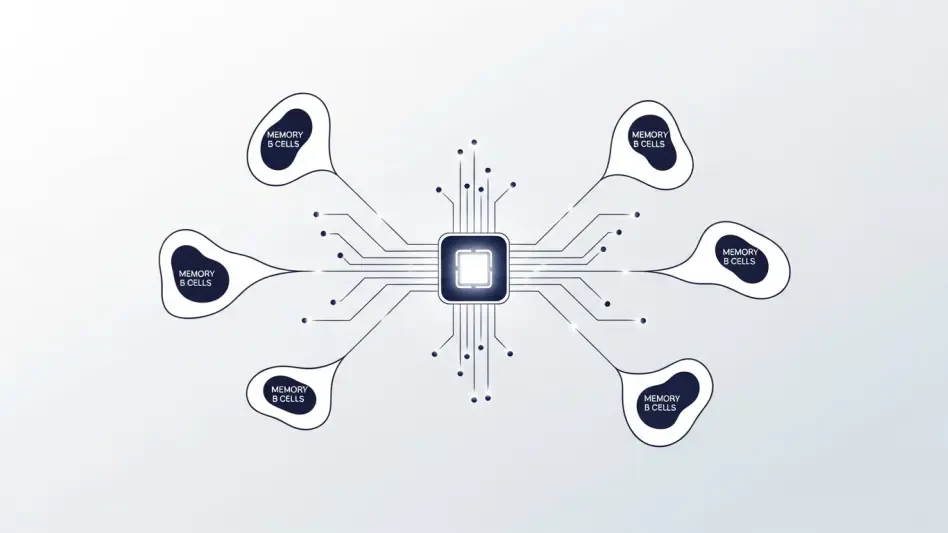
Your Anthrobody platform is described as screening millions of memory B cells to find new candidates. What is it about these specific cells that makes them such a powerful starting point for treating chronic diseases?
Memory B cells are essentially the long-term sentinels of our immune system, representing a living record of every antigen the body has encountered over decades of life. When we screen millions of these cells against hundreds of different targets, we are tapping into a biological library that is far more sophisticated than any artificial simulation. This living memory is what enables the human immune system to produce a rapid response to a pathogen, and our platform captures that specific intelligence to guide our selection and optimization. By screening human B cells directly, we gain deep insights into the exact molecular features that make an antibody effective at treating a specific disease state. This allows us to start our discovery process with molecules that have already been “vetted” by a living human body, which we believe results in superior drug properties.
Atopic dermatitis is a crowded field with established giants like Sanofi and Eli Lilly. What specific gaps in patient care did you identify that your internal programs like IFX-201 aim to solve?
While blockbuster drugs like Dupixent have done wonders by blocking pathways like IL-4 and IL-13, and newer entries like Adbry and Ebglyss received approvals in 2021 and 2024 respectively, many patients still struggle with heavy dosing schedules. Current injectable medicines often require dosing every two to four weeks, which can be a significant hurdle for long-term patient compliance. Furthermore, when we look at data from emerging long-acting competitors, we see that three out of five patients treated still do not achieve one hundred percent skin clearance. This tells us there is a major opportunity to aim for a higher bar of efficacy while also offering dosing profiles that are best-in-class. Our lead program, IFX-201, is designed to be a better IL-13-blocking drug that meets these unmet needs for convenience and complete symptom relief.
Infinimmune is exploring IL-22 with your IFX-101 program, a target that currently has no FDA-approved therapies. Why do you believe this signaling protein is the key for patients who don’t respond to traditional treatments?
We have observed that many patients who fail to respond adequately to standard IL-13 therapies have inflammation that is actually driven by a different signaling protein called IL-22. This specific protein is closely linked to the barrier breach, which is the physical breakdown of the outer skin layer that causes so much distress for atopic dermatitis patients. By developing IFX-101 as an IL-22-blocking antibody, we are addressing a biological pathway that has been largely overlooked by existing monotherapies. While others in the industry, including those recently acquired in deals like the eleven billion dollar AbbVie-Apogee transaction, are looking at long-acting solutions, we are focused on the underlying biology of the skin barrier itself. We intend to develop our candidates as monotherapies first to establish their individual safety and efficacy, but the future potential for combining these treatments to meet the needs of diverse patient populations is very promising.
You recently secured seventy-five million dollars in Series A financing to support your clinical research. How does this capital injection change your trajectory as you prepare to move into Phase 1 testing next year?
This financing, which follows our initial twelve million dollar seed round in 2022, provides the essential resources to move our internally discovered programs into the clinic. Being based in Alameda, California, we are now positioned to scale our operations and support the rigorous clinical research required for both IFX-101 and IFX-201. The support from a broad group of investors, including Regeneron Ventures and Merck Global Health Innovation Fund, validates our mission to build a therapeutic portfolio that serves all patients across different inflammatory profiles. While we have already established discovery partnerships with companies like Merck and Immunome, our near-term focus will be the clinical development of our two lead programs. This capital ensures that we can maintain our speed and efficiency as we transition from a technology platform to a company with human-tested medicines on the horizon.
What is your forecast for the future of antibody discovery?
I believe we are on the verge of a shift where the industry will move entirely away from synthetic or animal-based discovery models in favor of the natural human repertoire. Within the next decade, the standard for a “high-quality” antibody will be defined by how closely it mimics the successful immune responses found in healthy individuals or those who have naturally overcome disease. We will see a wave of new therapies for conditions that were previously considered unreachable because we are finally learning how to read the complex biological instructions already present in our B cells. As technology allows us to screen millions of cells more cheaply and quickly, the time between discovering a target and starting a Phase 1 trial will shrink dramatically. Ultimately, our ability to harness the human immune system’s own evolution will lead to medicines that are not only more effective but far safer for the patients who rely on them.