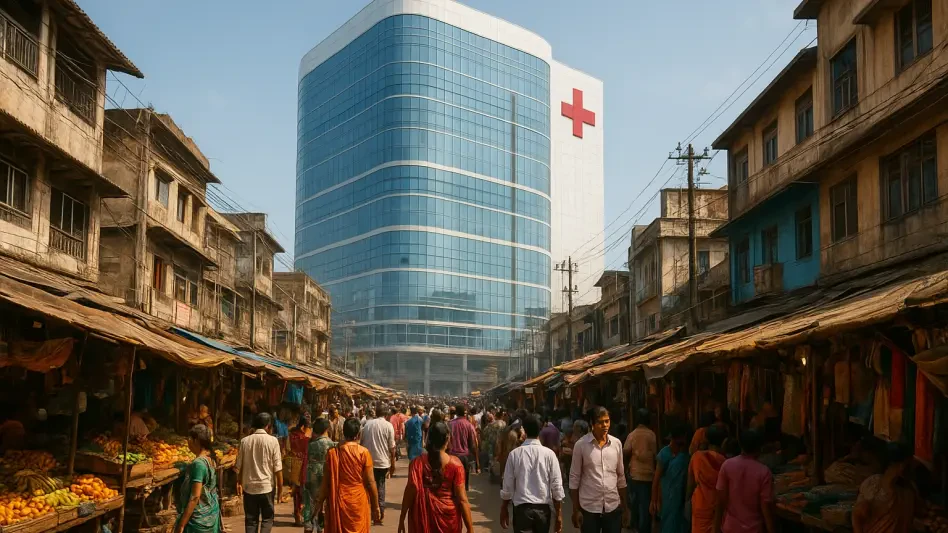

The Dual Face of Indian Healthcare: Rapid Expansion Meets Economic Barriers
The landscape of medical services across the subcontinent is currently undergoing a radical transformation that prioritizes sophisticated architectural expansion over the financial realities of the general population. This healthcare paradox defines a nation where world-class diagnostic centers and multi-specialty towers rise in record time, yet the average citizen finds these services increasingly inaccessible. While the infrastructure reflects a modernizing economy, the economic barriers to entry remain high, creating a stratified system where quality care is often a function of wealth rather than need.
The fundamental shift from a public-led health ecosystem to a dominant, multi-billion dollar private sector has altered how patients interact with the medical community. In the current environment, the private sector is no longer just a supplement to government services but the primary engine of healthcare delivery. This transition is most visible in the specialized medical hubs of metropolitan areas, where tertiary care has become a lucrative commodity. However, the neglect of primary care infrastructure has forced even minor ailments into expensive secondary and tertiary environments, further straining patient finances.
Investment flows and public market listings have accelerated this commercial evolution. Massive foreign direct investment and high-profile initial public offerings are reshaping the corporate landscape, shifting the focus from traditional metropolitan centers to emerging semi-urban corridors. Despite the availability of advanced diagnostics and robotic surgical suites, the nation still lacks uniform pricing standards. This regulatory vacuum allows for significant regional price volatility, making it difficult for consumers to predict or manage the costs of essential medical interventions.
Market Dynamics and the Surge of Private Capital
Emerging Trends and the Private Equity Influx
The capital boom in the healthcare sector has reached unprecedented levels, with a surge in mergers and acquisitions exceeding thirty billion dollars recently. An additional twenty billion dollars has been raised by hospital chains to fund aggressive expansion strategies, turning medical care into one of the most sought-after asset classes for global investors. This influx of capital is driving a consolidation wave where independent nursing homes are being absorbed into massive corporate entities backed by private equity firms seeking high-growth returns.
Geographic diversification is a key component of this capital surge, leading to the rise of specialized medical towns. In regions like Miraj, dozens of high-end facilities have emerged within small radii, creating dense clusters of specialized care. These hubs draw patients from hundreds of miles away, but they also highlight the uneven distribution of resources. Consequently, middle-income patients are frequently forced to transition from underfunded public clinics to these high-cost private facilities as local public options fail to meet basic modern standards.
Growth Projections and Economic Performance Indicators
Bridging the massive healthcare infrastructure gap requires a projected investment of three hundred billion dollars to meet international patient-to-bed ratio requirements. Between 2026 and 2030, the industry expects to see a significant increase in bed capacity, primarily driven by private providers. Major players like Manipal and Max Healthcare are currently targeting specific revenue milestones to justify the heavy capital expenditure involved in greenfield projects. Financial performance remains a central metric, with the sector maintaining a ten percent return on capital employed to attract continued international interest.
The increasing share of private providers in the national healthcare delivery model is reshaping long-term economic forecasts. As private entities take over a larger portion of the medical load, the national economy faces the challenge of managing rising healthcare inflation. Projections suggest that if current trends continue, private providers will account for more than seventy percent of the total healthcare spend by the end of the decade. This trajectory underscores the necessity of maintaining financial viability for investors while attempting to address the growing bed shortage across the country.
The Affordability Crisis and Systemic Hurdles
Price disparities between public and private care have become a source of systemic friction, with private treatments often costing five to ten times more than public alternatives. This gap is particularly evident in high-stakes fields like oncology and cardiology, where the cost of life-saving surgeries can exceed the annual income of an average household. Moreover, the lack of transparency in billing practices has led to a perceived over-treatment trap. Patients are frequently subjected to a battery of unnecessary diagnostics and procedures that inflate final bills without necessarily improving clinical outcomes.
Supply chain markups represent another significant hurdle for patient affordability. Investigations into the cost of basic medical supplies have revealed profit margins as high as two thousand eight hundred percent on simple consumables like intravenous sets and syringes. These markups are often buried within larger hospital invoices, making it difficult for families to dispute individual charges. The socio-economic impact of these practices is severe, as catastrophic debt from medical expenses continues to be a leading cause of poverty, forcing families to liquidate ancestral land or homes to settle hospital dues.
Operational complexity adds further layers to the pricing debate. Hospital administrators argue that the high cost of infection control, 24/7 emergency readiness, and specialized manpower necessitates a premium pricing structure. Balancing these legitimate operational expenses with the need for social equity remains a constant challenge. However, the commercial pressure to deliver returns to shareholders often outweighs the ethical imperative to provide affordable care, leaving the most vulnerable populations with few viable options for complex medical issues.
Navigating the Regulatory Landscape and Proposed Reforms
The debate over price caps has intensified as the government considers linking hospital room tariffs to local three-star hotel rates. Industry leaders have pushed back against this proposal, arguing that medical facilities require significantly higher overheads than the hospitality sector. Nevertheless, the push for standardized costing remains a priority for reformers who advocate for government-mandated price floors and ceilings. These measures are intended to provide a predictable pricing environment for essential surgeries and diagnostic tests, reducing the incidence of predatory billing.
Policy control and ownership structures are also under scrutiny, with proposals to restrict foreign ownership to fifty-one percent in the healthcare sector. This move is designed to maintain domestic sovereignty over healthcare policy and ensure that profit extraction does not compromise national health goals. The impact of the shortfall in public spending is undeniable, as the current allocation of one point four percent of the gross domestic product falls far short of the two point five percent national target. Without a substantial increase in public funding, the private sector will continue to operate with minimal competition from the state.
Future Outlook: Balancing Profitability with Social Equity
Stricter monitoring of profit margins on medical devices and drugs is expected to become a cornerstone of future regulatory efforts. Transparency initiatives aim to unbundle hospital charges, allowing patients to see the actual cost of care versus the retail markups on supplies. At the state level, a shift toward data-driven, localized cost estimates is anticipated, moving away from blanket national caps that fail to account for regional economic diversity. This localized approach could allow for more nuanced regulation that protects consumers without discouraging regional investment.
Innovation in financing, including expanded insurance coverage and the rationalization of goods and services taxes, may offer a way to lower out-of-pocket expenses. However, the investment climate faces risks from arbitrary regulations that could cause capital flight. If price controls are implemented without considering the cost of capital, innovation in the sector might stall. A sustainable model must prioritize patient welfare while ensuring that the private sector remains a viable destination for the billions of dollars in investment required to modernize the national health infrastructure.
Summary of Findings and Strategic Recommendations
The comprehensive analysis indicated that the integration of private sector efficiency with robust public oversight offered the only viable solution to the healthcare paradox. It was determined that while private capital remained essential for building the thousands of new beds required by the population, this growth had to be governed by fair-access protocols to prevent further socio-economic exclusion. Stakeholders recognized that the unbridled commercialization of medical services created a fragile system where financial ruin was often the price of survival.
Recommendations were made for policymakers to prioritize a significant increase in public health expenditure to alleviate the burden on private facilities. The report highlighted that by strengthening the public secondary and tertiary care systems, the government could create a competitive floor that would naturally regulate private sector pricing. Furthermore, the findings suggested that investment opportunities in semi-urban markets were plentiful, provided that companies adopted ethical governance models. Ultimately, the industry moved toward a consensus that long-term stability required a more equitable distribution of medical resources.