
The persistent challenge of treating advanced solid tumors has historically been met with limited success due to the complex immunosuppressive environments that prevent standard therapies from reaching their full potential. Patients facing late-stage diagnoses often encounter a therapeutic ceiling where traditional chemotherapy and radiation no longer offer sustainable benefits, leading to a desperate need for next-generation interventions. Statistics from early 2026 indicate that while liquid cancers have seen remarkable progress through early cellular therapies, solid tumors still account for approximately ninety percent of all cancer-related fatalities globally. This disparity highlights a significant gap in current medical capabilities, necessitating a radical shift toward more sophisticated, programmable immune cells that can infiltrate and destroy dense tumor masses. Researchers are now looking beyond basic CAR-T configurations to explore universal platforms that offer better persistence and safety profiles for diverse patient populations.
Transitioning to Scalable Cellular Platforms
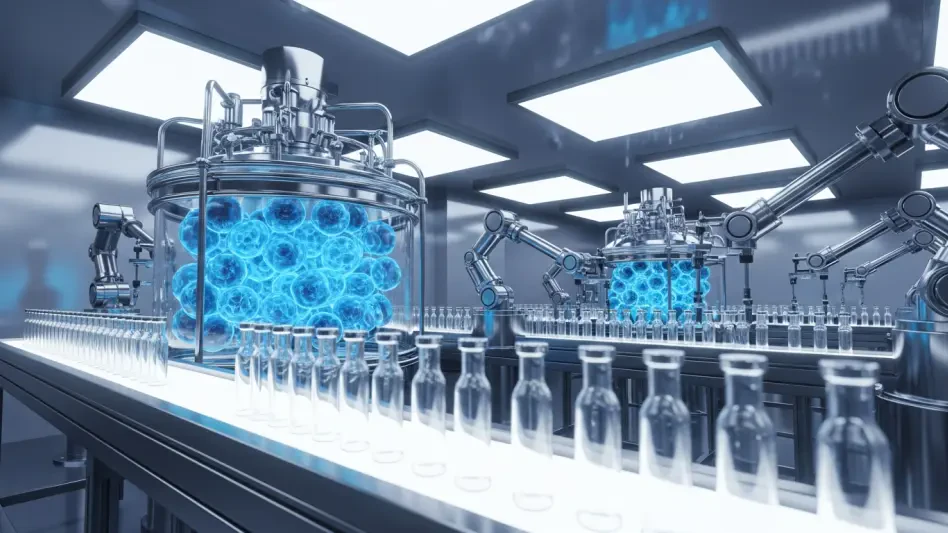
The transition toward universal induced pluripotent stem cell platforms marks a significant milestone in making advanced oncology treatments accessible to a broader demographic. By establishing stable master cell lines, biotechnology firms are now able to manufacture standardized “off-the-shelf” immune cells that eliminate the need for costly and time-consuming autologous processes. In 2026, the focus has shifted toward natural killer cells derived from these stem cells, which offer a lower risk of graft-versus-host disease compared to traditional T-cell therapies. These iPSC-derived products allow for rigorous quality control and the ability to pre-produce doses, ensuring that patients receive treatment exactly when it is most effective. Furthermore, the scalability of this technology ensures that therapeutic costs can be reduced over the coming years, starting from 2026 to 2029, as manufacturing efficiencies are realized across the specialized production facilities worldwide.
Modular Engineering: Optimizing Immune Persistence
To further enhance the efficacy of these cellular products, researchers have integrated sophisticated genetic circuits designed to overcome the metabolic exhaustion common in dense tumor environments. These engineering efforts include the insertion of specific chimeric antigen receptors that target multiple proteins simultaneously, preventing the tumor from escaping through antigen loss. Additionally, the deletion of inhibitory checkpoints using high-precision CRISPR tools has enabled these cells to remain active even when confronted with the immunosuppressive signals typically found in late-stage malignancies. Current clinical data suggests that these modified cells demonstrate superior infiltration capabilities and longer-lasting presence in the bloodstream, which is essential for preventing recurrence. As advancements continue from 2026 to 2028, the emphasis is placed on refining these multi-targeted approaches to ensure that the immune response is both highly specific and sufficiently robust to achieve total clearance.
Systemic Integration: The Path Toward Standard Care
The successful deployment of these programmable cellular therapies provided a foundational shift in how the medical community addressed the most aggressive forms of solid tumors. Healthcare systems implemented streamlined delivery protocols that allowed for the rapid administration of off-the-shelf products, significantly improving the survival rates for patients with limited options. By utilizing modular engineering and decentralized manufacturing hubs, the industry successfully lowered the barriers to entry for advanced genetic medicine, ensuring that these breakthroughs were not confined to specialized research centers. Stakeholders recognized the importance of ongoing genomic monitoring to track the long-term safety of iPSC-derived cells, which paved the way for broader regulatory approvals in secondary indications. These achievements solidified the role of universal immune cells as a cornerstone of modern oncology, and the future focus shifted toward optimizing delivery in outpatient community settings.