
The modern intensive care unit remains one of the most sterile and technologically dense environments in the medical field, often characterized by the constant hum of ventilators and the rhythmic beeping of monitors that can inadvertently heighten a patient’s stress levels during their most vulnerable moments. This persistent sensory deprivation and the lack of organic stimuli often lead to a phenomenon known as intensive care unit delirium, which complicates the recovery process for those on life support systems. As medical science advances through 2026, the focus is shifting from purely mechanical intervention to a more holistic approach that incorporates biophilic design principles to foster a sense of calm and connection to the outside world. Integrating nature into the clinical setting is no longer seen as a luxury but as a vital component of a care plan aimed at improving neurological outcomes and patient well-being. By addressing the psychological environment, providers can reduce stays and improve health.
Architectural Evolution: The Green Hospital Blueprint
Direct Nature Exposure: Designing for the Senses
Modern hospital facility design is undergoing a radical transformation as administrators recognize the profound impact that the physical environment has on physiological stability. The implementation of floor-to-ceiling windows in intensive care units allows for natural light penetration, which is crucial for maintaining the circadian rhythms of patients who are otherwise disconnected from the solar cycle. This architectural shift includes the creation of indoor healing gardens and the strategic placement of greenery within direct line of sight from the patient’s bed. Such features provide a visual anchor to the external world, offering a soft fascination that reduces cognitive fatigue. Research indicates that patients in rooms with views of natural landscapes require fewer potent analgesics and report lower pain intensity compared to those facing brick walls. By prioritizing these organic elements, healthcare facilities are transitioning into restorative spaces that actively support biological needs.
Circadian Alignment: The Role of Natural Light
The integration of natural light is not merely about aesthetics; it is a critical medical intervention that regulates the production of melatonin and cortisol. In many critical care settings, artificial lighting remains static, which can severely disrupt a patient’s internal clock and lead to sleep fragmentation. To combat this, newer installations in 2026 utilize smart glass and dynamic lighting systems that mimic the natural progression of sunlight from dawn until dusk. These systems ensure that patients receive the appropriate spectral blue light in the morning to promote wakefulness and warmer tones in the evening to facilitate restorative sleep. For life support patients, maintaining this biological rhythm is essential for neurological repair and immune system function. Moreover, the presence of shadows and light movement provides subtle environmental cues that help patients stay oriented, significantly decreasing the incidence of hospital-induced confusion and agitation during recovery.
Technological Integration: Bringing the Outdoors Inside
Digital BiophiliHigh-Definition Simulations
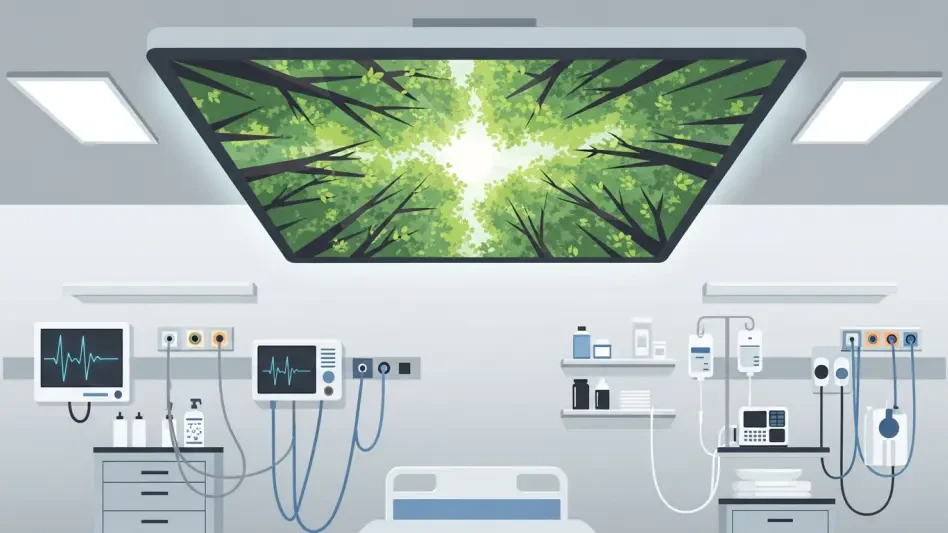
When physical access to the outdoors is impossible due to the patient’s condition or the hospital’s location, technology serves as a vital bridge to the natural world. High-definition wall projections and immersive ceiling displays are now being used to transform sterile ceilings into vibrant canopies of leaves or drifting clouds. These digital installations are carefully curated to avoid overstimulation, focusing instead on slow-moving, repetitive natural patterns that have a grounding effect on the nervous system. This approach, known as digital biophilia, leverages the brain’s innate affinity for organic fractals to induce a state of relaxation. For a patient tethered to life support, these visual stimuli offer an escape from the clinical setting. By engaging the visual cortex with scenes of forests, clinicians can lower sympathetic nervous system activity, effectively reducing heart rates and blood pressure levels without the immediate need for pharmaceutical intervention.
Auditory Landscapes: The Healing Power of Soundscapes
The auditory environment of an intensive care unit is often a chaotic mix of mechanical alarms and clinical conversations, which can be highly distressing for a patient whose senses are already heightened. To mitigate this, sound-masking technologies are being deployed to introduce organic soundscapes, such as gentle rain or distant birdsong, into the recovery space. These natural sounds serve to mask the abrasive noise of medical equipment while providing a soothing backdrop that promotes psychological comfort. Spatial audio systems can create a three-dimensional acoustic environment that further enhances the realism of these sounds, helping to transport the patient’s mind away from the hospital. Studies show that consistent exposure to these auditory nature cues can lower cortisol levels and improve rest. By carefully balancing the acoustic profile of the room, healthcare teams can create a sanctuary of sound that supports emotional resilience and facilitates smoother transitions during recovery.
Strategic Implementation: Future Protocols for Facility Design
The transition toward nature-integrated recovery protocols represented a significant milestone in critical care medicine during the initial months of 2026. Hospital boards prioritized the installation of biophilic elements, recognizing that the initial capital investment was offset by the reduction in patient complications. Design teams collaborated with neurologists to ensure that every visual and auditory addition served a specific therapeutic purpose. In facilities where these changes were implemented, staff observed a marked improvement in patient engagement and a decrease in the usage of sedatives. Clinicians recorded higher rates of successful extubation and noted that families felt more supported in the enhanced environment. These observations led to a new standard of care where the environmental context was treated with the same rigor as the medicine itself. Moving forward, the focus shifted to refining these interventions to ensure that the healing power of nature remained accessible for everyone.