
Health services research investigates the chaotic environment of real-world clinics to determine if proven medical interventions actually work outside of a controlled laboratory. This discipline serves as the vital bridge between theoretical scientific breakthroughs and the practical, often messy application of care at the bedside. Currently, the Agency for Healthcare Research and Quality (AHRQ) faces an unprecedented existential crisis that threatens to sever this link entirely. While the National Institutes of Health receives billions to uncover the molecular mysteries of disease, AHRQ operates on a fraction of that budget to ensure those discoveries do not inadvertently harm patients through medical errors or inefficient delivery systems. Recent administrative shifts and severe staffing shortages have pushed the agency to the brink of collapse, leaving the American medical infrastructure without its primary safety watchdog. The current instability suggests a dangerous trend where the focus shifts away from human factors in medicine.
The Immediate Impact: Funding and Staffing Cuts
The sudden withdrawal of support for over one hundred approved research projects marks a significant setback for clinical safety initiatives nationwide. These projects represent years of collaborative effort between federal scientists and regional health systems, focusing on real-time data collection that cannot be easily replicated. When funding is abruptly halted, the specialized workforce of data scientists, biostatisticians, and safety engineers is forced to seek employment in the private sector, resulting in a permanent loss of institutional knowledge. This brain drain is particularly damaging because the expertise required to analyze complex healthcare delivery systems takes decades to cultivate. Private corporations often prioritize proprietary algorithms over public health outcomes, meaning the shift of talent away from AHRQ reduces the transparency of safety data. The immediate cessation of these studies also renders previous investments obsolete, wasting millions of taxpayer dollars intended for safety.
Maintaining the continuity of long-term safety studies is essential for identifying rare but catastrophic medical errors that occur across diverse patient populations. High-quality healthcare research requires a steady stream of longitudinal data to distinguish between statistical noise and actual systemic failures. When administrative disruptions cause gaps in data collection, the integrity of the entire study is compromised, making it impossible to draw valid conclusions about the efficacy of safety protocols. Without the steady hand of a central federal agency, hospitals are left to rely on fragmented, short-term internal audits that lack the necessary scale to address national trends. This fragmentation leads to a scenario where localized improvements in one facility are never shared with others, effectively siloing life-saving information. The loss of a centralized repository for safety data means that the American healthcare system effectively stops learning from its mistakes, reverting to a reactive posture.
Tracking Diagnostic Errors: A National Imperative
Diagnostic errors remain a leading cause of preventable harm, often resulting from a combination of cognitive biases and technical failures within electronic health records. Addressing these complex issues requires a unified national framework that provides standardized metrics for measuring and reporting diagnostic accuracy across different states. AHRQ has traditionally served as the core engine for developing these standards, ensuring that a diagnosis in a rural clinic is held to the same rigorous evaluative criteria as one in a major urban teaching hospital. Without this centralized coordination, individual healthcare systems are left to develop their own disparate methodologies, leading to a confusing landscape of incompatible data sets. This lack of uniformity makes it nearly impossible for federal regulators to identify which hospitals are underperforming or which specific diagnostic technologies are prone to failure. Standardized reporting is the only way to hold the industry accountable for the decisions made.
The role of objective oversight is critical when evaluating the success of safety interventions, as hospitals often face internal pressures that can skew self-reported data. Independent researchers funded by federal grants provide the necessary distance to critique existing workflows without the influence of institutional politics or financial considerations. When this independent verification layer is removed, the healthcare industry loses its most reliable mechanism for internal correction. This is particularly concerning as medical technology becomes increasingly reliant on automated decision support tools that require constant validation against real-world outcomes. AHRQ provides the scientific rigor needed to determine whether these new technologies actually improve patient safety or merely introduce a different set of hidden risks. Without a robust agency to oversee these evaluations, the adoption of new medical software will likely outpace our ability to monitor its safety, potentially leading to widespread errors.
Specialized Care: Maternal Health and Primary Care Standards
Maternal health outcomes have become a focal point of national concern, yet improvements in this area depend heavily on the systems engineering of labor and delivery units. AHRQ research focuses on the protocols that allow nursing and surgical teams to communicate effectively during high-pressure emergencies, such as post-partum hemorrhages or preeclampsia. These standardized safety bundles have been instrumental in reducing mortality rates by ensuring that every member of the care team knows exactly how to respond when a complication arises. If the agency loses its ability to update and disseminate these protocols, the progress made in maternal safety over the last several years could quickly erode. Clinical teams rely on these evidence-based guidelines to navigate the complexities of modern obstetrics, where multiple comorbidities often complicate routine births. The removal of federal support for this research means that hospitals may have to rely on outdated or non-standardized practices today.
The primary care sector depends on the Agency for Healthcare Research and Quality to facilitate the work of the United States Preventive Services Task Force. This independent body sets the gold standard for cancer screenings, cardiovascular disease prevention, and routine vaccinations that form the backbone of public health. AHRQ provides the administrative infrastructure and the intensive evidence reviews necessary for the task force to make its recommendations without being swayed by commercial interests. If this support system fails, the resulting vacuum would likely lead to inconsistent screening guidelines that vary by insurance provider or geographic location. Patients could find themselves undergoing unnecessary procedures or missing early detection opportunities for life-threatening conditions. The uncertainty regarding which preventive services are truly effective would also create financial instability for clinics that rely on these guidelines to secure reimbursement for various health services.
Long-Term Consequences: The Decay of Systemic Safety
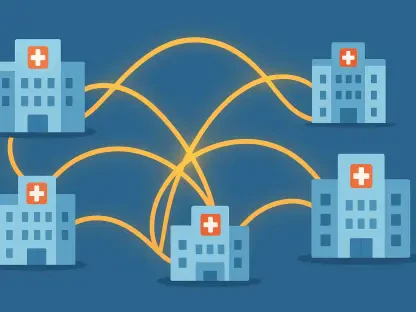
A truly resilient healthcare system must operate as a learning organization that continuously analyzes its performance to identify and mitigate potential hazards. This requires a robust infrastructure capable of aggregating data from thousands of facilities to identify patterns that are invisible at the individual hospital level. Large-scale data analysis is the only way to detect low-frequency events that, while rare, have devastating consequences for the patients involved. AHRQ provides the necessary scale and scientific rigor to turn these vast amounts of data into actionable insights that can be implemented across the entire medical landscape. Without a federal agency to lead these efforts, the American healthcare system risks becoming a collection of isolated islands, each repeating the same mistakes without a mechanism for shared learning. The ability to monitor national trends in patient safety is not a luxury but a fundamental requirement for a modern medical system.
The erosion of the scientific infrastructure that supported patient safety resulted in a significant decline in the reliability of clinical protocols. It became clear that the loss of centralized research led to an increase in preventable errors and a fragmentation of data across various healthcare sectors. To address this crisis, stakeholders recognized the need to restore federal funding for health services research and advocated for the independence of safety agencies. A hybrid model that integrated federal oversight with private-sector agility provided a more stable foundation for medical quality initiatives. Legislative safeguards were proposed to protect long-term research projects from administrative cycles, ensuring that patient safety remained a permanent national priority. Ultimately, the survival of the American healthcare system depended on the ability to realize that discovering a cure was only half the battle; the other half was ensuring the cure was delivered safely.