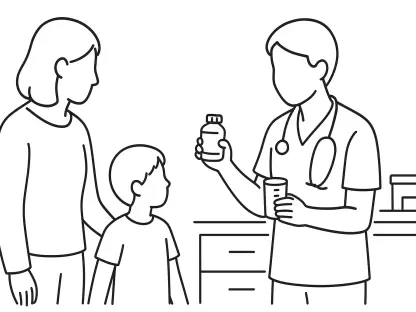

In the quiet aisles of a Sacramento pharmacy, a small glass vial marked with a minimalist grizzly bear logo signals a historic departure from the traditional profit-driven pharmaceutical model that has long dominated the American healthcare landscape. This unassuming packaging is the vanguard of CalRx, California’s state-branded drug initiative, which aims to provide immediate relief to millions of residents who are currently being squeezed by the astronomical costs of essential medications. By stepping into the role of a drug manufacturer, the state is no longer just a regulator or a payer; it has become a direct competitor in a market notorious for its opacity and high barriers to entry. This bold experiment seeks to transform the delivery of healthcare from a high-stakes financial burden into a sustainable public utility that prioritizes human life over corporate balance sheets.
The significance of this move cannot be overstated, as it represents a fundamental challenge to the “business as usual” approach that saw national prescription drug spending balloon to over $467 billion just a few years ago in 2024. For a state the size of California, the economic stakes are massive, but the human stakes are even higher. CalRx is designed to act as a market stabilizer, using the state’s immense purchasing power to force a conversation about transparency and equity in drug pricing. As the first major state-led pharmaceutical label, its success or failure will likely dictate whether other states—and perhaps even the federal government—follow suit in creating public options for the most critical life-saving treatments. This is not merely a policy shift; it is a declaration that the state has a moral obligation to intervene when the private market fails to provide affordable access to basic survival.
A New Era of State-Label Medicine: Disrupting the Pharmaceutical Status Quo
California is aggressively targeting the structural markups that have historically inflated the price of generic and biosimilar drugs by introducing its own “Grizzly Bear” label to the retail market. This initiative is not merely a subsidy program but a direct bypass of the traditional supply chain, where multiple intermediaries each take a cut, often leaving the consumer with a bill that bears little resemblance to the actual cost of production. By owning the brand and controlling the distribution through strategic partnerships, the state is effectively stripping away the layers of corporate profit-taking that have made medications like insulin unaffordable for many. This disruption is intended to force private manufacturers to reconsider their pricing strategies or risk losing market share to a government-backed competitor that prioritizes public health.
The traditional pharmaceutical “shell game,” characterized by complex rebate systems and backroom deals between manufacturers and Pharmacy Benefit Managers, has long been a target of reform, but CalRx offers a more direct solution through flat, transparent pricing. Instead of participating in the murky world of fluctuating discounts that rarely reach the patient at the pharmacy counter, California is setting a clear benchmark for what these drugs should cost. This shift toward a simplified pricing model is a direct attempt to demystify the cost of survival, providing a predictable financial environment for both patients and the state’s healthcare budget. By eliminating the reliance on hidden rebates, the state is creating a blueprint for a more honest marketplace where the value of a drug is determined by its clinical necessity rather than its potential for financial manipulation.
The Cost of Survival: Why California Residents Need a Pricing Intervention
For the nearly 3.7 million adults in California living with a diabetes diagnosis, the launch of CalRx represents a critical pricing intervention in a localized crisis that has reached a breaking point. Diabetes is a relentless condition that requires constant management, and for many, the price of the medication needed to stay alive has become a barrier to basic stability. When patients are faced with monthly costs ranging from $89 to over $400 for a single prescription, the financial strain often leads to a dangerous trend of non-compliance. National data consistently shows that a significant portion of the diabetic population has resorted to rationing doses or skipping them entirely, a practice that leads to severe health complications, increased emergency room visits, and a lower quality of life.
CalRx serves as a vital safety net specifically designed to close the coverage gaps that leave the most vulnerable residents behind. While many insured Californians have some form of prescription coverage, those with high-deductible plans or those who are completely uninsured often find themselves paying full list prices that are detached from reality. By offering a state-branded alternative that is accessible regardless of insurance status, California is providing a vital resource for those caught in the cracks of a fractured system. This intervention is not just about convenience; it is a life-saving measure that ensures no resident is forced to choose between purchasing groceries and purchasing the insulin required to prevent a diabetic crisis. Moreover, the presence of an affordable state option serves to alleviate the psychological burden of chronic illness, allowing patients to focus on their health rather than their bank accounts.
Inside the CalRx Portfolio: From Low-Cost Insulin to Future Weight-Loss Treatments
The flagship product of the CalRx portfolio is a five-pen pack of long-acting insulin glargine, which is now available for a fixed rate of $55, a price point that dramatically undercuts existing brand-name options. This was made possible through a strategic $50 million partnership with Civica, a nonprofit manufacturer dedicated to producing high-quality biosimilar medications that are interchangeable with their expensive counterparts. This manufacturing deal ensures that the state has a steady supply of medicine that meets rigorous safety standards while bypassing the high marketing and administrative overhead of traditional pharmaceutical firms. The presence of these grizzly-branded pens on pharmacy shelves marks the beginning of a larger effort to commoditize essential drugs that have been treated as luxury goods for too long.
Looking beyond insulin, the state is rapidly expanding its medicine cabinet to include other life-saving tools and treatments for various public health challenges. The roadmap for CalRx includes the distribution of state-branded naloxone to combat the opioid crisis, as well as the production of EpiPens and asthma inhalers specifically for use in public schools. Perhaps most ambitiously, there is a clear intention to enter the high-demand market of GLP-1 medications, with plans to introduce generic versions of drugs like Ozempic before the start of 2027. By targeting these specific high-cost areas, the state aims to mitigate the financial pressure on public health programs and private employers who are struggling to cover the skyrocketing costs of the latest generation of weight-loss and metabolic treatments. This expansion signals a commitment to addressing the evolving needs of the population, ensuring that the state remains a relevant and powerful player in the pharmaceutical sector.
Expert Analysis and Market Resistance: Can a State-Run Label Truly Compete?
Despite the promise of the CalRx initiative, it faces significant market resistance from the “Big Three” manufacturers and powerful Pharmacy Benefit Managers who currently dominate the national supply chain. These entities have built an intricate system that favors high-list-price drugs with substantial rebates, creating a barrier for lower-cost alternatives like the state-branded label. Industry skeptics argue that California’s move is more symbolic than disruptive, questioning whether a single state—even one as large as California—can truly move the needle on a global pricing structure. There is an ongoing debate among health policy experts about whether state-level manufacturing can achieve the necessary scale to remain viable against multinational corporations that have virtually unlimited resources to defend their market share.
Politically, however, California is serving as a high-profile laboratory for healthcare reform, with its leadership betting that a public-sector label can serve as a national model. This interventionist approach is a clear signal that the state is willing to use its regulatory and economic might to correct market failures that the federal government has been slow to address. While some critics view this as an overreach of government power, proponents see it as a necessary evolution of the social contract in an era of extreme corporate consolidation. The ultimate test for CalRx will be its ability to gain enough market share to become a self-sustaining entity that doesn’t rely solely on initial state subsidies, but rather on its reputation for quality and affordability. Furthermore, the ability to overcome the awareness hurdle among frontline pharmacists will be crucial, as many remain uninformed about the availability and benefits of the state-run option.
Accessing CalRx: Practical Strategies for Patients and Healthcare Providers
Navigating the availability of state-branded drugs has been simplified through partnerships with major retail chains, making CalRx products accessible at familiar locations like Amazon, Costco, CVS, Walgreens, and Walmart. Patients no longer need to travel to specialized clinics or government offices to benefit from these lower prices; they can simply request the state-branded biosimilar at their local pharmacy counter. This integration into the existing retail infrastructure is a key component of the program’s strategy to meet patients where they already are. Furthermore, the state has been working to ensure that CalRx is an emergency “safety valve” for those who find themselves in a pinch due to insurance malfunctions or travel-related prescription losses, providing a predictable 24-hour solution that maintains continuity of care.
To further ease the path for consumers, California has secured deals with major insurers such as Anthem and Blue Shield to include CalRx products on their covered drug lists. This simplified integration means that for many patients, the state-branded insulin is already the preferred, low-cost option within their existing health plans. For those who encounter resistance at the pharmacy or whose clinicians are unfamiliar with the label, patient advocacy groups are encouraging a proactive approach. By requesting interchangeable biosimilars and asking specifically for the CalRx option, residents can take an active role in advocating for their own financial and physical health. This grassroots adoption was essential for overcoming the awareness hurdles that still persisted among some healthcare providers who remained accustomed to traditional prescribing habits.
The launch of the CalRx initiative established a new precedent for how state governments interacted with the pharmaceutical industry. By focusing on the production of high-quality, low-cost generics, California provided a tangible solution to the chronic issue of drug affordability that had plagued the nation for decades. The project successfully transitioned from a conceptual political goal into a functioning supply chain that delivered millions of doses of life-saving medicine to those who needed them most. Legislators ensured that future expansions targeted the most pressing public health needs, creating a dynamic portfolio that adapted to the rising costs of new therapeutic classes. This bold step toward public-sector pharmaceutical participation proved that the state could indeed act as a stabilizer in a volatile market. Ultimately, the lessons learned from this transition offered a clear path forward for future healthcare strategies, emphasizing that transparency and direct competition were the most effective tools for ensuring that health remained a fundamental right for every resident. Advocates determined that the next logical steps involved scaling these efforts to include a wider array of specialty drugs, ensuring the grizzly bear label became a permanent fixture in the medicine cabinets of all Californians.