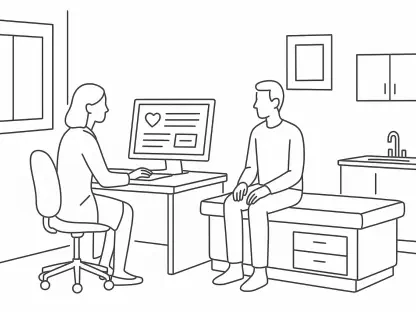

While medical AI becomes more common, only 16% of Americans are certain their own physician has used these technologies to assist with their diagnosis or treatment plan. This stark reality comes at a time when the healthcare sector is undergoing its most significant technological evolution in decades, as complex algorithms move from experimental laboratories into active clinical settings. From interpreting intricate radiological scans to predicting patient deterioration in intensive care units, artificial intelligence is no longer a distant promise but an operational reality in many modern hospitals. However, the integration of these tools has outpaced the development of clear communication strategies between providers and the public. A comprehensive 2026 survey involving more than 3,000 U.S. adults indicates that patients are not just passive recipients of medical innovation; they are increasingly vigilant stakeholders who expect to be informed about the mechanics of their care. As predictive models and automated diagnostic systems become standard, the tension between clinical efficiency and patient awareness continues to grow, suggesting that the industry must pivot toward a model of radical transparency to maintain public confidence.
The Decisive Consensus: A Universal Demand for Disclosure
The primary theme emerging from current public sentiment is a nearly universal demand for explicit transparency regarding the use of advanced computing in clinical decisions. Data suggests that approximately 72% of American adults believe it is vital for healthcare providers to disclose exactly when and how artificial intelligence is being integrated into their specific treatment plans. This is not a niche concern confined to tech-savvy individuals or specific generational cohorts; the desire for honesty remains remarkably consistent across all major demographic lines, including age, education level, and ethnicity. The public generally views the introduction of algorithmic assistance as a significant modification to the traditional medical contract, one that requires explicit acknowledgment rather than an assumption of trust. For most patients, the invisible hand of an algorithm is not something to be tucked away in the backend of an electronic health record but a factor that deserves a place in the consultative dialogue between a doctor and a patient.
This demand for disclosure is most acute when it pertains to clinical functions that directly impact health outcomes and long-term wellness. Research shows that at least 80% of the public expects to be notified if an algorithm is being used to analyze medical imaging, formulate a specific diagnosis, or interpret laboratory results that could alter their care trajectory. Even for administrative or lower-stakes tasks, such as ambient AI tools that automate clinical note-taking during a physical examination, a majority of patients still prefer to be informed rather than left in the dark. This preference indicates that Americans do not differentiate between “clerical” and “clinical” AI as much as providers might expect; instead, they view the presence of the technology itself as a variable that changes the nature of the encounter. Consequently, the lack of standardized disclosure protocols is increasingly seen as a barrier to the ethical deployment of these powerful tools in both primary and specialized medical practices.
Human Agency: Bridging the Patient Participation Gap
A significant friction point in modern medicine is the widening disparity between the control patients feel they possess and the influence they actually wish to exert over their healthcare journey. More than half of U.S. adults currently report feeling they have little to no say in whether their physician incorporates artificial intelligence into their diagnostic or therapeutic processes. This perceived lack of control creates what experts call a “human agency gap,” which has the potential to quietly erode the foundational trust required for effective medicine. When patients feel that decisions are being handed off to black-box systems without their input, they may become less compliant with treatment recommendations or more skeptical of the results provided. This dynamic suggests that the medical community needs to reconsider how it frames the use of technology, ensuring that it is presented as a collaborative tool rather than a replacement for shared decision-making.
In contrast to this widespread feeling of powerlessness, 63% of Americans express a clear and growing desire for more meaningful input regarding the use of these technologies in their care. This trend serves as a unifying factor across various socioeconomic backgrounds, although the feeling of having no say is statistically most pronounced among White adults compared to other groups. This widespread dissatisfaction suggests that current protocols for patient consent, which often bury technological disclosures in lengthy digital terms-of-service agreements, are failing to meet the public’s expectations for active involvement. Patients are increasingly looking for a “human-in-the-loop” guarantee, where they can verify that their doctor remains the ultimate authority and that the AI is acting purely in a supportive capacity. Addressing this gap will require more than just updated brochures; it will necessitate a fundamental shift in how doctors discuss the technological landscape of the modern clinic with those they treat.
Awareness and Understanding: Addressing the Literacy Deficit
There is currently a notable disconnect between the actual implementation of artificial intelligence in American hospitals and the public’s awareness of its presence in their own lives. While industry reports from 2026 indicate that AI-driven tools have become standard in many specialized practices, only a small fraction of the population can definitively state that their own providers have utilized such tools. A large plurality of the public remains entirely unsure if they have ever interacted with medical AI, pointing to a persistent gap in communication within the healthcare field. This lack of awareness is not necessarily due to a lack of interest, but rather a lack of visible labeling and verbal confirmation during the patient experience. Hospitals may be using predictive analytics to monitor for sepsis or analyze heart rhythms, but if the patient is never told, the technological benefit remains decoupled from the patient’s understanding of their own medical history.
Furthermore, even among the small group of patients who are aware that artificial intelligence was used in their care, the depth of their understanding remains remarkably shallow. Only about one in five patients in this category claim to understand well how the technology was specifically applied to their medical situation or how it influenced the final recommendations made by their physician. This suggests that simply mentioning the word “AI” or “algorithm” is insufficient for true transparency; instead, disclosure must be paired with clear, accessible, and non-technical explanations that demystify the process. Without this educational component, patients may harbor irrational fears or, conversely, place unearned trust in a system they do not comprehend. Enhancing medical literacy around artificial intelligence is becoming as important as the technology itself, as an informed patient is much more likely to engage constructively with a data-driven treatment plan.
Demographic Variations: Understanding Diverse Perspectives
While the desire for transparency is a majority view across the board, subtle and important differences exist across various segments of the American population. For instance, older Americans and women are statistically more likely to emphasize the critical importance of being told about the use of artificial intelligence in their medical visits. This heightened focus on disclosure may stem from a historical emphasis on the personal nature of the doctor-patient relationship, which these groups may feel is more at risk from automation. Additionally, there is a direct and measurable correlation between education levels and technological awareness. Those holding postgraduate degrees are twice as likely to report that their doctor has used AI compared to those with a high school diploma, suggesting that awareness is currently a byproduct of social capital rather than a standard output of the healthcare system itself.
Racial and ethnic perspectives also provide a more granular and complex look at these evolving attitudes toward medical automation. White adults generally show a higher preference for being informed about AI-driven clinical decisions, such as specific diagnoses or drug prescriptions, compared to Black or Hispanic adults. However, despite these variations in preference intensity, the underlying trend of uncertainty remains a universal constant; no matter the background, nearly half of all groups report being “unsure” about the presence of AI in their medical history. This highlights a systemic failure in reporting that transcends cultural and economic boundaries, suggesting that the healthcare industry has focused heavily on the technical efficacy of its tools while neglecting the social and ethical responsibility of informing the diverse public it serves. This communication void creates an environment where misconceptions can flourish, potentially deepening existing health disparities if not addressed through targeted outreach and standardized notification.
The Future of Medical Trust: Establishing New Standards
When synthesizing these current trends, it is evident that Americans view artificial intelligence with a complex mixture of curiosity, cautious optimism, and significant apprehension. The high demand for disclosure indicates that the public does not yet view algorithmic tools as “invisible” utilities like a standard stethoscope or a traditional blood pressure cuff. Instead, they perceive these technologies as a significant shift in the medical paradigm, one that requires a seat at the table for the patient. If healthcare providers continue to implement AI behind the scenes without proactive communication, they risk a steady decrease in patient trust that could take years to rebuild. The challenge for the industry over the next few years is to move beyond the “wow factor” of technology and focus on the human-centric aspects of its application, ensuring that the benefits of speed and accuracy do not come at the expense of the patient’s right to know.
To maintain the integrity of healthcare in an increasingly automated world, the industry prioritized the development of standardized disclosure frameworks and better educational structures for both staff and patients. It was determined that successful integration depended on more than just the mathematical accuracy of the algorithms; it required a profound commitment to transparency and the expansion of patient agency. Moving forward, the cornerstone of an ethical AI-driven healthcare system was established as the ability to bridge the gap between rapid technological innovation and the fundamental right of a patient to understand the forces shaping their health. Healthcare organizations that took the lead in offering clear, plain-language explanations of their algorithmic tools saw higher rates of patient satisfaction and better adherence to treatment protocols. These early adopters demonstrated that by treating the patient as an informed partner rather than a passive data point, the medical community could harness the power of artificial intelligence while preserving the human connection that remains the heart of the healing process.