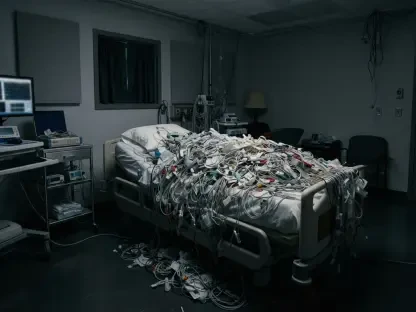

The difference between a medical breakthrough that transforms patient lives and a sophisticated piece of equipment gathering dust in a hospital storage closet often boils down to a single misunderstood phase: customer discovery. In the high-stakes world of medical technology, innovation teams frequently rush through this process, viewing it as a minor hurdle to clear before reaching the engineering phase. Yet, the reality of 2026 shows that the most successful ventures are those that treat discovery not as a task, but as a rigorous exploration of the human experience within the healthcare ecosystem.
This exploration is the foundational pillar of venture development, especially for university-led programs where the gap between a sterile lab and a chaotic clinic can feel insurmountable. MedTech discovery is uniquely challenging because the “customer” is rarely a single individual; it is a complex web of surgeons, specialized nurses, hospital administrators, and the patients themselves. Understanding the systemic barriers, the daily workflow pressures, and the existing workarounds is essential because no medical product exists in a vacuum. Failure to grasp these nuances often leads to solutions for low-priority problems that only serve to complicate an already overburdened healthcare system.
The High Cost of the “Check-the-Box” Mentality in Innovation
In the fast-paced environment of clinical development, many teams approach customer discovery with a narrow, administrative mindset. They follow a checklist that includes identifying a pain point, confirming a potential value proposition, and recording a theoretical willingness to pay. While these steps are necessary, treating them as a linear set of tasks often obscures the deep insights required for genuine market success. When discovery becomes a superficial exercise in validation rather than a deep dive into actual human behavior, the resulting technology is almost certainly destined to struggle once it hits the clinical floor.
Treating discovery as a mere formality creates a dangerous illusion of progress. Developers might believe they have validated their product because a handful of potential users agreed that a problem exists. However, this superficial confirmation does not account for the messy reality of the operating theater or the administrative friction of hospital procurement. The cost of this mentality is seen when brilliant inventions fail to achieve adoption, not because the technology is flawed, but because it does not align with the way medical professionals actually live and work.
Why Customer Discovery is the Lifeblood of MedTech Viability
For a medical technology venture to survive beyond 2026 and through 2028, it must prove its viability within a sprawling ecosystem. In MedTech, the product must satisfy clinical needs while also fitting into a logistical and financial framework that is often resistant to change. Customer discovery serves as the vital link between technical possibility and clinical reality. It allows developers to see the “invisible” influences on a product, such as how a nurse hands off a tool to a technician or how a billing department classifies a new procedure.
Without this deep understanding, a team is essentially building in the dark. The discovery phase is the only time when a project can pivot without the massive costs associated with late-stage engineering changes. It determines whether a team is addressing a high-priority clinical need or simply adding another layer of complexity to a patient’s journey. By identifying the real “job to be done” within the hospital, developers can ensure that their invention provides enough value to overcome the inherent inertia of the healthcare industry.
Debunking the Four Primary Myths of MedTech Discovery
The most prevalent myth in the industry is the product-centric bias, which suggests that discovery should revolve entirely around the invention. Teams often ask if users understand their device, but this narrow focus ignores the hierarchy of problems a clinician faces every day. For example, a new blood test for colorectal cancer screening might seem like a perfect solution because it is less invasive than a colonoscopy. However, if the diagnostic pathway still requires a follow-up colonoscopy to confirm results, the new test may actually add more administrative friction than clinical value. Success depends on how the invention fits into the entire patient journey, not just an isolated moment of care.
Another dangerous misconception is the interview fallacy, which assumes that what people say in a meeting is an accurate reflection of what they do in the clinic. Human memory is selective, and hypothetical predictions are notoriously inaccurate. Interviews often take the subject out of their environment, leading them to omit crucial physical details like the layout of a room or the specific location of supplies. To bridge this gap, teams must utilize contextual inquiry—watching the work as it happens. Observing a central line placement, for instance, reveals physical nuances and handoff frictions that a surgeon might never think to mention in a formal interview setting.
Furthermore, the industry often falls into the key opinion leader trap by relying solely on the feedback of elite physicians. While these experts provide high-level clinical insights, they are often tech-savvy outliers who have a higher tolerance for friction than the average practitioner. A product designed exclusively for an expert might be non-functional for the rest of the medical team. True discovery requires designing for the average user and the supporting staff who may not share the expert’s enthusiasm or technical proficiency.
Finally, many teams suffer from the illusion of completion, believing that discovery ends once the first batch of early adopters signs on. In reality, the most difficult challenges often appear after the honeymoon phase. Long-term viability depends on how the tool performs in less-than-ideal scenarios and how new staff members adapt to it over time. Discovery must remain a perpetual process, shifting its focus from initial problem identification toward long-term trust, sustainability, and seamless workflow integration.
Expert Perspectives on Human-Centered Research
Industry veterans argue that true discovery is a multidisciplinary research endeavor rather than a marketing pitch. The primary metric of success is not how many “yes” answers a team receives, but whether the feedback forced them to change their trajectory. If the discovery process only confirms existing assumptions, it has likely failed to penetrate the surface. Experts highlight that successful teams use formative evaluations to refine their designs long before a functional prototype is finalized. This ensures that the technology serves the human user, rather than forcing the human to adapt to the technology.
Detailed studies of connected sensor systems show that the best insights come from a combination of methods. By integrating direct observation with stakeholder workshops, developers can see the difference between perceived needs and actual operational requirements. This research-heavy approach allows teams to identify “workarounds” that clinicians have developed to deal with current equipment. These workarounds are often the keys to innovation, representing the true gaps in the market that a new product should aim to fill.
Strategies for Rigorous Discovery and Market Integration
To avoid common pitfalls, teams should actively implement multi-stakeholder inclusion from the start. This means moving beyond the surgeon and engaging the supporting cast of healthcare, including nurses, surgical assistants, and administrative staff. Workshops that bring these different groups together can identify hidden friction points in the handoff process that would otherwise remain invisible. This broader perspective ensures the product is viable for the entire department, which is essential for long-term procurement and adoption.
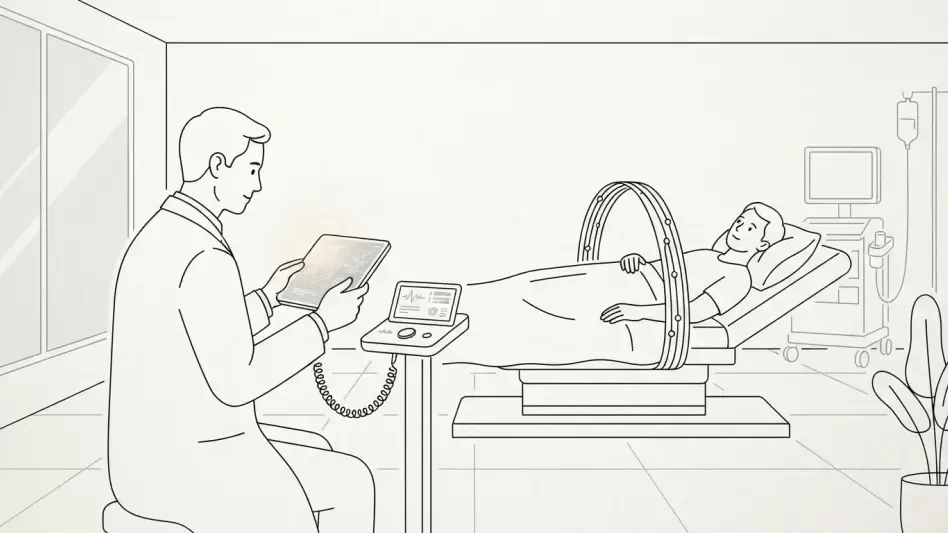
Moving beyond the conference room and into the clinical setting via contextual inquiry is another essential strategy. By performing side-by-side observations, developers can document the physical and temporal nuances of the workday that affect technology adoption. They can see how much space a device takes up in an operating room or how many steps a clinician must take to reach a terminal. These physical realities are often the deciding factors in whether a new tool is embraced or abandoned by the staff.
The transition toward a successful market entry required a fundamental shift in how teams viewed the relationship between their technology and the clinical environment. It was found that those who established iterative feedback loops throughout the development lifecycle were far more likely to produce products with high clinical utility. The most effective developers did not treat discovery as a milestone to be reached and forgotten; instead, they used every phase of production to challenge their own strategy. By prioritizing the complex realities of human behavior over technical checklists, these innovators ensured their solutions solved high-priority, real-world pain points.