
The pharmaceutical supply chain is currently facing a period of unprecedented disruption as manufacturers seek to regain control over the patient experience by bypassing the convoluted layers of legacy distribution networks that often drive up costs and create unnecessary barriers to treatment. This transformation is not merely a technical upgrade but a fundamental redesign of how healthcare value is delivered to the individual. Market access leaders have increasingly recognized that the old playbook of heavy reliance on intermediaries is failing to meet the demands of a modern, digitally savvy patient population that expects transparency and speed. As companies navigate these shifting sands, the move toward direct-to-patient strategies has emerged as a primary focus for ensuring that innovative therapies actually reach the people who need them without being sidelined by administrative friction or opaque pricing structures that often lead to prescription abandonment.
Navigating Gross-to-Net Pressures: Market Evolution and Strategies
Manufacturers are currently grappling with the widening gap between the list price of a medication and the actual revenue retained after paying various rebates and fees to third parties, a metric commonly known as Gross-to-Net pressure. This financial strain has reached a tipping point where the standard wholesale and retail models are no longer sustainable for many specialty products. By implementing direct-to-patient distribution, pharmaceutical companies are essentially reclaiming their margins while simultaneously lowering the out-of-pocket burden for the consumer. This structural shift allows for a more direct connection between the value created by the therapy and the price paid by the user, removing the parasitic costs associated with older, less efficient systems. Furthermore, these direct models provide a level of data granularity that was previously impossible to obtain through traditional channels, allowing for more precise forecasting and strategic resource allocation.
Adopting a technology-first approach to distribution involves building secure, cloud-based infrastructures that handle everything from prescription intake to home delivery with minimal human intervention. Around forty percent of industry executives have already initiated plans to launch or expand these direct capabilities between 2026 and 2028, signaling a widespread commitment to this new paradigm. These initiatives are designed to simplify the logistics of drug delivery, particularly for complex therapies that require specialized handling or frequent patient monitoring. By managing the end-to-end journey, manufacturers can ensure that patients receive consistent support throughout their treatment, rather than being left to navigate a fragmented healthcare landscape on their own. This evolution also facilitates more robust patient engagement programs, as companies can directly communicate instructions, thereby increasing the likelihood that a patient will adhere to their prescribed regimen.
Enhancing Transparency: Proactive Data Orchestration at Point of Care
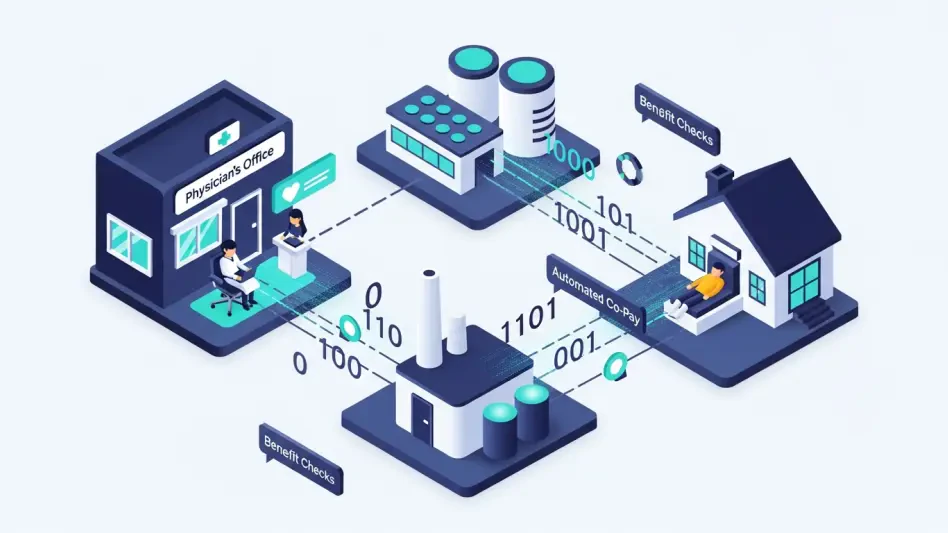
One of the most significant obstacles to patient adherence has historically been the phenomenon known as sticker shock, where a patient only discovers the high cost of a medication at the pharmacy counter, often resulting in immediate abandonment of the therapy. To mitigate this issue, modern pharmaceutical platforms are moving critical cost and coverage information upstream to the point of care during the initial physician consultation. By integrating real-time benefit checks directly into the electronic health record systems used by doctors, the industry can provide instantaneous visibility into a patient’s exact out-of-pocket costs before they even leave the exam room. This proactive transparency empowers patients to make informed decisions about their treatment plans in collaboration with their healthcare providers, significantly reducing the uncertainty that often plagues the traditional prescribing process. This shift transforms the patient into an active participant in their healthcare financial journey.
Beyond simple price checks, these sophisticated digital workflows allow for the seamless integration of manufacturer-sponsored co-pay assistance and patient support programs directly into the prescribing moment. When a physician submits an order, the system can automatically identify eligible savings and apply them in real-time, ensuring that the lowest possible price is presented to the patient immediately. This level of automation eliminates the need for manual enrollment processes or the use of physical discount cards, which are frequently lost or forgotten. Moreover, these systems provide patients with the flexibility to choose their preferred method of fulfillment, whether through a local pharmacy or a direct-to-home delivery service. This choice-driven model fosters a sense of agency and trust, as patients feel more supported and less overwhelmed by the complexities of the insurance landscape. For manufacturers, the benefit is a much higher rate of prescription fills and a clearer understanding of data.
Redefining Market Access: Next Steps for Sustainable Health Outcomes
To succeed in this new landscape, pharmaceutical companies must prioritize the integration of real-time data and flexible distribution networks as core components of their market access strategies. This involves investing in scalable technology stacks that can adapt to changing patient needs and regulatory requirements without requiring a complete overhaul of the existing business infrastructure. Manufacturers should also focus on fostering strategic partnerships with technology providers who specialize in digital healthcare orchestration to ensure that they remain at the cutting edge of innovation. By moving away from reactive, manual processes and embracing proactive, data-driven workflows, the industry can create a more seamless experience for both providers and patients. This transition requires a cultural shift within organizations to view patient access not just as a logistical challenge, but as a critical driver of therapeutic success and long-term brand loyalty for every therapy launched in the market.
The pharmaceutical industry successfully navigated a period of profound transition by adopting direct-to-patient models that fundamentally changed how life-saving medications were delivered. Leaders across the sector recognized that the structural barriers of the past could only be overcome through the aggressive implementation of transparent technology and automated support systems. By shifting the information exchange to the point of prescribing, they effectively eliminated the sticker shock that previously hindered patient adherence and therapeutic consistency. These efforts resulted in a more streamlined healthcare journey where patients regained agency over their treatment options and financial obligations. As these modern infrastructures became the standard, the gap between clinical innovation and patient access finally began to close. The strategic focus on orchestration and engagement ensured that the supply chain remained fixed on health outcomes rather than administrative complexity in a modern world.