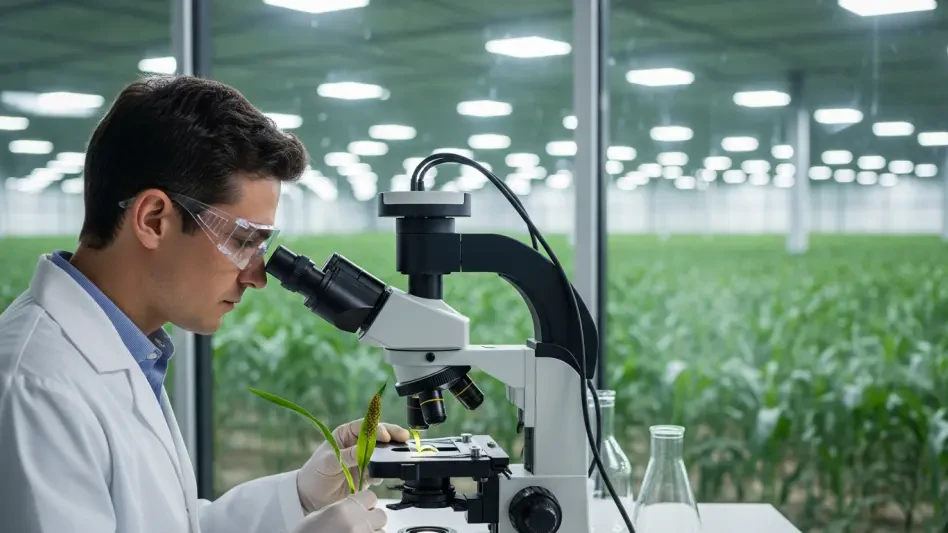

The global agricultural landscape is currently grappling with a monumental challenge as traditional breeding methods struggle to keep pace with the accelerating demands of a growing population and an increasingly erratic climate. In response to this pressing need for innovation, Rainbow Crops, a Belgian biotechnology startup that emerged from the VIB research institute, has secured a significant €9.7 million in seed funding to propel its advanced genomic platform. This capital injection, led by LIFTT EuroInvest with strategic participation from Corteva Catalyst and the Agri Investment Fund, signifies a major shift in the industry’s approach to crop development. By moving beyond the limitations of basic genetic modification, the company intends to harness the power of artificial intelligence to optimize staple crops like corn, rice, and sorghum. This strategic funding round not only validates the technical potential of the startup but also highlights a growing market confidence in data-driven systems biology as a viable solution for enhancing global food security and environmental resilience.
Agricultural Innovation: Navigating Genomic Complexities
Polygenic Traits: Decoding Genetic Architecture for Yields
While early breakthroughs in gene editing primarily addressed monogenic traits—those governed by a single gene, such as resistance to specific herbicides—the industry has long sought ways to manipulate more complex characteristics. Rainbow Crops has specifically targeted polygenic traits, including biomass production and overall drought tolerance, which are influenced by intricate networks involving hundreds of different genes. These complex traits represent the most substantial commercial and social value in modern agriculture, yet they have remained largely out of reach for traditional CRISPR techniques due to the risk of unintended biological consequences. By focusing on the systemic nature of these traits, the startup is pioneering a new era where scientists can address the fundamental architecture of plant growth. This approach requires a departure from the “one-gene-at-a-time” philosophy, favoring instead a comprehensive understanding of how multiple genetic factors interact to determine the final phenotype of a commercial crop.
Systems Biology: Mapping Internal Interaction Networks
To manage the inherent complexity of plant genomes, the startup employs a rigorous systems biology framework that maps how various genes influence one another within a living organism. This holistic perspective allows researchers to identify specific combinations of genetic edits that can produce desired physical outcomes, such as increased grain density, without compromising the structural integrity or health of the plant. By creating detailed maps of these internal relationships, the company can predict which genetic configurations will maximize productivity while maintaining overall vigor across diverse growing conditions. This predictive capability is essential for avoiding the phenotypic drag often associated with heavy genetic manipulation, ensuring that the resulting seeds are robust enough for commercial deployment. The emphasis on mapping the “interactome” provides a distinct advantage, as it allows for the rational design of crops that are specifically tailored to thrive in specific geographical regions or under particular environmental stressors.
Multiplex Editing: The Technological Architecture
Artificial Intelligence: Harnessing Graph-Based Predictive Models
At the heart of the company’s technological stack lies a massive graph-based artificial intelligence model designed to connect vast amounts of genomic data to specific, measurable traits. This sophisticated predictive engine evaluates whether specific genes within a plant’s network should be upregulated, downregulated, or silenced entirely to achieve an optimal balance of growth and resilience. Unlike earlier models that relied on linear data sets, this graph-based approach can process the non-linear interactions typical of biological systems, offering a much more accurate representation of how a plant will actually perform in the field. Complementing this AI is a revolutionary multiplexing capability that enables the team to execute between 50 and 100 simultaneous gene edits within a single cell. This scale of intervention far exceeds the capabilities of most traditional seed companies, which typically focus on a handful of edits at once. This high-scale multiplexing allows for the rapid testing of complex hypotheses and the creation of highly specialized genetic profiles.
Physical Validation: Screening Performance in High-Throughput Facilities
The theoretical predictions generated by the AI are subjected to rigorous physical validation within high-throughput screening facilities capable of monitoring up to 16,000 plants simultaneously. These facilities utilize automated imaging systems and sophisticated conveyor belts to capture precise performance data on every individual plant throughout its entire growth cycle. By measuring factors such as leaf area, water usage efficiency, and photosynthetic rates in real-time, the system creates a massive dataset that reflects the true impact of the multiplexed gene edits. This data is then immediately fed back into the core AI model to refine future predictions, creating a closed-loop learning system that continuously improves the accuracy of the platform’s genomic interventions. This iterative process significantly accelerates the traditional breeding cycle, allowing the startup to identify winning genetic combinations in a fraction of the time required by conventional methods. The integration of robotics and data science ensures that only the most promising candidates advance to field trials.
Market Integration: Strategic Implementation and Global Reach
Business Models: Leveraging Collaborative Traits and Licensing
A fundamental innovation in the methodology employed by the startup is the shift from simple gene “knockouts” to the more sophisticated concept of precision tuning. By targeting regulatory elements instead of disabling genes entirely, the researchers can adjust gene expression levels with extreme precision, effectively acting as a volume knob to optimize traits such as heat resilience or nutrient uptake. This level of control facilitates the creation of what the company calls “rationally designed genetic diversity,” where scientists engineer populations with a curated variety of edit combinations to find the most successful configurations for a given market. To bring these innovations to the global stage, the company utilizes a partnership-driven business model, collaborating with established seed firms to integrate its proprietary traits into existing high-performing plant varieties. Revenue is generated through a combination of upfront research fees, milestone payments, and long-term royalties from commercialized seeds, allowing the startup to remain focused on its core expertise in trait engineering.
Global Impact: Enhancing Sustainability in Vulnerable Regions
The organization extended its impact beyond commercial corn production by applying its platform to critical global food security initiatives, particularly those funded by the Bill & Melinda Gates Foundation. These projects specifically focused on improving the climate resilience of rice and sorghum in regions that remained highly vulnerable to environmental shifts. By optimizing these staple crops for local conditions, the team demonstrated the incredible versatility of their AI-guided multiplexing technology. Throughout this expansion, the startup successfully navigated the evolving international regulatory landscape, including the European Union’s new framework for New Genomic Techniques, which provided a clearer path for the deployment of precision-edited seeds. The strategic focus prioritized the development of sustainable agricultural solutions that addressed both the economic needs of farmers and the nutritional requirements of a growing global population. Ultimately, the integration of deep scientific expertise and flexible business strategies positioned the company to lead the next generation of agricultural science.