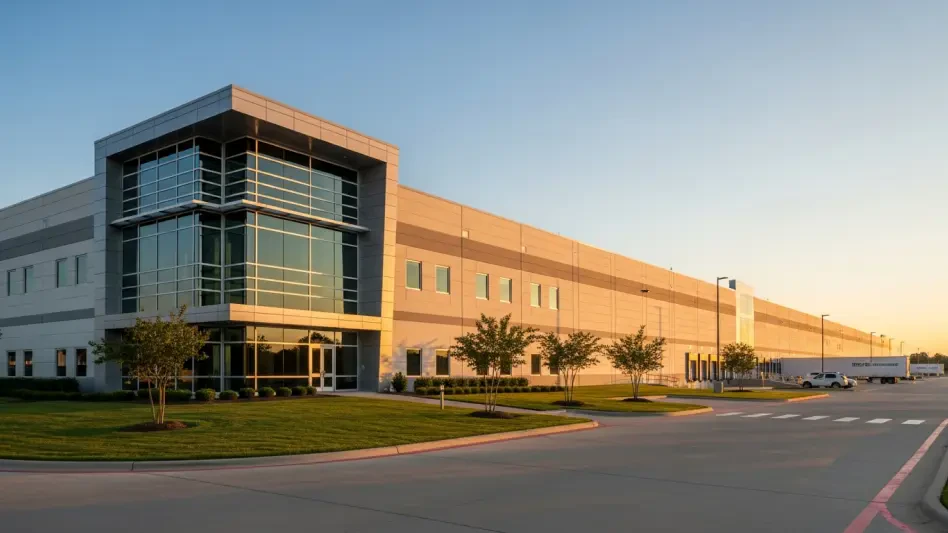

The efficiency of the modern pharmaceutical supply chain often goes unnoticed until a disruption occurs, yet the movement of life-saving medications relies on a highly sophisticated network of infrastructure and logistics that functions around the clock. McKesson Corporation, a prominent Fortune 100 healthcare leader, has recently broken ground on a massive 330,000-square-foot regional distribution center in Moore, Oklahoma. This $179 million investment, situated within the North Moore Industrial Park, represents a pivotal shift for Cleveland County, effectively transitioning its reputation from a traditional residential suburb to a major industrial powerhouse. As the first large-scale anchor for the park, the facility is strategically positioned to streamline the delivery of critical medicines across a multi-state region. By establishing this mission-critical node, the company ensures that pharmacies and hospitals receive essential supplies with speed and reliability.
Regional Economic Transformation: Building an Industrial Powerhouse
The official launch of this project marks a transformative era for Cleveland County as it pivots from a traditionally residential suburb into a mission-critical hub for national pharmaceutical distribution. For decades, the local economy relied heavily on service-sector jobs and small-scale commercial development, but the arrival of a Fortune 100 anchor tenant introduces a level of industrial density previously unseen in the area. This shift is not merely about physical expansion; it represents a fundamental change in the region’s fiscal identity and its role within the broader Oklahoma City metropolitan area. By hosting a facility of this magnitude, Moore is signaling its readiness to support high-stakes corporate operations that require significant infrastructure and municipal coordination. The move is expected to attract a cluster of ancillary businesses, ranging from maintenance providers to specialized logistics firms, further diversifying the tax base.
Competitive Positioning: Outpacing Established National Markets
Moore successfully landed the project after a rigorous and highly competitive selection process that pitted the Oklahoma city against established industrial hubs in major markets throughout Texas and Arizona. This successful bid serves as a clear market signal to global investors that Oklahoma is now a top-tier destination for high-stakes industrial development and corporate relocation. State and local leaders have pointed to the selection as a validation of the region’s robust infrastructure and pro-business environment, which allows for seamless integration of complex logistics operations. The strategic location along the Interstate 35 corridor proved to be the decisive factor, demonstrating that Moore can effectively compete against the largest metropolitan areas in the United States. By leveraging geographic advantages, the city has successfully attracted a major leader, reinforcing its role as a link in the nation’s north-south trade routes and logistical pipelines.
Fiscal Foundation: Economic Impact of Immediate Construction
The economic benefits of this massive project are already being felt through the initial construction phase, which is scheduled to generate significant regional activity from 2026 through 2028. This multi-year development stage is projected to support more than 1,100 construction jobs and generate nearly $86 million in total wages for local workers, providing an immediate boost to the local economy. Beyond the direct employment of trade workers, the project is slated to contribute approximately $28 million in tax revenue during the build-out period alone, offering a substantial windfall to the regional treasury. These initial funds are critical for the early-stage planning of municipal enhancements and provide the financial foundation needed to support the influx of new residents and businesses. This proactive fiscal injection ensures the community can prepare for long-term growth while simultaneously benefiting from the high-density investment required for such a large facility.
Infrastructure Resilience: Advanced Technology and Community Stability
The facility represents a significant leap forward in logistical design by incorporating advanced architectural features that prioritize operational continuity and environmental stability for medical goods. Unlike traditional warehouses, this regional hub is being constructed with high-performance materials and redundant systems to ensure that critical healthcare products remain safe under any conditions. The commitment to local infrastructure extends beyond the site itself, as the development has prompted the city to modernize adjacent utility networks and transportation access points. This modernization effort improves the overall reliability of the local power grid and road systems, benefiting nearby businesses and residential neighborhoods alike. By integrating such a high-value asset into the municipal landscape, the city is creating a more resilient urban environment that can withstand the logistical pressures of a modern, fast-paced economy while providing a stable anchor for future growth.
Operational Excellence: Securing the Pharmaceutical Supply Chain
Beyond its sheer size, the facility is a technological marvel equipped with artificial intelligence and predictive analytics to manage massive inventories with pinpoint precision. These systems ensure that pharmaceutical supplies are tracked and dispatched with maximum efficiency to prevent shortages in the healthcare system. Resilience remains a top priority for the site, which features 100% standby power capabilities and an expanded cold chain system designed to protect temperature-sensitive therapies during severe weather events or power disruptions. Given that McKesson handles roughly one-third of all pharmaceuticals in North America, this specific infrastructure is vital for maintaining a stable medical supply line. The integration of advanced automation allows the site to operate at a scale that was previously unattainable, setting a new industry standard for safety and reliability while ensuring the drug supply remains secure regardless of any external environmental challenges.
Long-Term Legacy: Community Stability and Future Development
The groundbreaking ceremony established a clear trajectory for the region, signaling that Moore has successfully transitioned into a key player within the national healthcare infrastructure network. Leaders moved forward with plans to integrate local vocational training programs with the facility’s specific technological needs, ensuring a steady pipeline of talent from nearby educational institutions. This alignment between corporate requirements and community development provided a blueprint for how suburban municipalities can successfully pivot toward high-value industrial sectors. Stakeholders focused on the immediate next steps of infrastructure readiness, prioritizing the expansion of utility capacities to support the site’s energy-intensive automation. By securing this massive investment, the city provided a stable foundation for future industrial expansion, inviting other healthcare and technology firms to consider the corridor. This move guaranteed that the local economy would remain resilient.