
The current strain on regional medical infrastructure has reached a critical juncture where the availability of highly trained registered nurses directly dictates the quality and safety of patient outcomes in local hospitals. To address this pressing challenge, the University of New England has officially inaugurated its advanced nursing laboratories, a move designed to cultivate a more resilient and technically proficient healthcare workforce starting in the 2026 academic cycle. These facilities represent a significant departure from traditional didactic instruction, instead prioritizing immersive experiences that allow students to practice life-saving interventions within a controlled yet hyper-realistic environment. By integrating sophisticated patient simulators and real-time diagnostic equipment, the institution has created a pipeline for skilled professionals who are prepared to enter the workforce with clinical readiness. This initiative serves as a pivotal cornerstone for the region, promising to stabilize nursing staff levels and improve the delivery of chronic and acute care services across the diverse communities that rely on these essential medical professionals.
Clinical Excellence: High-Fidelity Simulation and Patient Outcomes
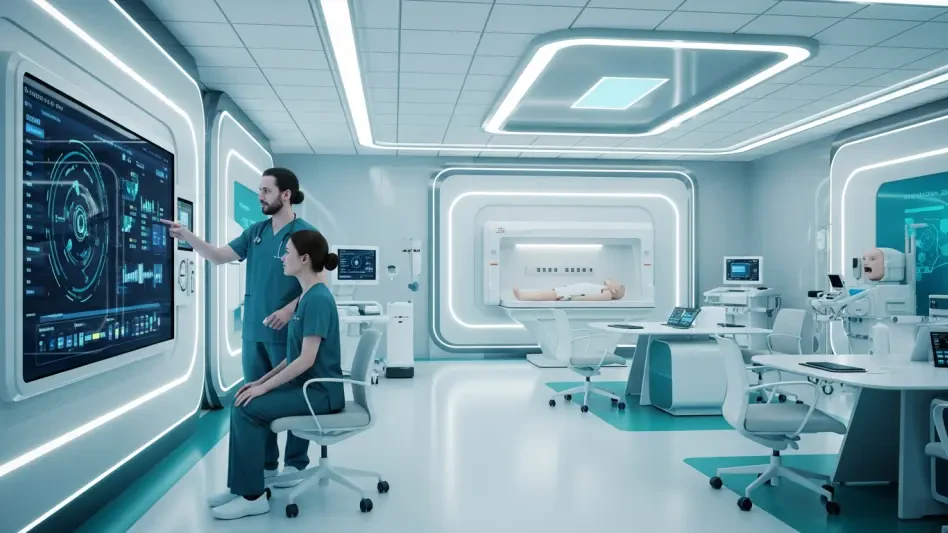
At the heart of these new facilities is the implementation of high-fidelity mannequins capable of mimicking complex physiological responses such as seizures, cardiac arrest, and respiratory distress with remarkable accuracy. These units provide students with the unique opportunity to monitor vital signs on realistic telemetry monitors and administer medications while receiving immediate feedback from the simulated patient’s biological systems. By utilizing advanced software that records every interaction, instructors can provide detailed debriefing sessions that analyze a student’s decision-making process during a crisis. This specific technological integration ensures that the first time a nurse encounters a life-threatening complication, it is not in a high-pressure hospital setting but within the safety of a simulated environment. The inclusion of such hardware allows the university to simulate rare but critical medical events that students might otherwise never encounter during their traditional clinical rotations, thereby broadening their scope of expertise.
Beyond the physical hardware, the new nursing labs are structured to facilitate interprofessional education, bringing together students from different disciplines such as pharmacy, physical therapy, and social work. This collaborative approach reflects the multidisciplinary nature of modern healthcare, where a nurse must act as a central coordinator among various specialists to ensure holistic patient management. During these joint sessions, participants engage in complex case studies that require synchronized communication and shared problem-solving, skills that are often overlooked in siloed educational programs. The labs utilize sophisticated video capture systems to record these interactions, allowing for a comprehensive review of team dynamics and the effectiveness of hand-off procedures between different care providers. Such training is essential for reducing medical errors, which are frequently linked to communication breakdowns. This fosters a culture of teamwork that defines the modern healthcare industry and prepares graduates for the realities of clinical practice.
Future Outlook: Economic Stability and Medical Innovation
The launch of these expanded facilities also serves as a critical economic driver for the region, as it attracts a larger pool of prospective students who might have previously sought education in distant urban centers. By providing top-tier training locally, the University of New England is effectively encouraging a “grow-your-own” model of workforce development that benefits local healthcare systems through improved retention rates. Many of these students are already rooted in the community, and providing them with a world-class education nearby increases the likelihood that they will remain in the area after graduation. This strategy is particularly vital for rural clinics and community hospitals that have historically struggled to maintain adequate staffing levels due to geographic isolation. Furthermore, the presence of these labs allows the university to host continuing education workshops for current practitioners, ensuring that the existing workforce stays current with the latest progress. This dual focus on new students and veteran professionals creates a cycle of improvement.
Looking forward, the successful deployment of these nursing labs suggested that regional institutions must continue to prioritize the integration of virtual reality and artificial intelligence to stay ahead of evolving patient needs. The university demonstrated that investing in physical infrastructure was only the first step; the true value lay in the continuous adaptation of curricula to match the rapid pace of medical innovation seen from 2026 to 2028. To maintain this momentum, stakeholders were encouraged to foster deeper partnerships with technology providers to ensure that training modules remained relevant to local disease prevalence and demographic shifts. It became clear that the proactive expansion of clinical simulation was a necessity for any institution aiming to secure the future of regional healthcare. Moving into the next phase of development, the focus shifted toward expanding telehealth training within these labs. These efforts established a framework for a robust, future-proof medical workforce capable of meeting modern challenges.