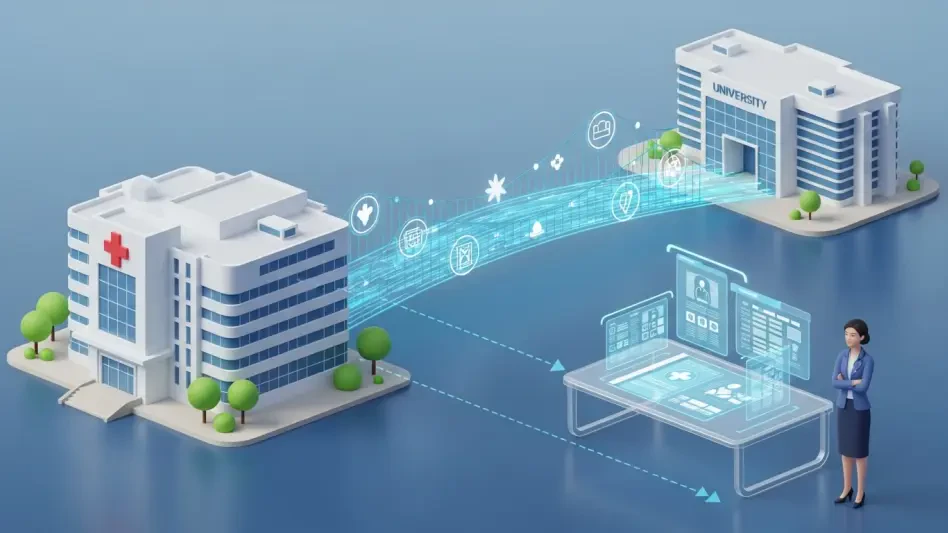

The persistent shortage of healthcare providers in Southern California has reached a tipping point, forcing academic institutions and community clinics to re-evaluate traditional methods of medical training and service delivery to address regional needs. In Orange County, this crisis is particularly evident as a growing “care gap” leaves thousands of residents without reliable access to primary or mental health services. To bridge this divide, the UC Irvine Sue & Bill Gross School of Nursing has pioneered an innovative, integrated clinical education model that merges advanced academic instruction with direct patient care. By utilizing its Doctor of Nursing Practice (DNP) faculty and students, the school provides high-quality medical services to underserved populations through Federally Qualified Health Centers and the UCI Student Health Center. This strategy does more than just fill vacant roles; it reimagines the role of the nurse practitioner as a leader capable of navigating the complex social and economic factors that frequently hinder health outcomes in modern society.
Navigating the Complexity of Local Healthcare Disparities
The healthcare landscape in cities like Anaheim and Santa Ana presents a unique set of challenges that extend far beyond simple medical diagnoses. In these densely populated urban areas, a significant portion of the community faces a lack of insurance or is severely underinsured, which creates a massive barrier to even the most basic preventative care. Patients often arrive at clinics with advanced symptoms of chronic conditions because they have spent months or even years avoiding the system due to a profound fear of high costs or a lack of health literacy. Furthermore, transportation remains a critical obstacle; for a family without a reliable vehicle, a routine follow-up appointment across town can become an insurmountable logistical hurdle. Consequently, by the time many residents seek help, their conditions have progressed to a point where they require intensive intervention, placing an even greater strain on the already overburdened local clinics that serve as the region’s primary safety net.
These clinical environments require a level of dedication and cultural sensitivity that goes beyond what is taught in standard medical textbooks. The UCI-associated health centers operate in a high-demand environment where the need for care frequently exceeds the number of available providers. For many patients, the nurse practitioners and students from UCI are the only consistent source of medical guidance they have ever known. This reality forces healthcare providers to look at the patient through a holistic lens, acknowledging that a prescription for medication is useless if the patient cannot afford the pharmacy co-pay or does not understand the dosing instructions due to language barriers. By placing DNP students and faculty directly into these high-stakes environments, the university ensures that the next generation of clinicians is fully prepared to manage the specific socioeconomic realities of Orange County, turning the clinical rotation into a vital community service that saves lives while training the workforce of the future.
The Evolution of the Integrated Faculty Practice Model
A defining feature of the UC Irvine approach is the integrated faculty practice model, a structural shift that differentiates the school from the majority of nursing programs across the United States. In a traditional academic setting, professors often maintain their clinical relevance by picking up independent shifts at hospitals or private practices during their off-hours, completely separate from their university duties. This creates a disconnect between what is being taught in the classroom and what is actually happening on the front lines of patient care. At the Sue & Bill Gross School of Nursing, however, faculty members who hold clinical doctorates are required to treat patients at community clinics as a formal, integrated part of their academic appointments. This means that the person lecturing on advanced pathophysiology on Tuesday is the same person managing a complex case of uncontrolled hypertension at a community clinic on Wednesday, ensuring that their teaching remains grounded in the current realities of modern medicine.
This model fosters a culture of professional transparency and credibility that is immediately apparent to the students. When faculty members “walk the walk” by practicing in the same clinics where their students are training, it creates a symbiotic relationship that benefits everyone involved. The educators stay sharp and current with the latest clinical protocols and electronic health record systems, while the students see firsthand how an expert handles the nuances of patient interaction and clinical decision-making. This transparency builds a deeper level of trust, as students recognize that their instructors are not just academic theorists but active, relevant practitioners who face the same challenges they will encounter after graduation. It allows for a seamless transition of knowledge where theoretical lectures are reinforced by real-time clinical application, creating a more cohesive and rigorous educational experience that prepares graduates for the intensity of high-level nursing practice.
Transforming Clinical Education Through Direct Mentorship
The impact of this immersive model on DNP students is profound, moving them away from the role of passive observers and into the heart of patient care. During their rotations, students are paired with their faculty mentors to engage in the full spectrum of clinical responsibilities. They are tasked with taking detailed patient histories, conducting physical examinations, performing minor procedures, and developing comprehensive care plans under direct, expert supervision. This level of involvement is particularly visible at the UCI Student Health Center, where students manage a variety of primary and urgent care needs, utilizing on-site diagnostics like X-rays and laboratory testing. Because the preceptors are also their classroom instructors, a unique educational loop is formed. A professor can refer back to a specific lecture from earlier in the week while standing at a patient’s bedside, reinforcing complex concepts through immediate, tangible examples that solidify the student’s understanding and clinical confidence.
Furthermore, the school has strategically adjusted the DNP curriculum to introduce these clinical rotations earlier in the program than is standard for most nursing schools. This early exposure allows students to begin developing their professional identity and clinical judgment long before they enter their final year of study. By the time these students reach graduation, they have already navigated hundreds of hours of patient care within a system that prizes evidence-based practice and cultural competence. This immersive environment does more than just build technical skills; it teaches students how to be resilient in the face of systemic challenges. They learn that their role involves advocating for the patient within a complex healthcare bureaucracy, ensuring that every individual receives the highest standard of care regardless of their background or financial status. This comprehensive mentorship ensures that UCI graduates are not just ready to work, but ready to lead in diverse and demanding healthcare settings.
Beyond Medicine: Addressing Social Determinants of Health
One of the most critical lessons taught through the UCI model is that effective healthcare for underserved populations is rarely limited to medical intervention alone. Faculty members emphasize the necessity of “expanded expertise,” which requires students to think critically about how social determinants of health—such as housing stability, food security, and education—impact a patient’s ability to heal. For instance, if a patient in Santa Ana requires specialized dermatological care but cannot access a specialist due to insurance restrictions or a six-month waiting list, the primary care provider must be equipped to manage that condition directly. Students are trained to be resourceful, learning to provide high-level care for complex issues within the primary care setting when external resources are unavailable. This focus on self-reliance and broad clinical competence ensures that the “care gap” is bridged not just by adding more providers, but by increasing the capability of those who are already on the ground.
The human element of this model is perhaps its most significant contribution to community health, as building trust is often the first step in successful treatment. A notable example involves a DNP student who, through consistent rapport-building and empathetic communication, managed to uncover a serious gynecologic mass in a patient who had been avoiding follow-up care for uncontrolled diabetes. The patient’s initial avoidance was rooted in fear and a previous lack of connection with the healthcare system; however, the student’s willingness to spend extra time and offer a compassionate ear led to a life-saving cancer diagnosis. This story illustrates a core philosophy of the program: clinical knowledge is only as effective as the relationship between the provider and the patient. By prioritizing the human connection, UCI nursing students are able to break through the barriers of mistrust that often prevent vulnerable populations from seeking help, leading to better long-term health outcomes and more equitable care for the entire region.
Establishing a Sustainable Pipeline for Future Clinicians
To ensure that these improvements in community health are sustainable, the Sue & Bill Gross School of Nursing established a dedicated Family Nurse Practitioner (FNP) residency program. Supported by a significant grant from CalOptima Health, this initiative provides newly graduated, board-certified nurse practitioners with a structured year of additional training and mentorship. The residency is specifically designed to prepare clinicians for the “depth of complexity” found in community health settings, where patients often present with multiple comorbidities and significant language barriers. By placing these residents in sites like the Camino Health Center in San Juan Capistrano, the program effectively increases the number of highly skilled providers who are committed to serving the county’s most vulnerable groups. This residency acts as a critical bridge between academic preparation and independent practice, helping new clinicians build the resilience and specialized skills needed to thrive in demanding environments.
The benefits of this integrated model also extend to the operational efficiency of the clinics themselves, as DNP students frequently lead quality improvement projects to enhance patient safety and workflow. These projects allow students to apply advanced “systems thinking” to solve real-world administrative and clinical challenges, such as reducing patient wait times or improving the accuracy of medication reconciliation. This dual benefit ensures that while students are gaining valuable leadership experience, the clinics are receiving evidence-based solutions that improve the overall quality of care. By embedding students and faculty directly into the community, UCI has created a self-sustaining cycle of improvement that addresses the immediate provider shortage while simultaneously elevating the standard of medical practice across Orange County. This comprehensive approach serves as a blueprint for how academic institutions can actively participate in solving regional public health crises through innovation and direct community engagement.
The integrated faculty practice model demonstrated how academic institutions successfully transitioned from theoretical instruction to active community partnership. By embedding clinical doctorates and advanced students directly into regional health centers, the school effectively reduced the wait times and accessibility barriers that previously defined the local healthcare landscape. The program fostered a new generation of nurse practitioners who prioritized cultural competence and trust-building as essential components of medical intervention. These clinicians recognized that the most effective care plans accounted for the socioeconomic realities of the patients, ensuring that treatments remained sustainable outside the clinic walls. The establishment of the FNP residency further solidified this pipeline, providing a consistent flow of expert providers dedicated to serving the underserved. Ultimately, the initiative proved that a collaborative approach between universities and community clinics could create a more resilient and equitable healthcare system for all residents. Moving forward, the expansion of similar residency programs into other specialized fields could offer a scalable solution for other regions facing similar provider shortages and public health challenges.