
The Alabama School of Healthcare Sciences represents a groundbreaking shift in the state’s educational paradigm by establishing the first residential specialty high school dedicated to medical training. As the institution prepares for its inaugural opening on August 13, it has already demonstrated immense public interest by meeting its primary enrollment targets and securing a complete roster of specialized faculty members. This initiative serves as a strategic response to a mounting shortage of medical professionals that has long strained the regional public health infrastructure. By centralizing high-level medical education in a boarding school environment, the state is creating a pipeline of talent that starts much earlier than traditional collegiate programs. This model allows young Alabamians to focus their academic energy on specific healthcare disciplines while they are still in their formative years. The school’s early success suggests a high level of confidence in its mission to revitalize the healthcare sector through innovative education.
Strategic Leadership and Educational Governance
Administrative Transitions: Establishing a Stable Foundation
The leadership structure at the school recently underwent a calculated shift to ensure that academic objectives remain the primary focus during the critical inaugural year. Laura Bailey was appointed as the Head of School after serving as the Dean of Curriculum and Instruction, a move designed to maintain continuity in the educational framework she helped develop. This internal promotion reflects a commitment to stability, as Bailey’s deep understanding of the school’s pedagogical goals allows for a seamless transition from the planning phase to active campus life. By placing an academic expert at the helm, the institution signals that while the residential aspects are vital, the core priority remains the intellectual development of future healthcare providers. This administrative alignment is crucial for establishing the school’s reputation as a center of academic excellence rather than just a vocational center. Her leadership role involves balancing the complexities of a startup institution with the high expectations of state stakeholders.
Academic Oversight: Maintaining Rigorous Standards
Transitioning from a traditional day-school environment to a residential campus requires a specialized approach to student governance and daily life management. A dedicated residential life team was established to oversee the well-being of students who are moving away from home for the first time to pursue their medical aspirations in Demopolis. This team focuses on creating a structured yet supportive environment where students can balance intensive clinical studies with the social demands of a communal living space. The integration of high-level academics with a boarding-school lifestyle is intended to mirror the collaborative nature of the professional healthcare environment, where practitioners often live and work in close proximity. By fostering a sense of community within the residence halls, the school prepares students for the rigorous teamwork and professional camaraderie they will encounter later in their medical careers. This holistic approach ensures that students develop the maturity and independence necessary to succeed in demanding healthcare environments beyond the classroom walls.
Building a Statewide Student Community
Geographic Reach: Representing Diverse Alabama Communities
The inaugural class of the academy reflects a remarkable geographic diversity, with students arriving from fifty-one different cities across the state of Alabama. This broad representation is essential for addressing workforce shortages in both densely populated urban centers and underserved rural communities where access to care is often limited. To ease the transition into this new academic community, the school implemented a series of virtual orientation sessions titled “Scrubbing In” to build relationships before the physical campus opened. These sessions allowed faculty and students to interact in a low-stakes digital environment, discussing expectations and establishing a shared culture centered on medical ethics and academic rigor. By connecting students from various backgrounds, the school creates a microcosm of the state’s population, fostering a learning environment where different perspectives on public health can be shared. This social integration is a key component of the school’s strategy to ensure that students feel a sense of belonging and purpose.
Future Perspectives: Scaling Sustainable Healthcare Solutions
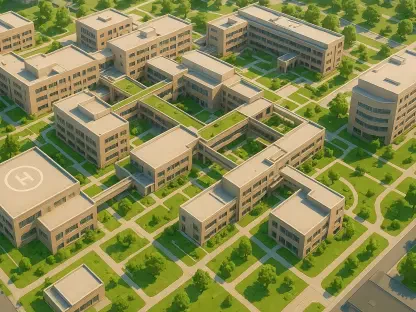
Strategic investment in long-term infrastructure and financial sustainability played a pivotal role in establishing this educational model as a permanent fixture in the region. While initial operations were housed on a temporary campus at the University of West Alabama, construction progressed rapidly on a permanent ten-acre facility in Demopolis that was scheduled for completion by 2027. The development of this state-of-the-art campus was supported by the ASHS Foundation, which utilized community partnerships and naming rights to secure the necessary capital for modern clinical labs. Local leaders and healthcare organizations collaborated to ensure the curriculum remained aligned with the actual needs of the regional medical workforce, focusing on certifications that led to immediate employment. These efforts demonstrated that a coordinated approach between state funding and private philanthropy could effectively bridge the healthcare talent gap. Stakeholders recognized that maintaining this momentum required ongoing evaluation of vocational training outcomes and the continuous expansion of clinical partnerships.