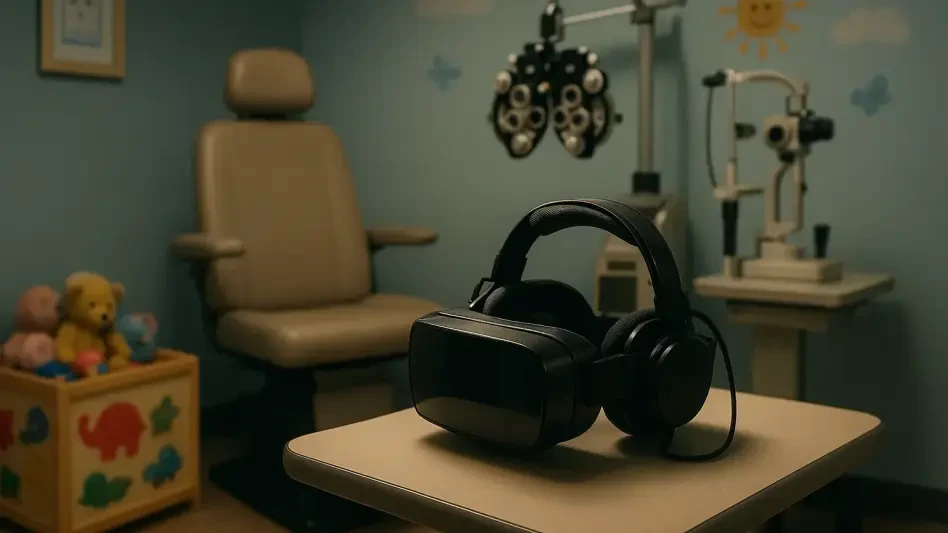

Scott Xiao is a visionary leader at the forefront of pediatric health technology, recognized for bridging the gap between cutting-edge neuroscience and clinical practice. As the co-founder and CEO of Luminopia, he pioneered the development of the first FDA-cleared virtual reality therapeutic for amblyopia, a condition that impacts approximately 1 in 30 children. His work is not just about medical devices; it is a fundamental challenge to how our healthcare system values long-term outcomes versus immediate costs. Having led his company from early-stage research to national commercialization, Xiao brings a unique perspective on the systemic hurdles and the massive societal potential inherent in treating the next generation early.
Pediatric treatments often yield their greatest benefits decades later, yet the financial costs are incurred immediately. How do you quantify the true value of these interventions when the return on investment is so far over the horizon?
Quantifying the value of a pediatric intervention requires us to look far beyond a simple clinical chart; we are looking at the entire trajectory of a human life. When we treat a child for a condition like amblyopia today, we are effectively preventing vision loss that would otherwise hinder their development, confidence, and career prospects for the next sixty or seventy years. It is about realizing that early success compounds—improving a child’s learning capacity today reduces the downstream public and private healthcare costs they might accrue as adults. We have to shift the framework from “cost per treatment” to “value over a lifetime,” recognizing that preventing a permanent challenge before it takes root is the most practical investment a society can make. Seeing a child regain their sight and the accompanying surge in their self-esteem is a powerful reminder that these aren’t just data points; they are lives being rerouted toward a healthier, more productive future.
You’ve noted that the average person stays on a health plan for only two to three years. How does this constant churn create a systemic barrier that prevents life-altering pediatric technologies from reaching the children who need them?
This two-to-three-year window is perhaps the single biggest misalignment in our current insurance model because private insurers are naturally incentivized to focus only on savings realized within that short timeframe. If a pediatric therapy costs a certain amount today but saves the system hundreds of thousands of dollars twenty years from now, that current insurer likely won’t see a dime of those savings. This creates a “not on my watch” mentality where the long-term benefits are ignored because the patient will have moved on to a different plan by the time the value matures. On the public side, Medicaid is often hamstrung by its own structure, with state legislators making annual budget decisions that leave little room for visionary, multi-year health strategies. It is a frustrating reality where children are left waiting for care because the institutions meant to protect them are focused on the next fiscal quarter rather than the next decade.
How does this financial misalignment ripple backward through the innovation pipeline, and what does it do to the confidence of investors and developers in the pediatric space?
The impact is a chilling effect that starts at the very beginning of the innovation cycle, long before a device even reaches a regulator’s desk. Investors, who are naturally wary of uncertain reimbursement paths, tend to funnel their capital toward adult indications where the market is perceived as more stable and the returns more immediate. This pressure forces drug and device developers to deprioritize pediatric programs or skip the specialized studies necessary to prove efficacy in children, leading to a chronic lack of innovation. It creates a self-reinforcing cycle of neglect: because there are fewer pediatric success stories, the market continues to be viewed as “too risky,” which in turn starves the next generation of breakthroughs of the funding they need. We have managed to break through this by treating over 12,000 patients and working with 1,300 providers, but the path was far more arduous than it would have been for an adult-focused technology.
The Early and Periodic Screening, Diagnostic, and Treatment (EPSDT) benefit is often described as a visionary policy. Why is it still struggling to serve as an effective safety net for modern medical innovations in 2026?
In theory, EPSDT is a powerful federal mandate designed to ensure that no Medicaid-enrolled child is left behind, requiring states to cover any “medically necessary” service even if it isn’t in their standard plan. However, the execution often falls short because awareness of this benefit is incredibly low among the families who need it most, and the administrative process is often a labyrinth. We see providers at 600 top eye institutes and children’s hospitals struggling to navigate these bureaucratic hurdles just to get their patients the standard of care they deserve. Medicaid plans need to modernize and streamline these approval processes so that EPSDT becomes a functional highway for innovation rather than a neglected side road. It is a visionary policy on paper, but without a commitment to making it accessible, it remains an underutilized tool in the fight for pediatric health equity.
What is your forecast for the evolution of pediatric healthcare technology and the incentive structures that support it?
I believe we are entering an era where the data from real-world evidence and digital registries will finally force a reckoning in how we value pediatric care. As we gather more concrete proof that early interventions drastically alter a child’s life path, the pressure on payers and policy leaders to adopt long-term “life-course” valuation models will become irresistible. We will see a shift toward more specialized pediatric coverage pathways that recognize the unique realities of childhood development, moving away from the “small adult” approach that has failed us for so long. Ultimately, our healthcare ecosystem will realize that the most expensive choice we can make is to delay treatment for a child; the foresight to invest now will define the health of our society for the next half-century. My forecast is that by the end of this decade, the success of pediatric-first companies will prove that the most “risky” market was actually the most rewarding one all along.